

I have driven enough electric cars over the years to know that impressive acceleration figures don’t necessarily make a car enjoyable to drive. These days, almost every manufacturer can build an electric vehicle that accelerates incredibly quickly, offers a large touchscreen and promises hundreds of kilometres of range. What separates a genuinely good car from the rest is how it behaves when you’re not accelerating in a straight line, and this is precisely why I was interested in getting behind the wheel of the new Porsche Macan Electric.
For Porsche, the Macan is an important car. The original model attracted a completely different generation of customers to the brand, offering the practicality of an SUV without abandoning the driving characteristics Porsche is famous for. Turning such a successful model into an electric vehicle was always going to be a significant challenge, particularly when expectations are considerably higher for a car carrying the Porsche badge.
After spending time with the Macan Electric, I wanted to look beyond its performance figures and technology and concentrate on something much simpler: how well does it work as a car, and how much of the Porsche character remains?
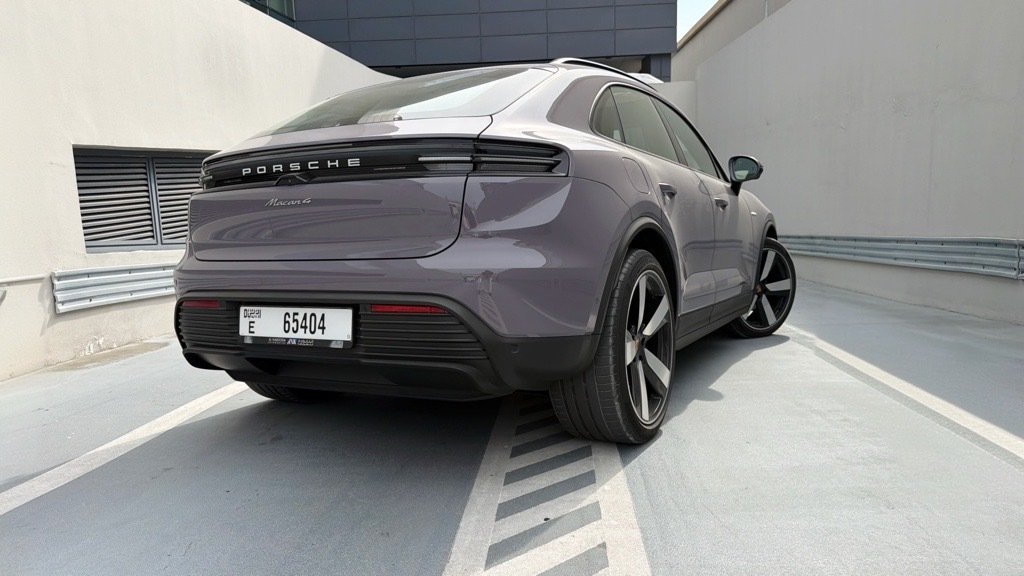
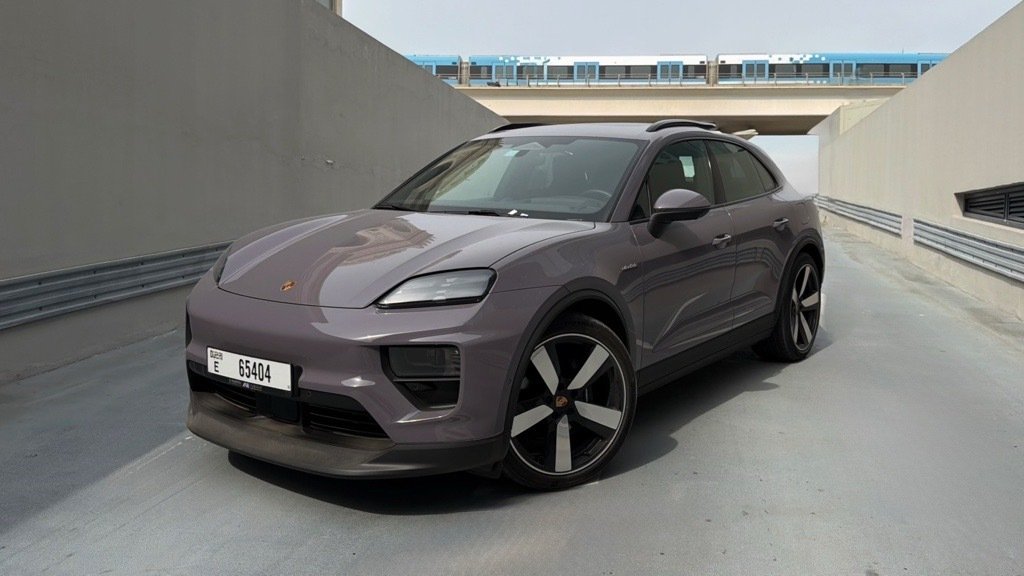
The first thing I noticed about the Macan Electric was how Porsche managed to give it a completely different appearance without making it unrecognisable.
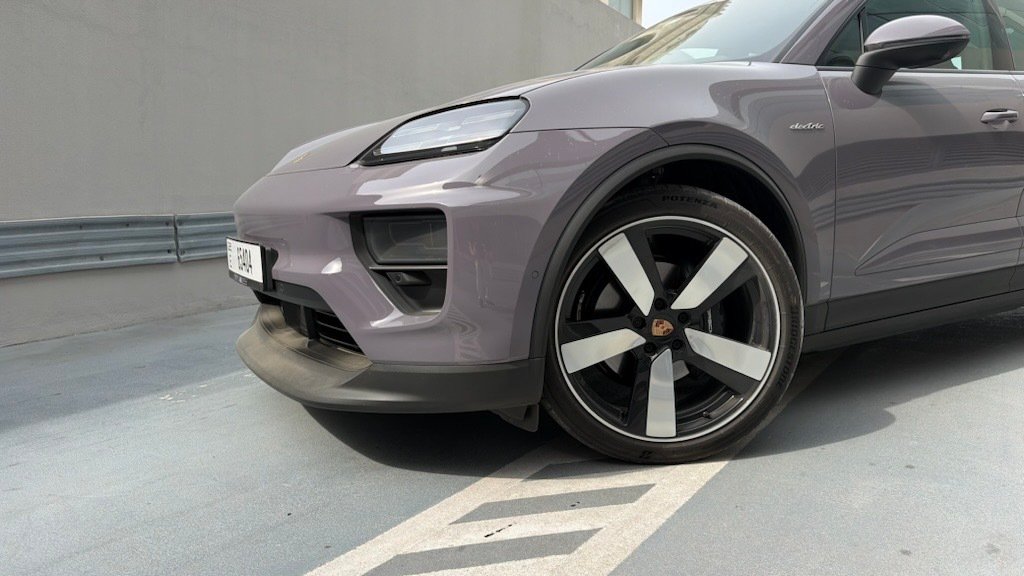
The front is cleaner and more futuristic than the petrol-powered Macan, with slim upper lighting units, separate main headlight elements and a more sculpted bumper. The overall proportions are familiar, although the roofline and body shape give the car a sportier appearance than you might expect from a compact luxury SUV.
I particularly like how Porsche resisted the temptation to make the Macan look unnecessarily aggressive. Some manufacturers seem determined to convince buyers that every electric vehicle needs an exaggerated design, but Porsche has taken a more restrained approach.
The large wheels, muscular rear shoulders and relatively low stance give the Macan Electric a distinctive road presence, while the absence of a conventional front grille immediately distinguishes it from its predecessor.
Personally, I think the design works particularly well in lighter and more unusual exterior colours, which highlight the shape of the bodywork and its details.
Behind the Wheel: The Most Important Part of the Experience
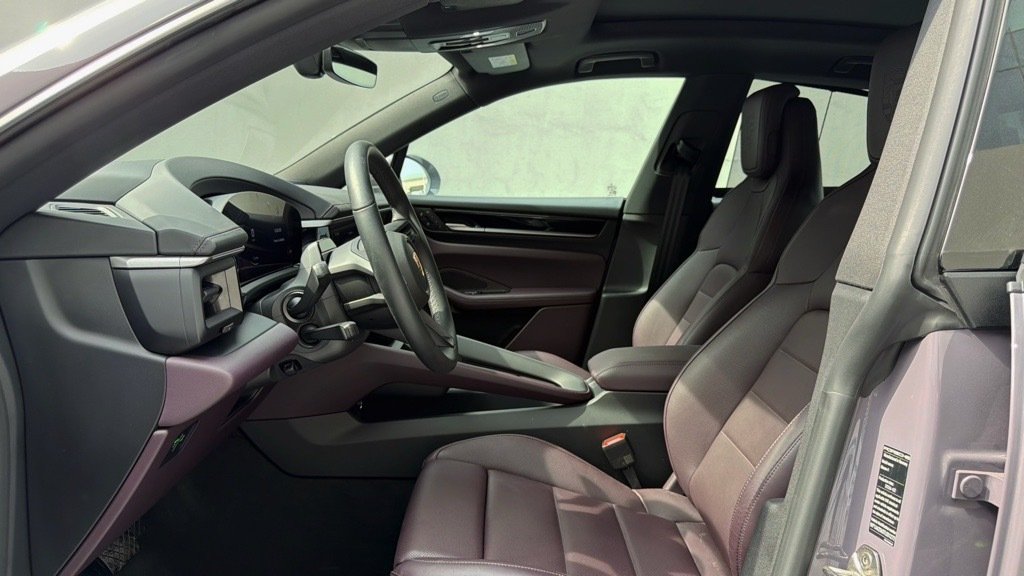
What interests me most whenever I drive a Porsche is not necessarily how much horsepower it produces, but how the steering, chassis and suspension communicate with the driver.
This is where the Macan Electric becomes particularly interesting.
Electric SUVs have a natural disadvantage when it comes to weight. Their batteries add considerable mass, and while positioning that weight low in the chassis helps the centre of gravity, it doesn’t make the additional kilograms disappear.
Porsche has approached this challenge by focusing heavily on steering precision, chassis balance and suspension control. The Macan Electric also offers technologies such as adaptive air suspension and rear-axle steering, depending on the version and specification.
What I appreciate about Porsche’s approach is that the Macan is designed to deliver more than effortless acceleration. The steering, suspension and overall chassis calibration are intended to make the car enjoyable through corners, not simply impressive when the accelerator is pressed.
This distinction matters to me because I have driven several very powerful electric SUVs that feel genuinely exciting for the first few minutes, but much less interesting once the novelty of their acceleration disappears.
For a Porsche, delivering confidence and consistency through a corner is more important than producing an impressive number on a specification sheet.
Electric Performance Without the Drama of a Petrol Engine
One thing that cannot be ignored is how responsive electric powertrains have become.
The Macan Electric range offers different levels of performance, beginning with the rear-wheel-drive model producing up to 360 PS with Launch Control, while the Macan 4 delivers up to 408 PS. At the top of the range, the Macan Turbo produces up to 639 PS and accelerates from 0 to 100 km/h in just 3.3 seconds.
These figures would have been associated with serious sports cars not very long ago. Today, they are available in a practical SUV with five seats and a usable luggage compartment.
But I have always believed there is a difference between being fast and feeling exciting.
A petrol-powered Porsche offers an experience built around the engine, the response to throttle inputs and the mechanical sensations that accompany acceleration. Electric power changes that experience completely.
There is no traditional engine note building towards the redline, no conventional gearbox working through the ratios and no mechanical soundtrack contributing to the sense of speed.
What you gain instead is immediate response, smooth power delivery and the ability to accelerate without waiting for the engine or gearbox to react.
Whether this is an improvement depends very much on what you want from your car. I can appreciate the efficiency and response of an electric powertrain while still missing some of the character that comes with a good combustion engine.
Comfort and Everyday Driving in Dubai
An SUV like the Macan needs to be judged on more than its ability to entertain a driver on an open road.
Most owners in Dubai will spend much of their time commuting, travelling on highways, dealing with traffic and using the car for everyday activities.
This is where the electric powertrain makes a strong argument for itself.
The absence of engine vibration, smooth acceleration and quiet operation are clear advantages in urban driving, particularly when travelling through heavy traffic or covering longer distances.
Porsche’s available adaptive suspension technology also gives the Macan the ability to balance comfort with a more controlled driving character when required.
I also appreciate that Porsche has not tried to make the Macan behave like every other electric car. It does not offer conventional one-pedal driving, where lifting off the accelerator can bring the vehicle to a complete stop. Instead, Porsche places greater emphasis on coasting and uses regenerative braking when the brake pedal is applied.
It is a different philosophy, but one that makes sense for a manufacturer that places so much importance on the relationship between the driver and the controls.
Interior: More Technology, but Still Driver-Focused
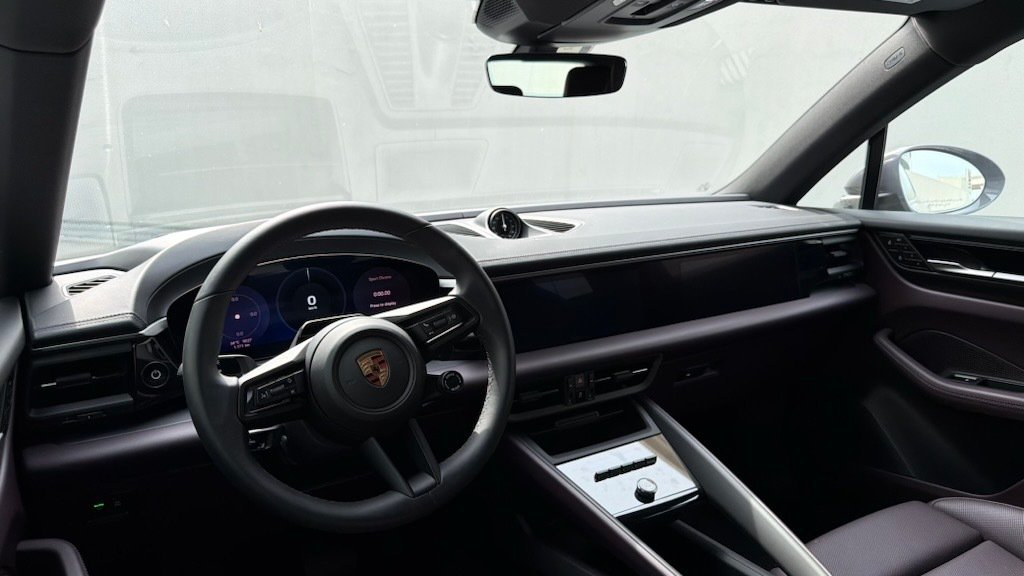
Inside, the Macan Electric represents a significant step forward compared with the previous generation.
The dashboard features a 12.6-inch curved digital instrument cluster and a 10.9-inch central touchscreen, with an additional passenger display available as an option.
The cabin feels much more modern in its design, with a cleaner layout and a stronger emphasis on digital technology.
What matters to me, however, is whether technology actually improves the driving experience.
I don’t believe that adding more screens automatically makes an interior better. I would rather have a well-designed driving position, supportive seats and controls that are easy to operate than an unnecessarily complicated dashboard.
Fortunately, Porsche has retained a driver-focused layout, with the steering wheel and main instruments positioned to keep the driver at the centre of the experience.
Practicality has also improved. Depending on the configuration, the Macan Electric offers up to 540 litres of rear luggage space and an additional 84-litre compartment under the bonnet.
These are useful improvements for a vehicle that needs to function as a family car as well as a premium performance SUV.
Range and Charging: Important Questions for UAE Buyers
One of the most important considerations for anyone thinking about an electric Porsche in the UAE is how practical it will be to charge and use every day.
The Macan Electric uses an 800-volt electrical architecture and a battery with a gross capacity of 100 kWh.
Porsche quotes a maximum DC charging capacity of 270 kW, allowing the battery to charge from 10 to 80 percent in approximately 21 minutes under ideal conditions at a compatible fast charger.
The claimed driving range varies according to the version. For the current UAE model range, Porsche quotes up to 643 km on the ECE combined cycle for the rear-wheel-drive Macan Electric, while the all-wheel-drive Macan 4 is rated at up to 619 km.
Of course, these are official laboratory figures rather than results from my own range test.
In real-world UAE conditions, factors such as summer temperatures, air-conditioning usage, motorway speeds and driving style can affect the distance achieved on a charge.
For someone who has access to reliable home charging, the Macan Electric could be relatively straightforward to live with. For buyers who depend entirely on public charging stations, I would strongly recommend considering the charging infrastructure around their home and workplace before making a decision.
Porsche Macan Electric Price in the UAE
According to Porsche’s current UAE listings for the 2027 model year, the Macan Electric starts from AED 324,700, including VAT, while the Macan 4 Electric starts from AED 337,500.
The more powerful Macan 4S starts from AED 361,700, with the Macan GTS and Turbo positioned higher in the range.
As with most Porsche models, the final purchase price can increase substantially once optional equipment, larger wheels, interior upgrades and chassis technologies are added.
This is something buyers should keep in mind. The Macan Electric is not simply competing on performance or range; it also needs to justify its premium over other electric SUVs that offer impressive specifications for considerably less money.
My Verdict: Has Porsche Lost Its Identity?
I think the real challenge facing Porsche is not whether it can build a fast electric vehicle. The Taycan has already demonstrated the company’s engineering capabilities, and the Macan Electric benefits from much of that experience.
The more difficult question is whether Porsche can maintain the emotional connection that has made its cars special for generations.
The Macan Electric approaches that challenge by focusing on the qualities that have always mattered to the brand: steering, chassis development, driver involvement and the feeling of control.
It also brings genuine everyday advantages through its quiet operation, modern technology, improved practicality and electric performance.
There are compromises. The additional weight remains a reality, the purchase price is significant, and anyone who enjoys the sound and mechanical character of a petrol engine will inevitably find something missing.
For me, the Macan Electric is interesting not because it replaces everything that made the previous Macan enjoyable, but because it demonstrates how Porsche is attempting to reinterpret those qualities for a very different type of powertrain.
And ultimately, that is how I believe an electric Porsche should be judged. Not simply by how quickly it accelerates, how large its battery is or how many kilometres it can travel, but by whether the person behind the wheel still feels the engineering philosophy that makes a Porsche different from an ordinary car.
Fahed Abu Salah
Editor-in-Chief, GearsMe
More automotive reviews, exclusive test drives and the latest car news from the UAE and around the world at www.gearsme.com.