
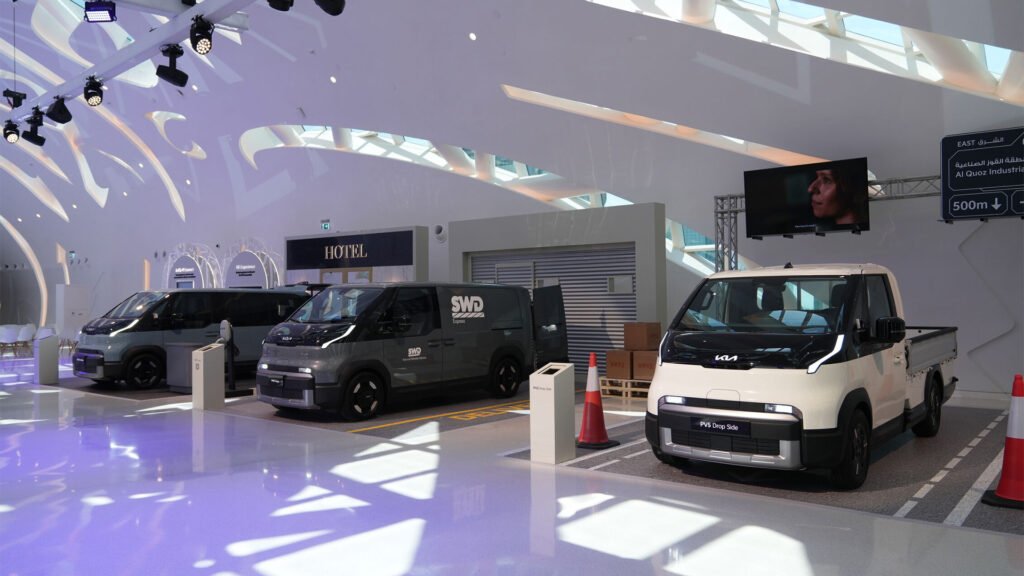

The Kia PV5 2026 arrives at the Museum of the Future in Dubai with a statement that redefines an entire vehicle category. Therefore, Kia Middle East and Africa reveals the PV5 as the first model in its Platform Beyond Vehicle — PBV — family for the region. Furthermore, this is not simply a new electric van. Based on this, it is a single flexible electric platform that delivers five completely different vehicles from one shared architecture. So, the Kia PV5 2026 covers personal transport, cargo logistics, wheelchair access, executive travel and commercial fleet use simultaneously. Ultimately, one platform. Five vehicles. One clear vision of what urban mobility becomes next.
What is PBV and Why Does It Matter?
The PBV concept is Kia’s most ambitious engineering commitment since the EV6. Therefore, Platform Beyond Vehicle describes a modular electric architecture that separates the vehicle’s floor from its upper body entirely. Furthermore, this means different body configurations can sit on the same floor plan without engineering the structure from scratch each time. Based on this, the result is five distinct Kia PV5 2026 variants that share a battery, motor and chassis while serving completely different use cases.
Consequently, the Dubai launch at the Museum of the Future is a deliberate statement about intent. So, Kia does not announce the PV5 at a commercial vehicle trade show — it launches it where future thinking is the entire point.
The Five Kia PV5 2026 Variants Explained
The Kia PV5 2026 lineup covers more use cases than any single electric vehicle in the current Middle East market.
PV5 Passenger targets personal mobility, ride-sharing services and corporate transport. Therefore, sliding doors, a spacious cabin and large luggage capacity make it the most versatile people-mover in Kia’s current lineup. Furthermore, the cabin design prioritises easy access and smart space distribution for daily commuting and shuttle services.
PV5 Cargo targets logistics, delivery and last-mile distribution operations. Therefore, a load volume of 4.42 cubic metres and a low load floor simplify urban delivery operations significantly. Furthermore, the 71.2kWh long-range battery delivers up to 524km of range — eliminating the charging anxiety that limits most urban commercial EVs.
PV5 WAV — Wheelchair Accessible Vehicle — targets inclusive mobility for people with disabilities. Therefore, dedicated equipment and optimised interior configurations make it one of the most purpose-built accessible transport solutions in the regional market. Furthermore, the same platform engineering that enables cargo flexibility enables accessibility modifications without compromise.
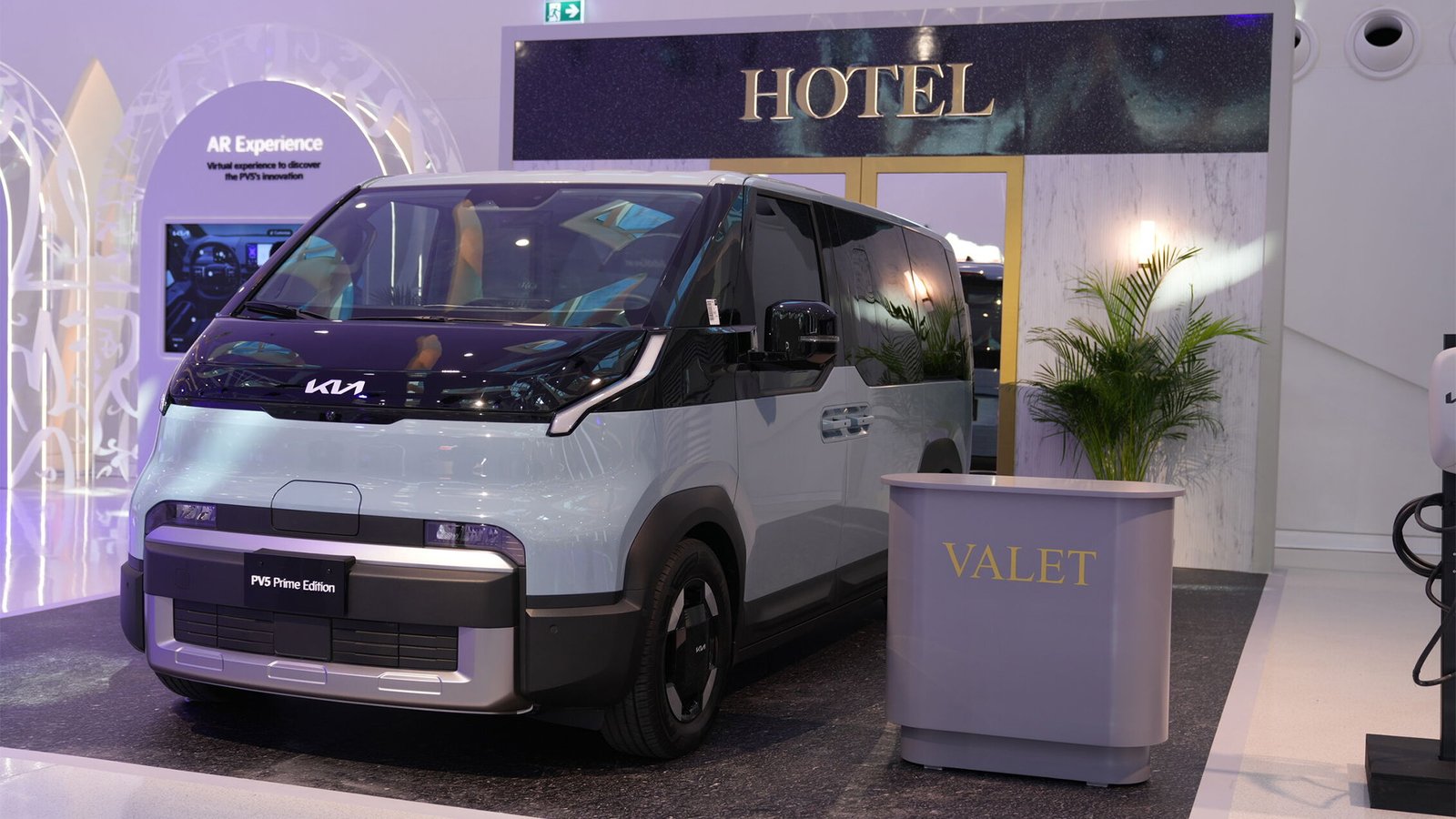
PV5 Prime Edition targets executive transport, hotel services and VIP chauffeur operations. Therefore, comfort and privacy take priority over load volume or passenger count in this variant. Furthermore, the premium cabin environment positions the Prime Edition directly against established executive minivan competitors at a significantly different technology level.
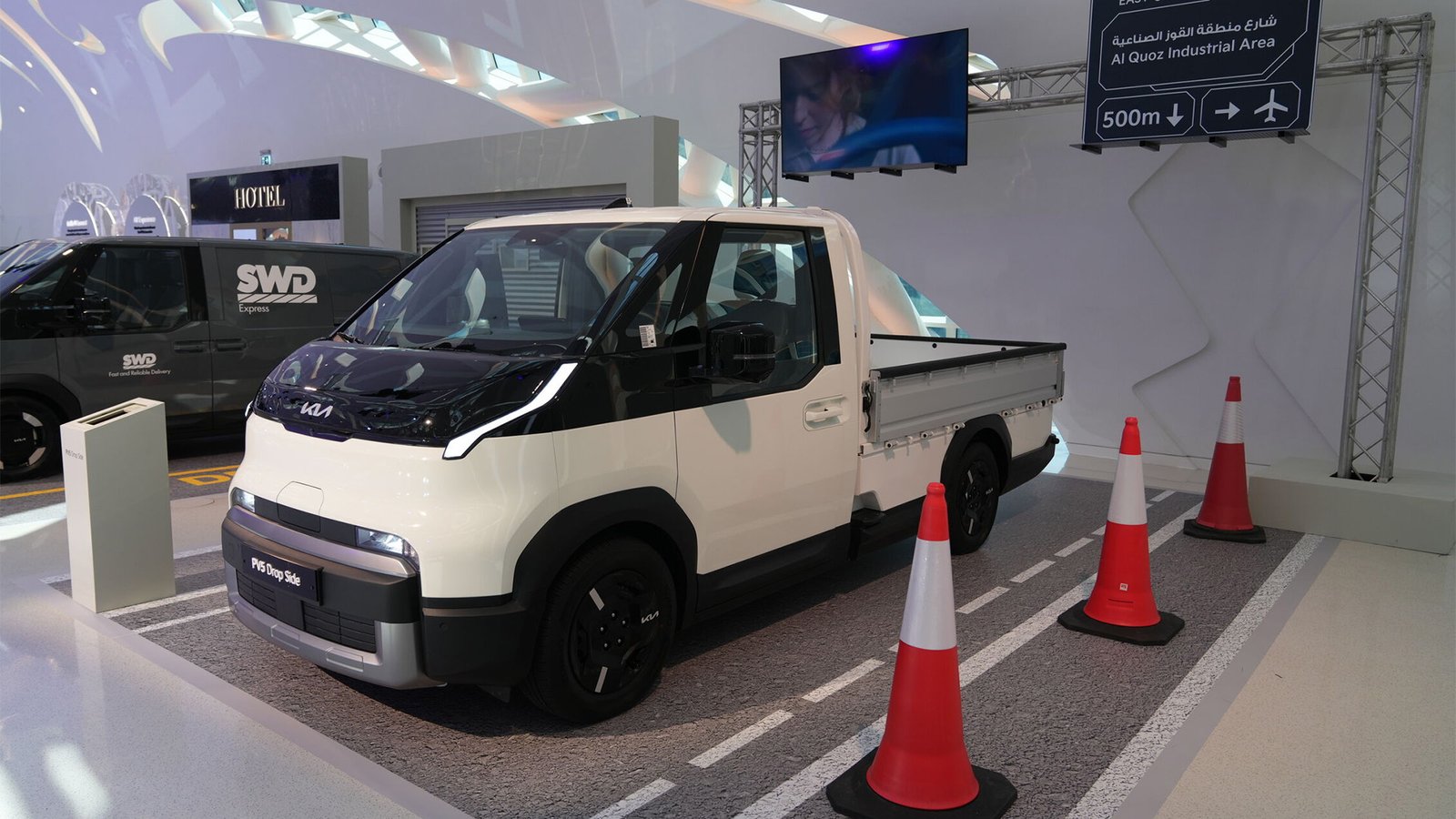
PV5 Drop Side targets commercial fleet, maintenance, government and construction applications. Therefore, a configurable chassis body replaces the fixed van structure for operators who need maximum load flexibility. Furthermore, the Drop Side addresses a commercial vehicle segment that most electric platforms have not yet reached in the Middle East.
The Technology Inside the Kia PV5 2026
The Kia PV5 2026 cabin centres on a 12.3-inch touchscreen with full Apple CarPlay and Android Auto support. Therefore, the Android Automotive OS operating system runs Google services natively rather than through a connected phone. Furthermore, over-the-air OTA updates ensure the software stays current throughout the vehicle’s operational life. Based on this, fleet operators receive a digital environment that adapts and improves after purchase rather than becoming obsolete.
Consequently, remote diagnostics and real-time performance monitoring make the PV5 a credible professional fleet tool. Additionally, an open infotainment architecture allows businesses to integrate their own fleet management and operational applications directly into the system. So, the technology package serves the individual driver and the fleet manager simultaneously.
Safety and Driver Assistance
The Kia PV5 2026 carries a comprehensive suite of driver assistance technology across all five variants. Therefore, Forward Collision Avoidance — FCA — and Lane Keeping Assist — LKA — come standard. Furthermore, Lane Following Assist LFA and Smart Cruise Control SCC complement the active safety package. Based on this, the Speed Limit Assist system adds regulatory compliance support for fleet operators working across different speed zone environments.
Consequently, the ADAS package matches what Kia offers in its passenger car lineup rather than applying a simplified commercial vehicle specification. So, drivers in commercial PV5 variants receive the same active safety protection as drivers in premium Kia passenger cars.
Charging: 10 to 80 Percent in 30 Minutes
The Kia PV5 2026 supports DC fast charging across all variants. Therefore, the battery charges from 10 to 80 percent in approximately 30 minutes at a compatible rapid charger. Furthermore, the 71.2kWh battery in the long-range Cargo variant delivers up to 524km of WLTP range — covering full working days for most fleet applications without intermediate charging. Based on this, the charging speed and range combination removes the two most common objections to electric commercial vehicle adoption in the region.
Consequently, fleet operators can integrate the PV5 into existing operations without restructuring charging logistics from the ground up. So, the 30-minute charge window fits naturally into driver break schedules for urban logistics operations.
What the Dubai Launch Means for the Middle East
The Kia PV5 2026 regional debut at Dubai’s Museum of the Future carries significance beyond the product announcement. Therefore, launching a commercial electric mobility platform at the region’s most iconic future-focused venue signals that Kia positions this as a long-term infrastructure commitment rather than a product introduction. Furthermore, the Middle East’s combination of urban density, fleet-heavy mobility markets and government smart city commitments creates exactly the environment the PBV platform was engineered to serve. Based on this, Dubai, Abu Dhabi, Riyadh and Doha represent priority markets for every variant in the PV5 lineup.
Consequently, the five-variant approach allows Kia to address public transport, private mobility, logistics and accessibility through a single dealer and service network. Additionally, the shared platform architecture simplifies parts supply, technician training and fleet management across all five body types. For the latest Kia and electric vehicle news across the Middle East, follow GearsME. For full official PV5 specifications and regional availability, visit the official Kia Middle East website. So, the Kia PV5 2026 does not compete with other electric vans — it competes with the entire concept of what urban mobility infrastructure looks like.
One Platform That Changes the Conversation
Ultimately, the Kia PV5 2026 is the most strategically ambitious electric vehicle launch in the Middle East market in 2026. Therefore, five variants from one platform covering personal transport, cargo delivery, wheelchair access, executive travel and commercial fleet use is a scope that no competitor currently matches in a single product family. Furthermore, 524km of range, a 30-minute fast charge, Android Automotive OS with OTA updates and a comprehensive ADAS package across all variants delivers professional-grade technology at a scale the regional market needs. Consequently, the Museum of the Future was the right place to announce it — because the Kia PV5 2026 is not a van. It is a rethinking of what a vehicle is for.
Key Facts Summary:
| Detail | Information |
|---|---|
| Model | Kia PV5 2026 |
| Platform | PBV — Platform Beyond Vehicle |
| Variants | Passenger / Cargo / WAV / Prime Edition / Drop Side |
| Battery | 71.2kWh (long-range Cargo) |
| Range | Up to 524km WLTP |
| Charging | DC fast charge — 10 to 80% in ~30 minutes |
| Infotainment | 12.3-inch — Android Automotive OS — Google built-in |
| Connectivity | Apple CarPlay / Android Auto / OTA updates |
| Cargo volume | 4.42 cubic metres (Cargo variant) |
| ADAS | FCA / LKA / LFA / SCC / Speed Limit Assist |
| Launch venue | Museum of the Future — Dubai |
| Launch date | June 24, 2026 |
| Target markets | UAE / Saudi Arabia / Qatar / Middle East |