

The latest sales data for Top 10 Best-Selling Cars in Oman 2025 paints a clear picture of a market that still values durability, reliability, and off-road capability above all else. Unsurprisingly, Japanese brands continue to dominate, with Toyota leading the charge across multiple segments. However, what makes this year particularly interesting is the rise of new contenders and the shifting dynamics within traditional best-sellers.
From rugged pickups to full-size SUVs and budget sedans, the Omani market reflects a unique mix of lifestyle needs and economic realities. Here is a deep dive into the top 10 best-selling models and what their performance tells us about consumer trends in the Sultanate.
Toyota Hilux Holds the Crown
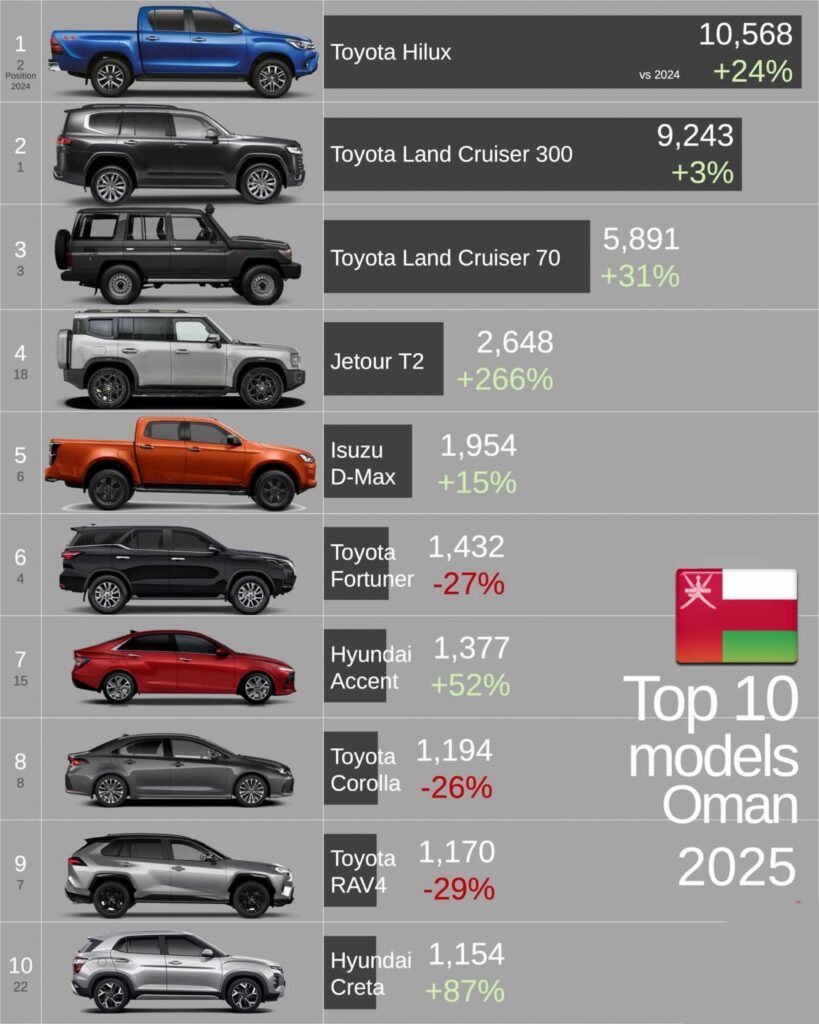
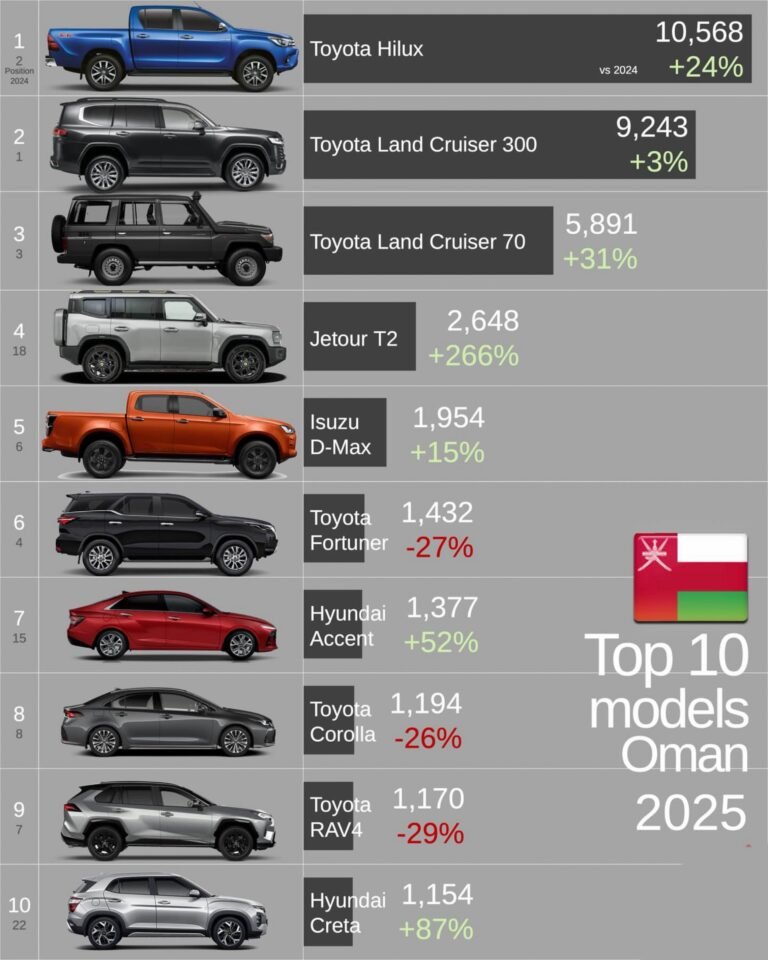
At the top of the list sits the Toyota Hilux, with 10,568 units sold, marking a strong 24% increase compared to 2024. This comes as no surprise, as the Hilux has long been a staple across the GCC.
Its success in Oman is driven by its unmatched reputation for durability, especially in harsh desert conditions and demanding work environments. Whether used for commercial purposes, off-road adventures, or daily driving in rural areas, the Hilux continues to be the go-to vehicle for those who need something that simply works.
The growth also suggests continued investment in infrastructure and construction, sectors where pickups like the Hilux play a critical role.
Land Cruiser 300 Remains a Luxury Icon
In second place, the Toyota Land Cruiser 300 sold 9,243 units, recording a modest 3% growth. While the increase is not dramatic, the numbers themselves are significant for a premium SUV.
The Land Cruiser 300 remains a symbol of status and capability in Oman. Buyers are drawn to its combination of luxury, off-road performance, and long-term reliability. Even in a market where newer competitors are entering, the Land Cruiser continues to hold its ground thanks to decades of trust built across generations.
Land Cruiser 70 Shows Remarkable Growth
The Toyota Land Cruiser 70 ranks third with 5,891 units and an impressive 31% growth. This is one of the most interesting stories in the list.
Despite its old-school design, the LC70 is thriving. Its appeal lies in its simplicity, toughness, and ability to handle extreme terrains with ease. In Oman, where off-road capability is not just a preference but a necessity for many, the LC70 remains highly relevant.
Its growth also reflects a niche but loyal audience that values mechanical simplicity over modern tech-heavy alternatives.
Jetour T2 Makes a Massive Leap
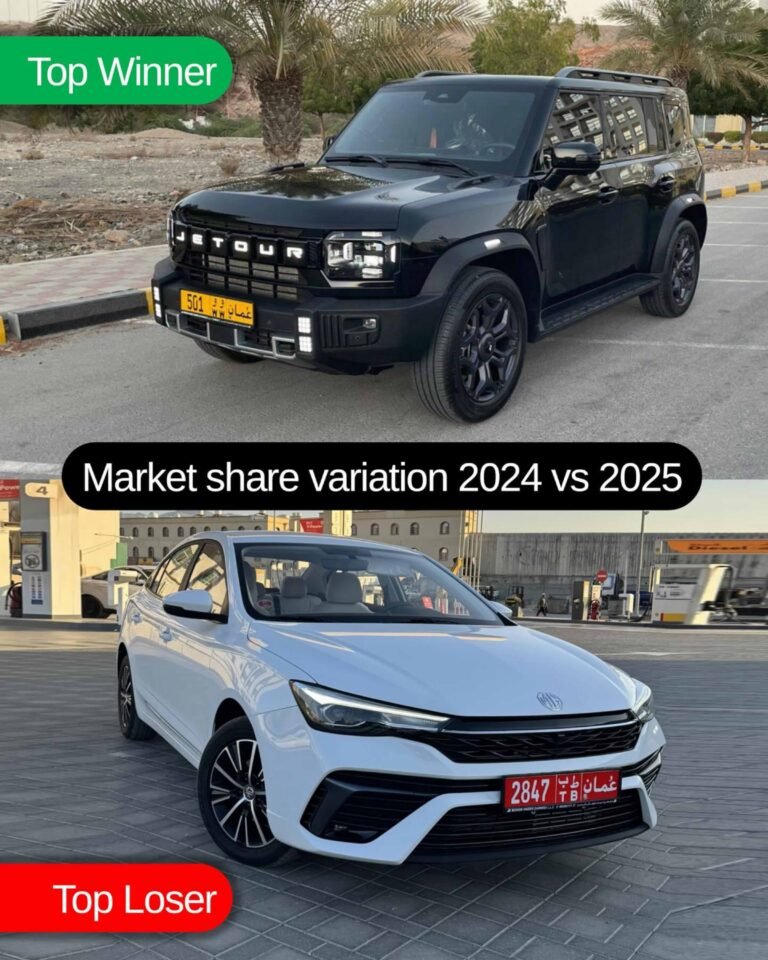
One of the biggest surprises is the Jetour T2, which jumps into fourth place with 2,648 units and a staggering 266% growth.
This kind of increase signals a major shift in the market. Chinese brands are no longer just budget alternatives. They are becoming serious competitors with strong design, competitive pricing, and increasingly refined products.
The Jetour T2 appeals to younger buyers and those looking for modern styling and features at a lower price point compared to traditional Japanese SUVs. Its rise suggests that consumer confidence in newer brands is growing rapidly in Oman.
Isuzu D-Max Continues Steady Performance
The Isuzu D-Max takes fifth place with 1,954 units sold, showing a 15% increase. Known for its reliability and efficiency, the D-Max remains a strong contender in the pickup segment.
While it does not match the Hilux in volume, it serves a loyal customer base that values its practicality and lower running costs. Its steady growth indicates consistent demand rather than sudden spikes.
Toyota Fortuner Faces a Sharp Decline
In sixth place, the Toyota Fortuner recorded 1,432 units, but with a significant 27% drop.
This decline raises questions about shifting buyer preferences. The Fortuner, once a dominant mid-size SUV, may be losing ground to newer alternatives, including Chinese models and even internal competition from other Toyota offerings.
Buyers might be looking for more advanced features or better value, areas where newer entrants are becoming increasingly competitive.
Hyundai Accent Gains Momentum
The Hyundai Accent ranks seventh with 1,377 units and a strong 52% increase.
This reflects growing demand for affordable, fuel-efficient sedans. In a market dominated by SUVs and pickups, the Accent stands out as a practical urban choice.
Its growth suggests that there is still a solid segment of buyers prioritizing cost efficiency, especially in times where economic considerations play a bigger role in purchasing decisions.
Toyota Corolla Sees Decline
The Toyota Corolla, traditionally one of the most popular sedans globally, sits in eighth place with 1,194 units, but with a 26% decrease.
This drop could be due to changing market trends, where SUVs are becoming more desirable than sedans. Additionally, increased competition from Korean and Chinese brands offering more features at similar price points could be affecting Corolla sales.
Toyota RAV4 Also Drops
The Toyota RAV4 takes ninth place with 1,170 units and a 29% decline.
This is another notable shift. The RAV4, once a strong player in the compact SUV segment, appears to be losing traction. It may be facing pressure from newer models that offer more aggressive styling, better tech, or stronger value propositions.
Hyundai Creta Rounds the List with Strong Growth
Closing the top 10 is the Hyundai Creta, with 1,154 units and an impressive 87% increase.
The Creta’s growth highlights the rising popularity of compact SUVs, especially among younger buyers and families. It offers a balance between affordability, practicality, and modern features, making it an attractive option in a competitive segment.
Key Market Insights
Several key trends emerge from this data:
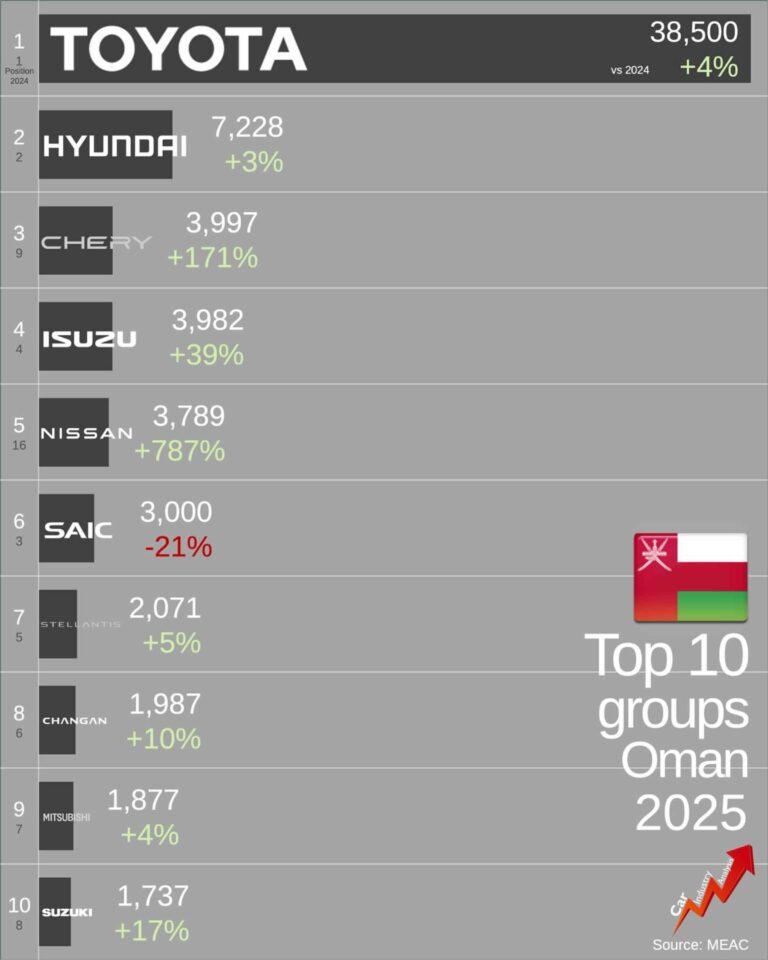
Toyota’s dominance remains strong, with six out of the top ten models. However, not all Toyota models are performing equally, with some seeing declines.
Pickups and rugged SUVs continue to lead, reflecting Oman’s terrain and lifestyle needs. Vehicles like the Hilux and Land Cruiser are deeply embedded in the market.
Chinese brands are gaining serious momentum, with Jetour leading the charge. This could reshape the competitive landscape in the coming years.
Sedans are losing ground, as SUVs and crossovers become more desirable. Even strong names like Corolla are feeling the pressure.
Affordable and practical vehicles are growing, as seen with Hyundai models like Accent and Creta, indicating a shift toward value-conscious buyers.
Final Thoughts
The 2025 sales figures in Oman tell a story of transition. While legacy brands like Toyota continue to dominate, cracks are beginning to show in certain segments. At the same time, new players are rising quickly, challenging long-standing norms.
For manufacturers, the message is clear. Reliability and durability are still essential, but modern design, technology, and value are becoming just as important.
For buyers, the options have never been more diverse. Whether it is a rugged pickup, a luxury SUV, or a budget-friendly compact, the market is evolving to meet every need.
The coming years will be crucial in determining whether Toyota can maintain its dominance or if emerging brands will finally disrupt the hierarchy in Oman’s automotive market.