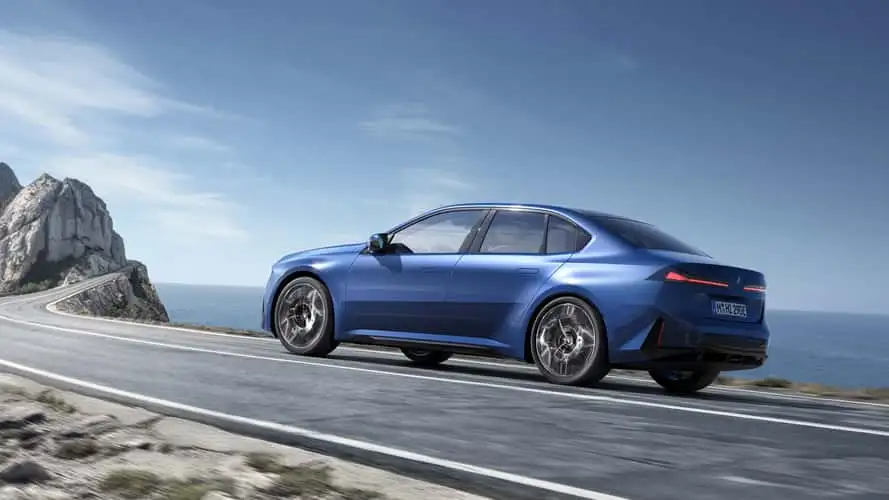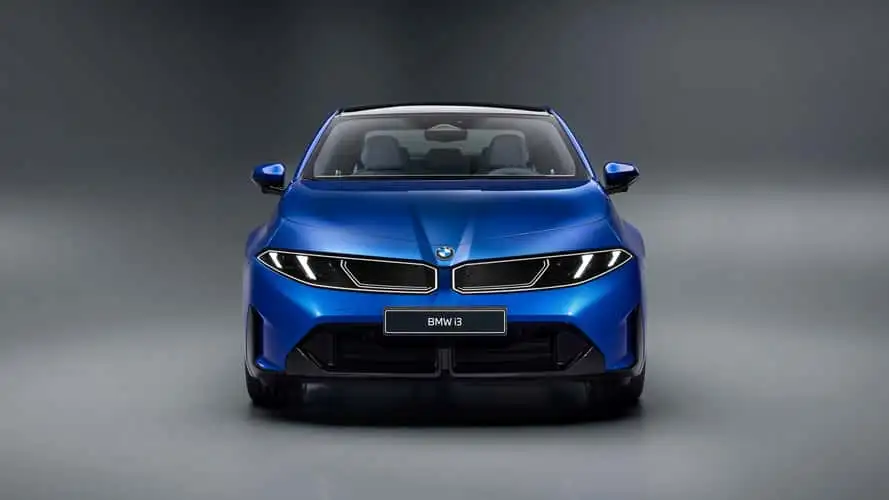

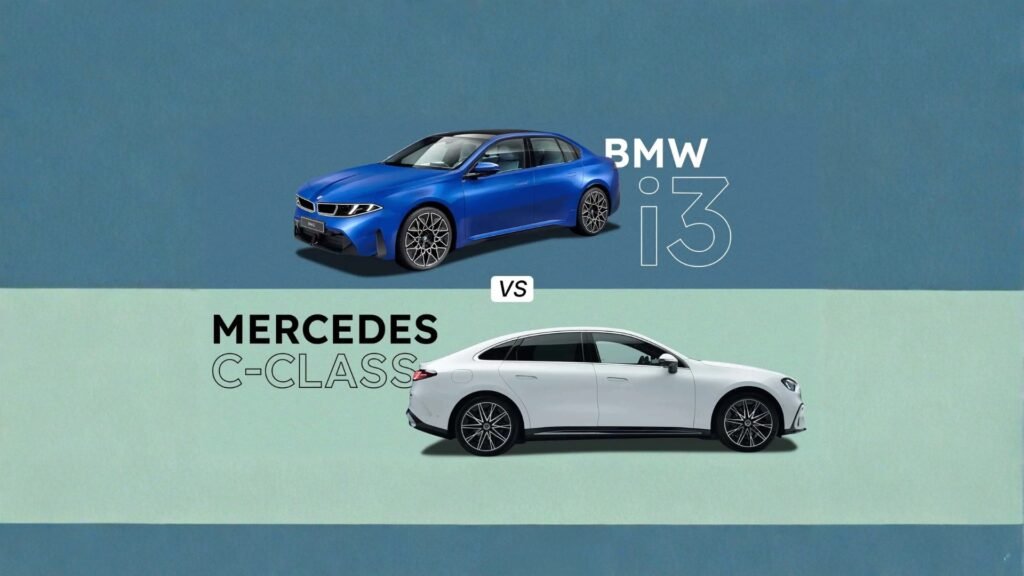

The Mercedes C-Class EV vs BMW i3 rivalry marks the start of a new chapter in car history. Therefore, the two German giants meet again on fully electric ground. Furthermore, each car carries a very different vision of what a premium electric sedan should be. Based on this, the fight goes far beyond spec sheets and numbers alone. So, anyone interested in luxury electric cars in 2027 has a strong reason to study this matchup closely. Ultimately, this is one of the most exciting head-to-head battles in the EV world right now.
Size and Dimensions: Two Cars, Two Different Scales
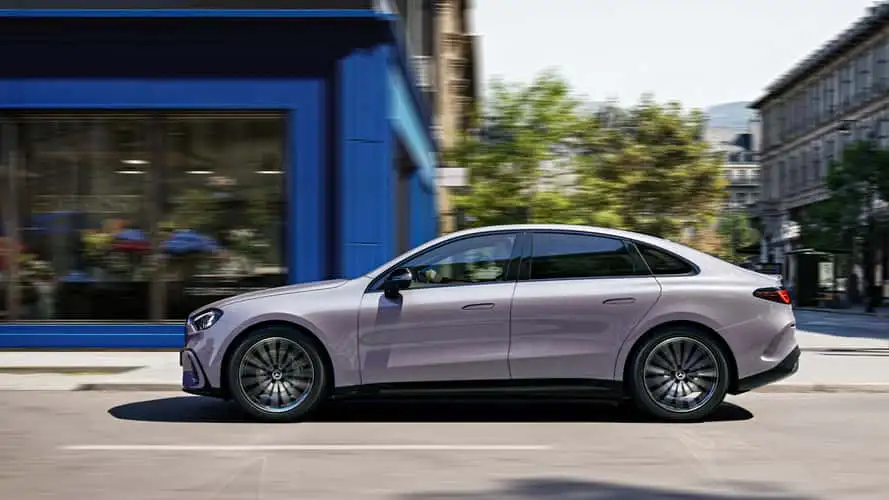
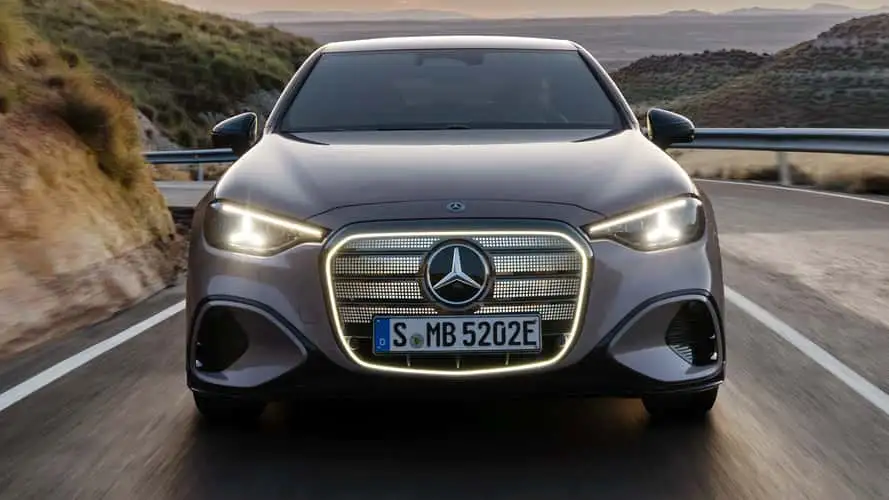
A close look at the Mercedes C-Class EV vs BMW i3 dimensions reveals a clear size gap. First, the C-Class EV measures 4.88 metres long with a 2.96-metre wheelbase. In contrast, the BMW i3 is shorter by 12 centimetres at 4.76 metres long. Furthermore, the C-Class is also 2.7 cm wider and 24 mm taller than the BMW. As a result, the C-Class EV is actually closer in size to a traditional E-Class than a C-Class. Based on this, Mercedes clearly targets a broader group of buyers with its larger package.
However, the interior space tells a different story. Despite its larger exterior, the C-Class rear cabin feels tighter than expected. The i3, on the other hand, feels more spacious inside despite its smaller dimensions. Additionally, the C-Class adds a 470-litre boot and a 101-litre frunk. Therefore, total storage capacity remains very practical for everyday use.
Power and Performance: The Winner Depends on the Angle
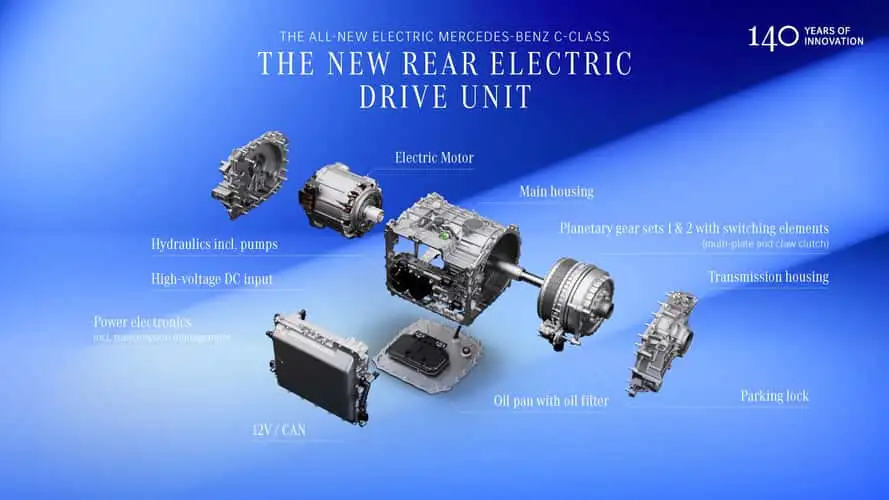
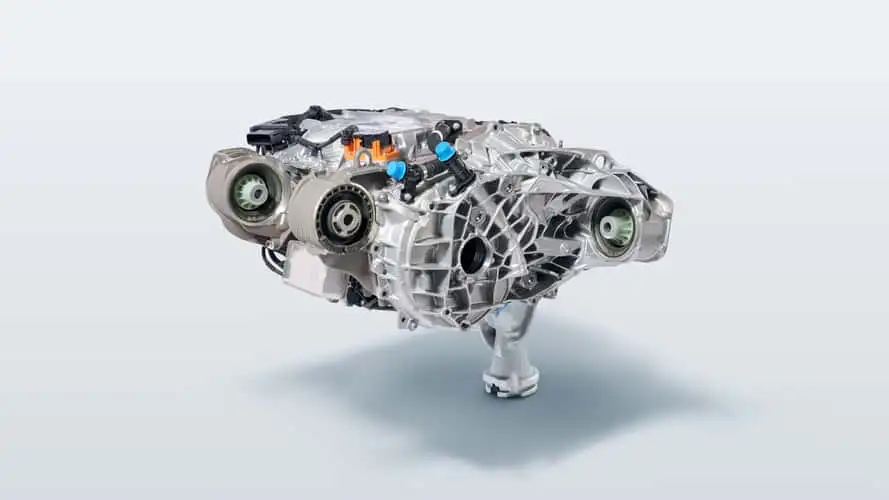
In the Mercedes C-Class EV vs BMW i3 performance battle, Mercedes leads on the headline numbers. Specifically, the C400 4Matic produces 482 horsepower and 800 Nm of torque. Therefore, it sprints from zero to 100 km/h in just 3.9 seconds. Furthermore, the C-Class uses a two-speed rear transmission that improves both acceleration and efficiency. As a result, the Mercedes delivers strong real-world performance in everyday driving conditions.
In contrast, the BMW i3 xDrive 50 produces 469 horsepower and 645 Nm of torque. Therefore, it trails the C-Class by 13 horsepower and 155 Nm. However, BMW has not yet published an official acceleration figure for the i3. Nevertheless, based on the heavier iX3 needing 4.9 seconds with the same powertrain, a fair estimate for the i3 is around 4.5 seconds.
Range and Charging: BMW Wins Clearly
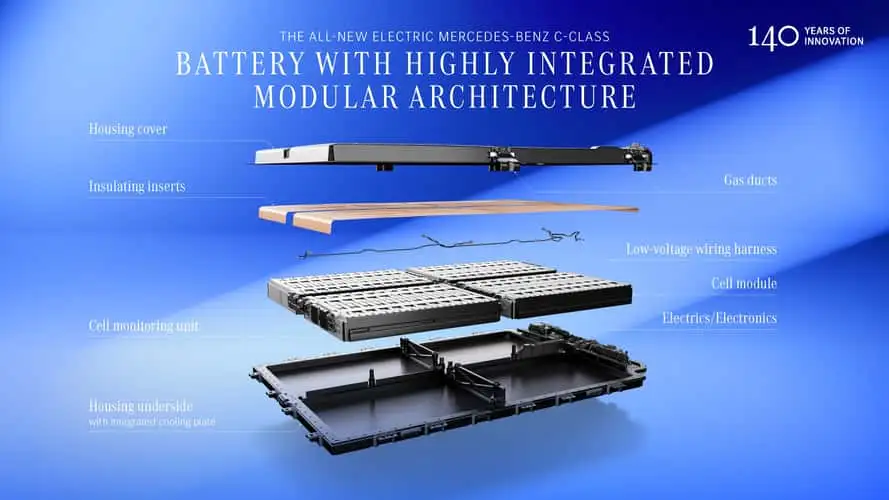
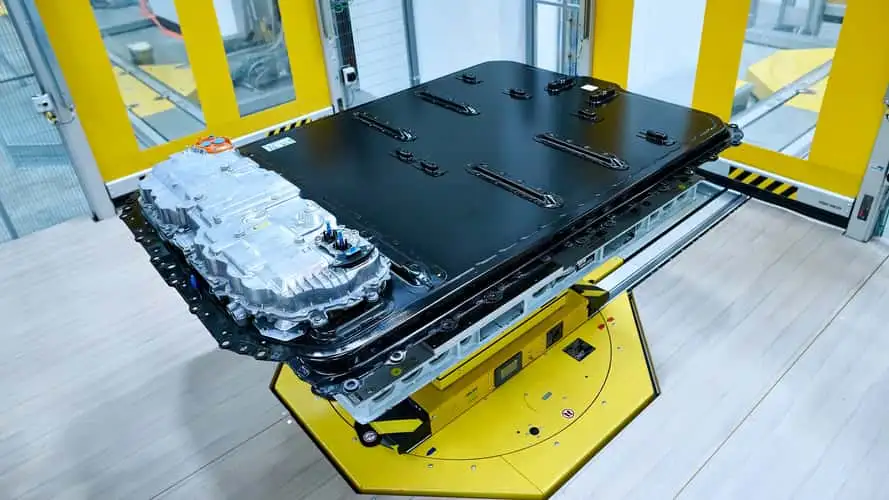
In the Mercedes C-Class EV vs BMW i3 range battle, the BMW takes a dominant victory. First, the i3 carries a larger 108.7 kWh battery versus the C-Class’s 94.3 kWh pack. Therefore, the BMW delivers a WLTP range of 900 kilometres against 762 kilometres for the Mercedes. Furthermore, this gap of 138 kilometres per charge is a significant real-world advantage that matters on long trips. As a result, the i3 is clearly the better choice for drivers who travel long distances regularly.
Moreover, the i3 charges much faster with a peak rate of 400 kW. Specifically, this adds 400 kilometres of range in just 10 minutes at a fast charger. In contrast, the Mercedes peaks at 330 kW and adds 325 kilometres in the same time. Therefore, BMW takes full marks in this category without serious competition.
In addition, both cars support V2L bidirectional charging as standard. Furthermore, BMW confirms the i3 also supports V2H and V2G charging. Consequently, the i3 offers a more complete and future-ready charging ecosystem overall.
Technology and Screens: Two Very Different Approaches
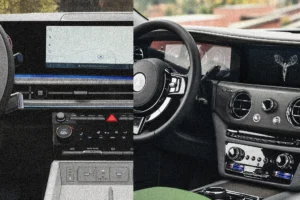
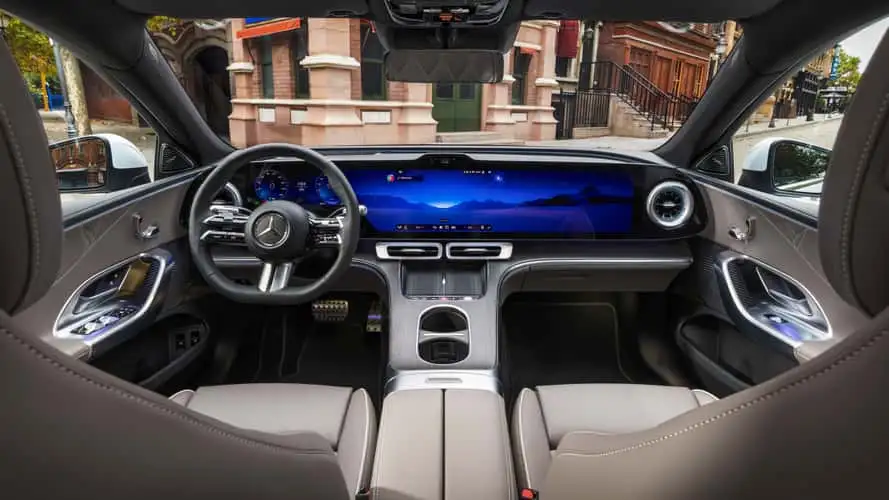
The technology in the Mercedes C-Class EV vs BMW i3 shows a striking contrast in philosophy. On one hand, Mercedes chooses bold visual impact with a massive 39.1-inch pillar-to-pillar dashboard display. Indeed, this is the largest single screen ever fitted to any production car. Furthermore, a three-screen setup is available as the standard option for buyers who prefer a calmer interior. As a result, Mercedes clearly wants to show off its tech in the most dramatic way possible.
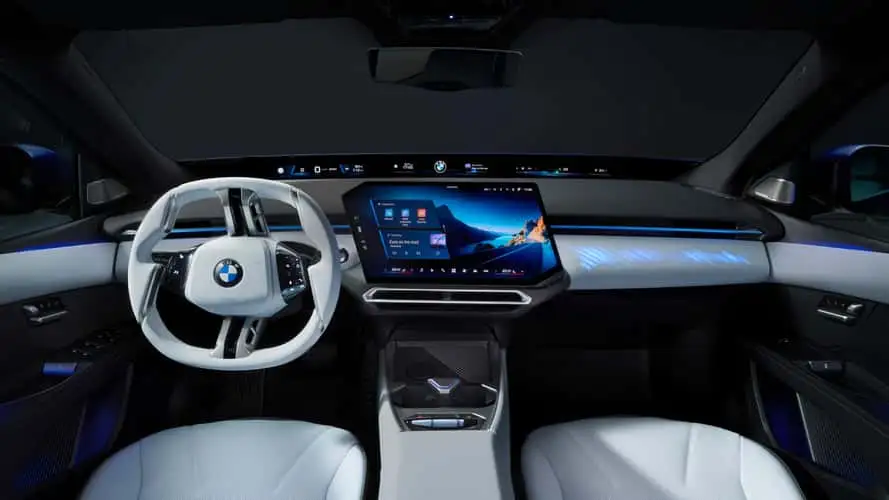
On the other hand, BMW follows a “shy tech” approach that hides technology until the driver needs it. For example, the i3 uses a distinctive 17.9-inch parallelogram-shaped centre screen. Additionally, a sweeping 43-inch panoramic display runs along the bottom edge of the windscreen. Therefore, BMW creates a more subtle but equally impressive experience for the driver. Based on this, the BMW setup feels more intuitive and less distracting during real driving.
Moreover, BMW brings the Heart of Joy supercomputer for precise driving dynamics. In addition, it delivers a smooth limo stop that brings the car to a halt without any head jolt. Meanwhile, Mercedes counters with optional adaptive air suspension and 4.5 degrees of rear-wheel steering. Therefore, this gives the C-Class a level of ride comfort and adaptability that the i3 cannot match on this specific point.
Final Verdict: Which One Do You Choose?
Ultimately, the Mercedes C-Class EV vs BMW i3 comparison reveals two outstanding cars that differ deeply at their core. The BMW i3 wins on range, charging speed and future-facing technology by a clear margin. Furthermore, it presents a bolder and more forward-thinking vision of what an electric car can be. However, the Mercedes C-Class EV leads on outright power, luxury, ride comfort and adaptability options. Therefore, if you want the longest range and fastest charging, the i3 is your answer. But if you prioritise luxury, comfort and raw performance, the C-Class EV is the stronger choice. For more electric car comparisons across the Middle East, follow GearsME. For full official specs on both cars, visit the official BMW website.