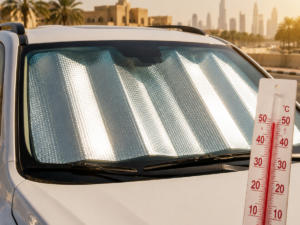



Summer driving in the UAE can be challenging for both drivers and vehicles. High temperatures, hot road surfaces, long highway journeys, and heavy use of air conditioning can place additional demands on a car.
Whether you are planning a daily commute, a weekend trip, or a long-distance road journey, a few basic checks can help reduce the risk of breakdowns and keep your vehicle performing properly.
1. Check the Engine Coolant
The cooling system plays an important role in keeping the engine within its recommended operating temperature.
Before a long journey, check the coolant level and look for signs of leaks around the radiator, hoses, and engine compartment. If the temperature gauge frequently rises above its normal position, the vehicle should be inspected before continuing to drive.
Never open the coolant reservoir or radiator cap when the engine is extremely hot.
2. Inspect Your Battery
Extreme heat can affect battery performance and shorten its lifespan. If your vehicle takes longer than usual to start, the headlights appear weaker, or you notice other electrical issues, the battery may require inspection.
Checking the battery terminals for corrosion and having the battery tested can help identify potential problems before a long journey.
3. Check Tyre Pressure
Tyre pressure should always be checked according to the manufacturer’s recommended specification.
Both underinflated and overinflated tyres can affect handling, braking, comfort, and tyre wear. Since road surfaces become extremely hot in summer, tyre condition deserves particular attention.
Inspect the tyres for cracks, cuts, uneven wear, or bulges and make sure the spare tyre is also properly inflated.
4. Test the Air Conditioning
A reliable air-conditioning system is essential for summer driving in the UAE.
Before setting out, check whether the AC is cooling properly. Weak airflow, unusual noises, unpleasant smells, or inconsistent cooling may indicate that the system needs servicing.
For longer journeys, it is better to address AC problems before travelling rather than waiting until the system stops working completely.
5. Check Engine Oil and Other Fluids
Engine oil helps lubricate and protect moving engine components. Other fluids, including brake fluid, transmission fluid, and windshield washer fluid, also play important roles in vehicle operation.
Check the levels according to the manufacturer’s instructions and look for signs of leaks. If any fluid appears unusually dark, contaminated, or low, consider having the vehicle inspected.
6. Inspect the Brakes
Brakes are particularly important when driving on highways or travelling long distances.
Warning signs can include squeaking or grinding noises, vibrations when braking, a soft brake pedal, or increased stopping distance.
If you notice any of these symptoms, have the braking system checked before starting your journey.
7. Check the Wipers and Windshield
Dust and sand can quickly accumulate on the windshield during summer. Worn-out wiper blades may leave streaks or fail to clear the glass properly.
Make sure your windshield is clean and your wipers are in good condition. Keeping washer fluid topped up can also improve visibility when needed.
8. Protect Your Car From the Sun
Whenever possible, park your vehicle in a covered or shaded location. Continuous exposure to direct sunlight can affect the exterior paint and interior materials.
Using a windshield sunshade can reduce the amount of heat entering the cabin and help protect the dashboard from prolonged sunlight exposure.
9. Prepare an Emergency Kit
A basic emergency kit can be useful if you experience a problem during a journey.
Depending on your needs, consider carrying drinking water, a first-aid kit, a warning triangle, a tyre inflator, a tyre repair kit, a flashlight, and a phone power bank.
It is also important to ensure that your vehicle’s roadside assistance and insurance details are easily accessible.
10. Plan Your Journey
Summer driving is not only about checking the vehicle. Planning your route can also make a difference.
Before a long journey, check the route, fuel or charging stops, traffic conditions, and available rest areas. Avoid unnecessary stops in direct sunlight and take breaks when needed.
If travelling through remote areas, make sure your vehicle has sufficient fuel or charge and that someone knows your travel plans.
A Few Minutes of Checking Can Make a Difference
Summer conditions can put additional pressure on a vehicle, but many common problems can be reduced through preventive checks.
Before heading out, take a few minutes to inspect the tyres, battery, coolant, fluids, brakes, air conditioning, and windshield. These simple steps can help identify potential issues before they become major problems.
For UAE drivers, regular maintenance combined with careful summer preparation can help keep the vehicle safe, reliable, and comfortable throughout the hottest part of the year.