

Live from Paris: Renault celebrates its performance heritage, embraces electrification and showcases a bold vision for the future, with important implications for the Middle East.
Paris, France October 12, 2026 | GearsMe Exclusive Coverage
Walking through the Renault stand at the 2026 Paris Motor Show, one thing becomes immediately clear: the French manufacturer is not interested in building ordinary electric cars.
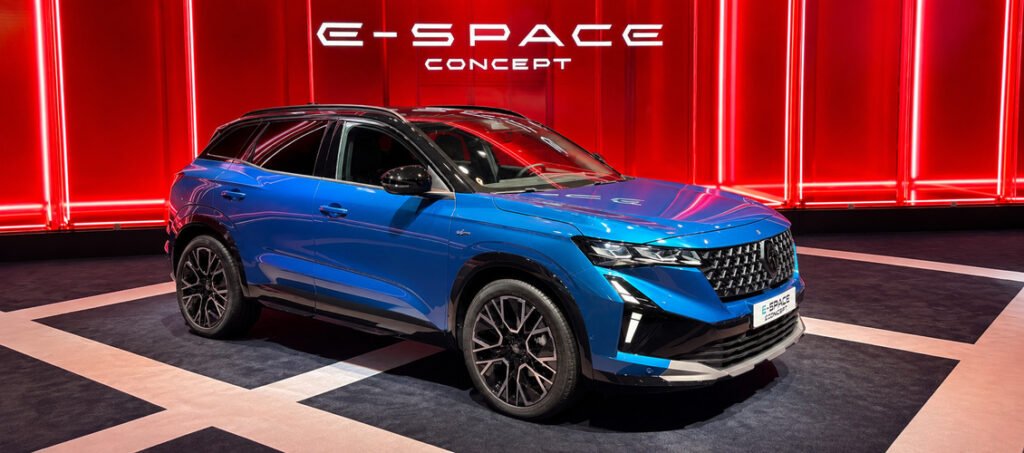
Instead, Renault is bringing its heritage into the electric era, combining some of its most recognizable designs with technology that promises to reshape the brand’s future.At the center of attention is the spectacular Renault 5 Turbo 3E, an electric reinterpretation of one of the most iconic performance cars in French automotive history. Alongside it, Renault is showcasing the futuristic E-Space Concept, offering a completely different perspective on what the next generation of family vehicles could look like.
Renault 5 Turbo 3E: A Legend Reborn with 555 Horsepower
Few cars on the Renault stand attract as much attention as the Renault 5 Turbo 3E.Inspired by the legendary Renault 5 Turbo and Turbo 2 of the 1980s, this modern interpretation retains the unmistakable proportions of the original while introducing a much more aggressive design.The enormous widened wheel arches, muscular bodywork, low stance and prominent aerodynamic elements give the car a presence that is difficult to ignore.But the real surprise is underneath its dramatic exterior.With 555 horsepower generated by two electric motors mounted within the rear wheels, the Renault 5 Turbo 3E is the most powerful Renault-branded production road car ever developed.
Unlike conventional electric hatchbacks designed primarily for efficiency and practicality, the Turbo 3E has been engineered to deliver an emotional driving experience.Its rear-wheel-drive configuration, advanced electric technology and compact proportions are intended to recreate the playful character that made the original Renault 5 Turbo so memorable.The electric powertrain operates on an 800-volt architecture, allowing the vehicle to combine impressive performance with advanced charging capabilities.
Production will be limited to just 1,980 numbered examples, paying tribute to the decade that gave birth to the original Renault 5 Turbo, with first deliveries expected in 2027.It is a fascinating contrast: a car that looks back more than four decades for inspiration while relying entirely on electric propulsion. And perhaps that is precisely what makes it so interesting. Renault is demonstrating that the future of performance does not necessarily mean abandoning the past.
Renault E-Space Concept: Reinventing the Family Car
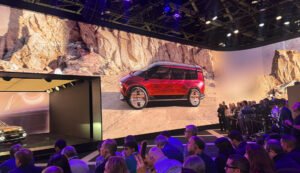
On the opposite end of the Renault spectrum is the new E-Space Concept, a vehicle that takes a completely different approach to electrification.Where the Turbo 3E is designed to excite the driver, the E-Space Concept focuses on the experience of everyone inside the vehicle.The concept revisits the philosophy of the original Renault Espace, introduced in 1984, which helped redefine family transportation in Europe.
The design is striking.
Its tall, almost monolithic silhouette combines the proportions of a traditional people carrier with futuristic styling more commonly associated with concept vehicles.Finished in a vibrant red color with a contrasting dark roof, the E-Space features a large panoramic windshield, dramatic oversized wheels, sculpted body panels and distinctive lighting elements.At the front, an illuminated Renault diamond sits between horizontal LED lighting elements, creating a futuristic digital appearance.The blacked-out glass surfaces wrap around the cabin, giving the vehicle a floating-roof effect, while the unusually short front overhang and upright proportions emphasize interior space.
Measuring approximately 4.7 meters in length, the concept features six individual seats, with a strong focus on passenger comfort, flexibility and practicality.The idea is simple: rather than treating the car purely as transportation, Renault wants it to become an extension of everyday living.Although the E-Space Concept is not currently confirmed for production, it provides an interesting indication of how Renault imagines future electric family vehicles.
Renault Becomes Europe’s Second Best-Selling Automotive Brand
Beyond the exciting vehicles on display, Renault arrives at its home motor show with strong commercial momentum.According to the company’s first-half 2026 results, Renault ranks as Europe’s second best-selling automotive brand when passenger cars and light commercial vehicles are combined.More importantly, the company’s electrification strategy is already delivering measurable results.In Europe, approximately two out of every three Renault passenger cars sold during the first half of 2026 were electrified, representing 66.3% of sales.
However, this figure includes both fully electric vehicles and hybrids, with pure battery-electric vehicles accounting for approximately 26.6% of Renault’s European passenger-car sales.Models such as the Renault 5 E-Tech, Renault 4 E-Tech and Scenic E-Tech have played an important role in accelerating the transition.These figures demonstrate that Renault’s transformation is not limited to futuristic concepts or ambitious announcements. Customers are already responding to its growing range of electrified vehicles.
More Than Renault: Dacia and Alpine Strengthen the Group
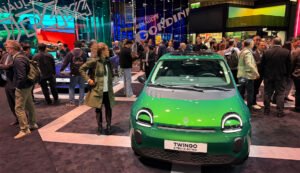
Renault’s presence at the Paris Motor Show extends beyond vehicles carrying the Renault badge.The Renault Group also owns Dacia and Alpine, two manufacturers with very different identities and target audiences.Dacia continues to focus on affordable, practical mobility, offering vehicles that prioritize value and everyday usability.Alpine, meanwhile, represents the group’s sporting ambitions, combining French performance heritage with an increasingly electrified future.Together, the three brands allow Renault Group to compete across multiple segments, from accessible family vehicles to exclusive high-performance machines.At the 2026 Paris Motor Show, the group is presenting approximately 50 vehicles, concepts and demonstrators across its stands, highlighting the scale of its ambitions.
What Does Renault’s Electric Future Mean for the Middle East?
While Renault’s latest innovations are making headlines in Paris, their significance extends well beyond Europe, particularly to the Middle East, where the automotive industry is undergoing a major transformation.Markets such as the UAE and Saudi Arabia are investing heavily in electric mobility, charging infrastructure and sustainable transportation.However, consumer preferences in the region remain different from those in Europe.SUVs, larger vehicles and traditional combustion engines continue to play an important role, while extreme summer temperatures, long-distance driving and charging convenience remain important considerations for customers evaluating electric vehicles.
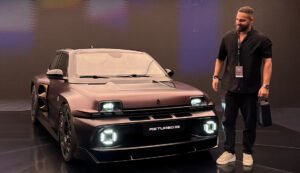
For Renault, this creates both an opportunity and a challenge.The Renault 5 Turbo 3E could appeal to the growing community of collectors and performance enthusiasts in the Gulf, where limited-production vehicles, distinctive designs and powerful sports cars have always attracted considerable interest.With 555 horsepower, an exclusive production run and styling inspired by a legendary performance car, the Turbo 3E represents a different kind of electric vehicle, one designed around excitement and exclusivity rather than simply efficiency.
Meanwhile, the futuristic E-Space Concept offers a glimpse of something potentially more relevant to Middle Eastern families: spacious, technology-focused electric vehicles designed around comfort, practicality and everyday usability.Its six-seat configuration, futuristic cabin and emphasis on passenger experience could resonate with buyers who want the benefits of electrification without sacrificing interior space.Nevertheless, neither vehicle’s appearance in Paris should be interpreted as confirmation of its arrival in Middle Eastern showrooms.
Perhaps Renault’s biggest opportunity lies in bringing its successful European electrification strategy to the region while adapting its products to local driving conditions, customer expectations and infrastructure.With Renault Group also operating Dacia and Alpine, the company has the potential to serve different segments of the regional market, from affordable mobility to premium performance vehicles.From our perspective at GearsMe, Renault’s challenge in the Middle East is not simply to introduce more electric cars. It is to convince customers that electrification can deliver the performance, practicality, reliability and value they already expect from conventional vehicles.The technology is clearly moving forward. The next question is how quickly Renault will bring these innovations to our roads.
A French Manufacturer Looking Confidently Toward the Future
What makes Renault’s presence at this year’s Paris Motor Show particularly interesting is the contrast between its two headline vehicles.The Renault 5 Turbo 3E is aggressive in appearance, extreme in engineering and deliberately emotional.The E-Space Concept, meanwhile, is about space, practicality and imagining how people will travel together in the coming decades.
Yet both vehicles share something important: a clear connection to Renault’s history.Rather than abandoning its identity to embrace electrification, the French manufacturer is finding new ways to reinterpret the vehicles that helped establish its reputation.Renault is also demonstrating that there is no single formula for the future of the automobile. Some customers will prioritize efficiency and practicality, while others will continue to seek performance, individuality and driving excitement.From the show floor in Paris, Renault’s message is clear.
The future may be electric, but it doesn’t have to be boring.GearsMe is covering the 2026 Paris Motor Show live, bringing you the latest vehicle reveals, exclusive interviews and automotive innovations directly from the French capital.