


The Ferrari 296 Challenge Stradale is the most race-focused road car in Ferrari’s current line-up. In fact, Ferrari revealed it on 21 November 2026 at the Finali Mondiali in Montmeló, Spain. Next to it stood the new 296 Challenge Evo, the race car for the 2027 Ferrari Challenge season. Better still, GearsME was there for the unveiling, so we brought back our own photos alongside Ferrari’s official gallery.
Both cars share one idea. Above all, Ferrari wants to show how closely its race cars and road cars now work together. So the road car borrows parts and logic from the track car. In return, the track car gains new aero and electronics for 2027. Below, you will find everything you need to know, from specs and downforce to the new Ferrari Challenge Middle East series.
Ferrari 296 Challenge Stradale at a Glance
Ferrari 296 Challenge Stradale and 296 Challenge Evo: key facts
- Engine: 2,992 cc 120° twin-turbo V6 with no hybrid system
- Power: 670 hp (Stradale) and 700 hp (Challenge Evo)
- Dry weight: 1,330 kg for both cars, 140 kg less than the 296 GTB
- Downforce: 617 kg at 250 km/h on the Stradale, 72% more than the 296 GTB
- Challenge Evo: 12% more peak downforce, 4% less drag in Low Drag trim and 0.8 s faster at Mugello
- Debut: the 296 Challenge Evo races from the 2027 season
In this article
- The reveal at Finali Mondiali 2026
- Ferrari 296 Challenge Stradale vs 296 Challenge Evo specs
- Engine and gearbox
- Aerodynamics and downforce
- Vehicle dynamics and brakes
- Design, interior and options
- 296 Challenge Evo for 2027
- Ferrari Challenge Middle East
- Ferrari Challenge cars since 1993
- Full technical specifications
- FAQ
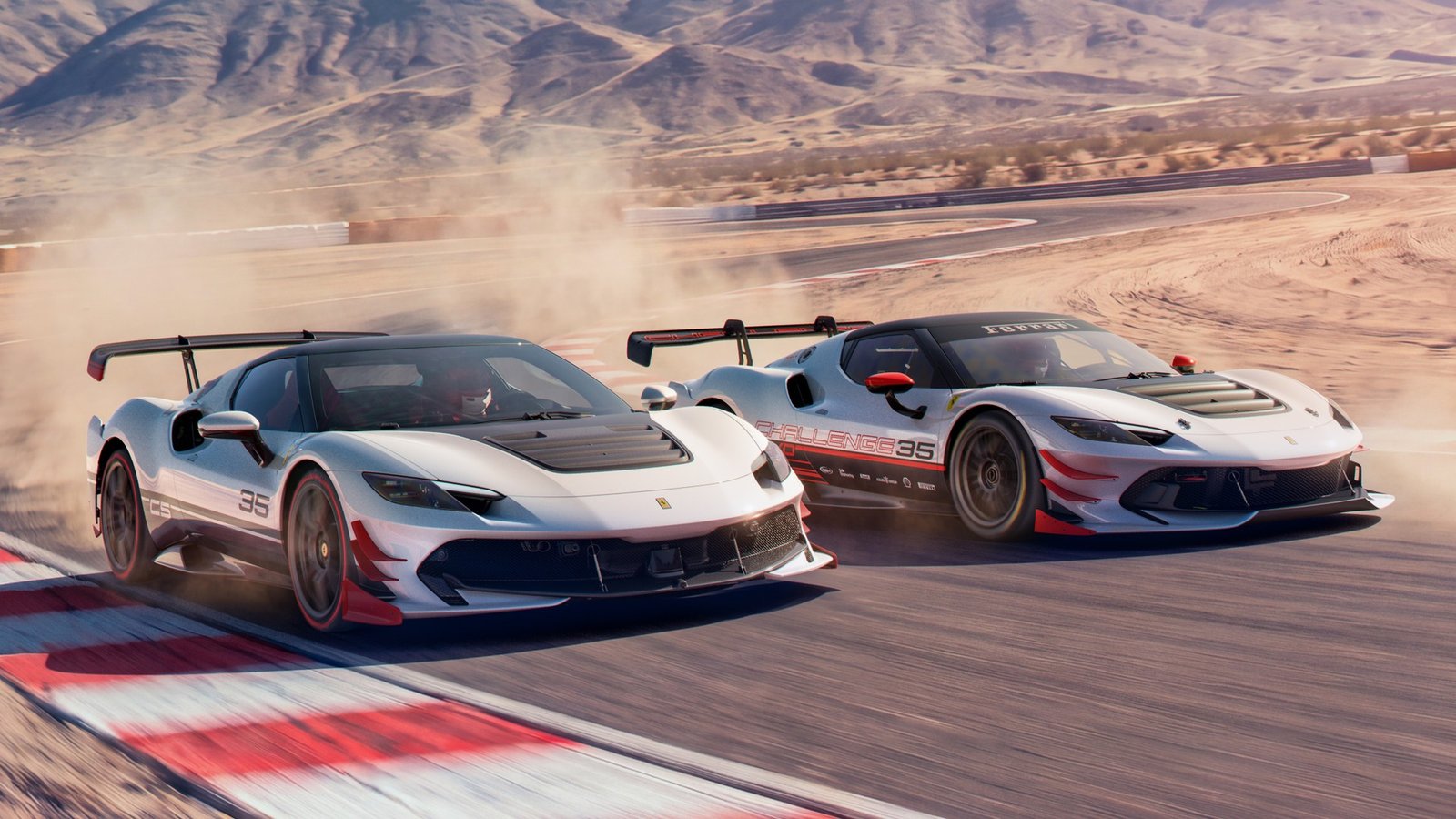
The Ferrari 296 Challenge Stradale Reveal at Finali Mondiali 2026
For the launch, Ferrari chose the Circuit de Barcelona-Catalunya. The Finali Mondiali closes the Prancing Horse’s racing season every year. Each year, it brings Ferrari Challenge drivers, XX Program cars and client track programs onto one circuit. As a result, it is the perfect stage for two cars that link road and track.
On stage, the white and red Challenge cars drew a huge crowd. In fact, the most striking details were easy to see up close. For example, we spotted the exposed carbon, the louvered bonnet, the giant rear wing and the race-car switch panel. So, here are our own photos from the night.
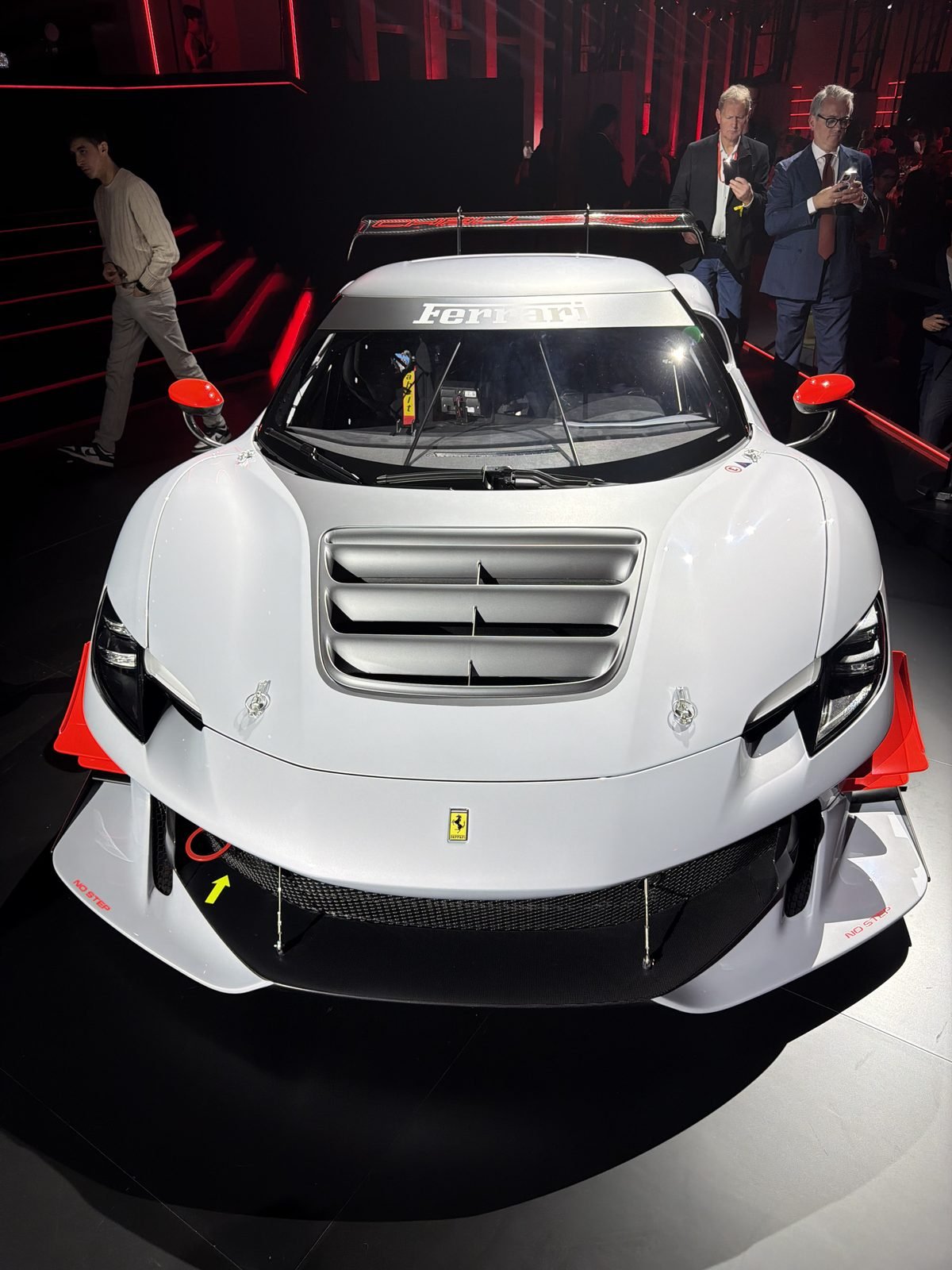
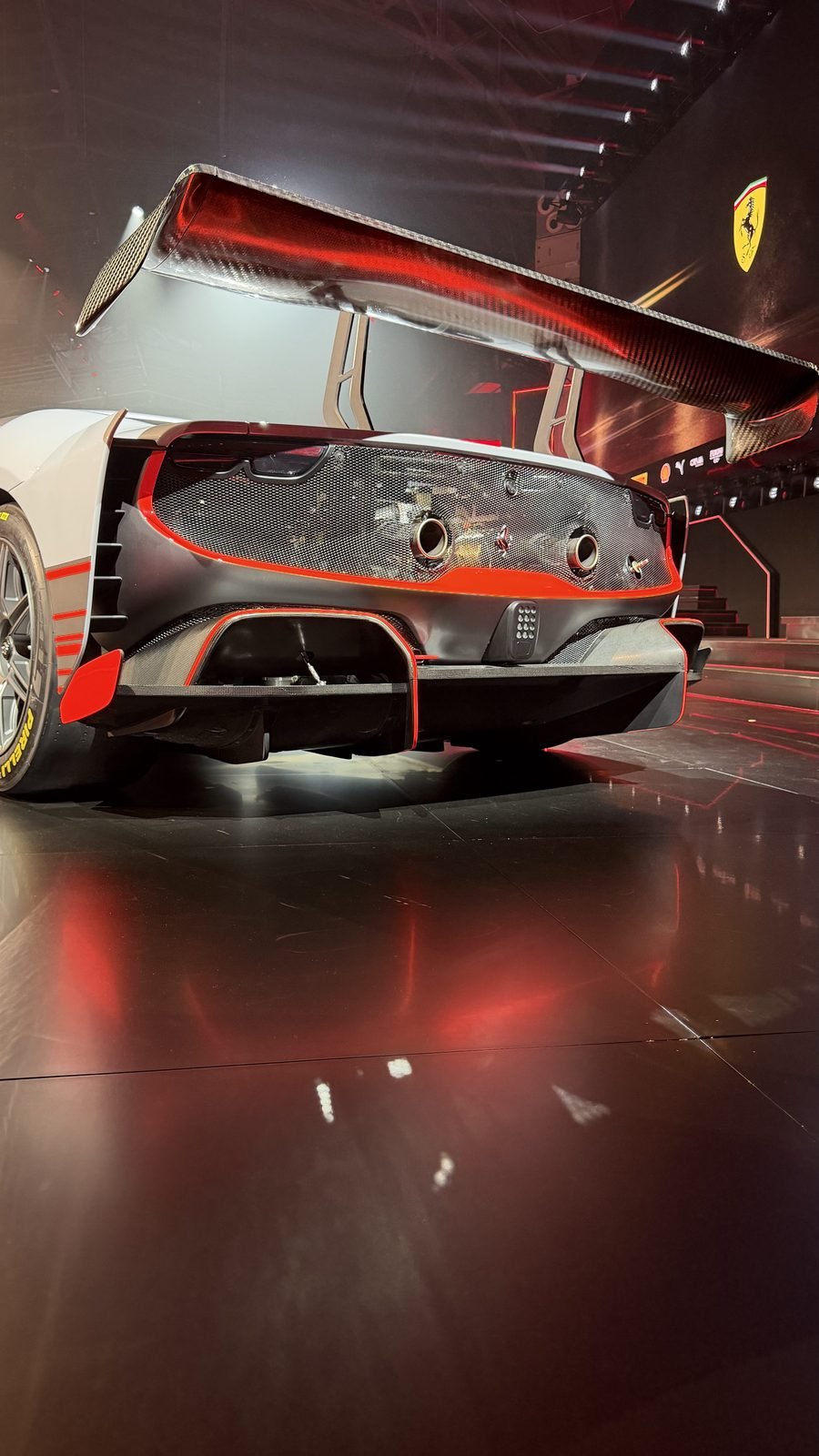
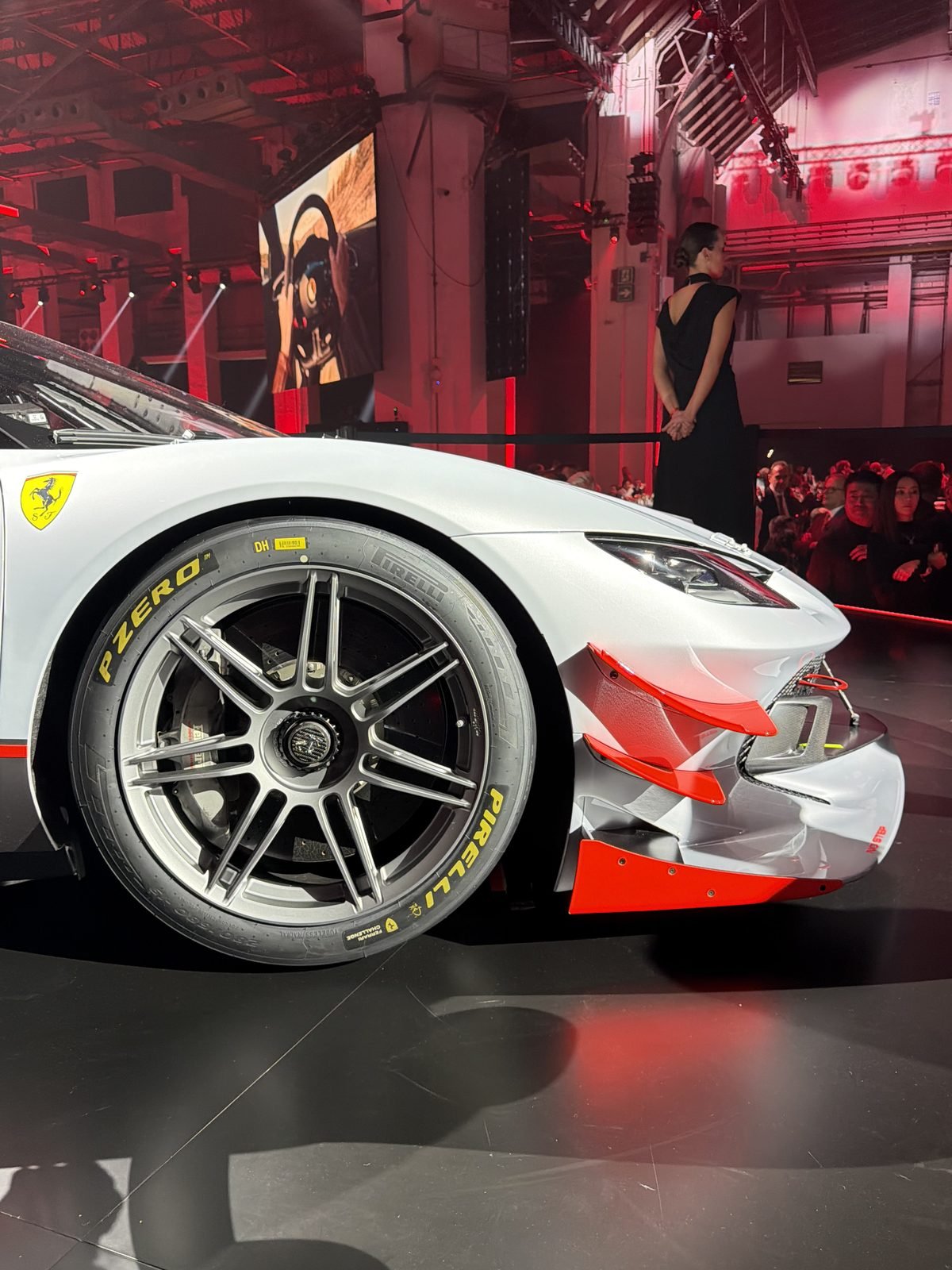
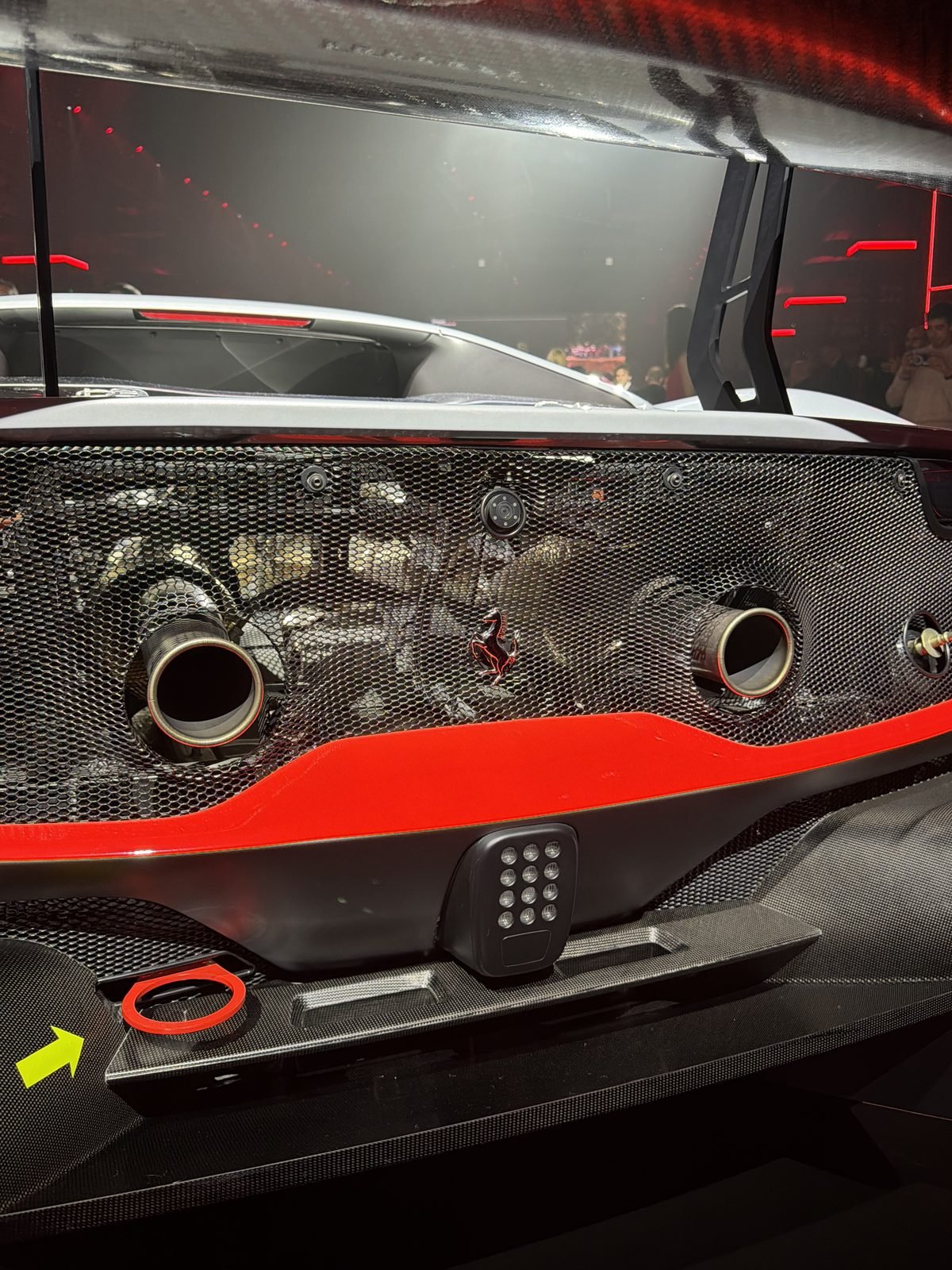

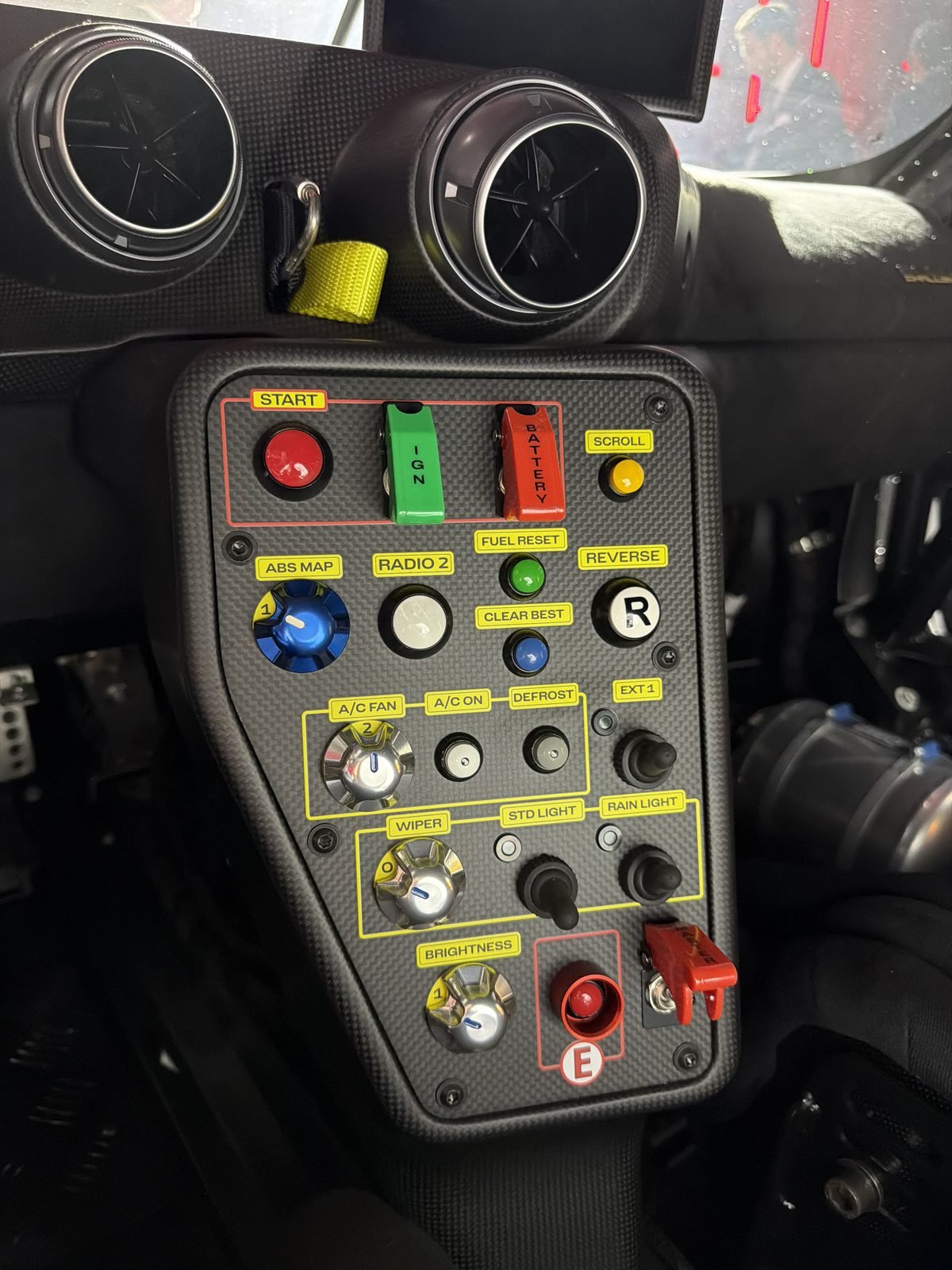
Photos: GearsME at the 2026 Ferrari Finali Mondiali
Ferrari 296 Challenge Stradale vs 296 Challenge Evo: Key Specs Compared
First, the two cars share the same engine family and the same dry weight. However, their missions differ. For instance, the Stradale must pass type approval and work on public roads. Meanwhile, the Challenge Evo exists purely to win races.
| Specification | 296 Challenge Stradale | 296 Challenge Evo |
|---|---|---|
| Engine | 2,992 cc 120° twin-turbo V6 | 2,992 cc 120° twin-turbo V6 |
| Hybrid system | None | None |
| Peak power | 670 hp at 8,000 rpm | 700 hp at 7,500 rpm |
| Torque | 740 Nm at 6,250 rpm | 740 Nm at 6,000 rpm |
| Specific output | 224 hp/l | 234 hp/l |
| Gearbox | 8-speed F1 dual-clutch | 7-speed F1 dual-clutch |
| Dry weight | 1,330 kg | 1,330 kg |
| Length / width / height | 4,678 / 2,039 / 1,301 mm | 4,795 / 1,958 / 1,159 mm |
| Wheelbase | 2,600 mm | 2,600 mm |
| Tires | Pirelli P Zero R / P Zero Trofeo RS, 20-inch | Pirelli slicks, 19-inch |
| Front brake discs | 398 x 38 mm carbon-ceramic | 408 x 38 mm |
| Use | Road-legal, track-focused | Ferrari Challenge Trofeo Pirelli |
Power output: 296 Challenge Stradale vs 296 Challenge Evo
Maximum power in hp, plus specific output per liter
Specific output: 224 hp/l (Stradale) and 234 hp/l (Challenge Evo). Source: Ferrari press kit.
Ferrari 296 Challenge Stradale Engine: a Twin-Turbo V6 Without Hybrid
The engine keeps the 120° “hot-V” layout that debuted on the 296 GTB. However, Ferrari removed the hybrid system completely. As a result, that choice cuts weight and complexity. It also creates a purer link between the driver’s right foot, the engine and the rear wheels.
In the Stradale, the V6 makes 670 hp at 8,000 rpm and revs to 8,500 rpm. Also, Ferrari reworked the calibration for stronger low-end torque and faster turbo response. Thus, for the same maneuver, dynamic torque rises by more than 32% over the 296 GTB. In addition, a statistical knock-control strategy from Formula 1 lets the engine use its full potential on every cycle.
The turbos and their heat shields come straight from the 296 Challenge race car. Similarly, the exhaust uses larger twin tailpipes, which lower back pressure and boost the V6’s higher notes. Ferrari also offers a track-only exhaust that dealers can fit and remove.
Gearbox and shift times
The eight-speed F1 dual-clutch gearbox runs a dual strategy. First, at high load and high revs, it uses race logic from the 296 Challenge, with shifts of about 170 ms. Then, at low and medium revs, a calmer sports logic from the SF90 XX Stradale shifts in about 250 ms.
A first for a Ferrari road car
Because there is no hybrid unit, Ferrari had to engineer new parts. For example, the car uses a mechanical air-conditioning compressor. It also gets a Belt Starter Generator that acts as both starter and alternator. Ferrari says this is an absolute first for one of its road cars.
Ferrari 296 Challenge Stradale Aerodynamics: 617 kg of Downforce
Aerodynamics form the strongest link between the two cars. The Stradale generates 617 kg of downforce at 250 km/h. In other words, that is 72% more than the 296 GTB. To get there, Ferrari uses a fixed rear wing, a large splitter and flicks. It also adds an aero damper, vortex generators and a fully closed underbody.
Downforce at 250 km/h: Ferrari 296 Challenge Stradale vs 296 GTB
Kilograms of downforce at 250 km/h
Note: the 296 GTB value is derived from Ferrari’s stated +72% gain. Source: Ferrari press kit.
The fixed rear wing comes directly from the 296 Challenge Evo. Indeed, on its own, it makes 270 kg of downforce at 250 km/h. Meanwhile, aircraft-style end plates control the airflow at the wingtips and improve efficiency. Furthermore, up front, the splitter grows in both width and length to add suction under the car.
Cooling is part of the aero plan too. First, two water radiators and two condensers sit ahead of the front wheels. Ducts then send the hot air out through the bonnet louver and over the roof. As a result, the hot air stays away from the main aero surfaces and the climate intakes.
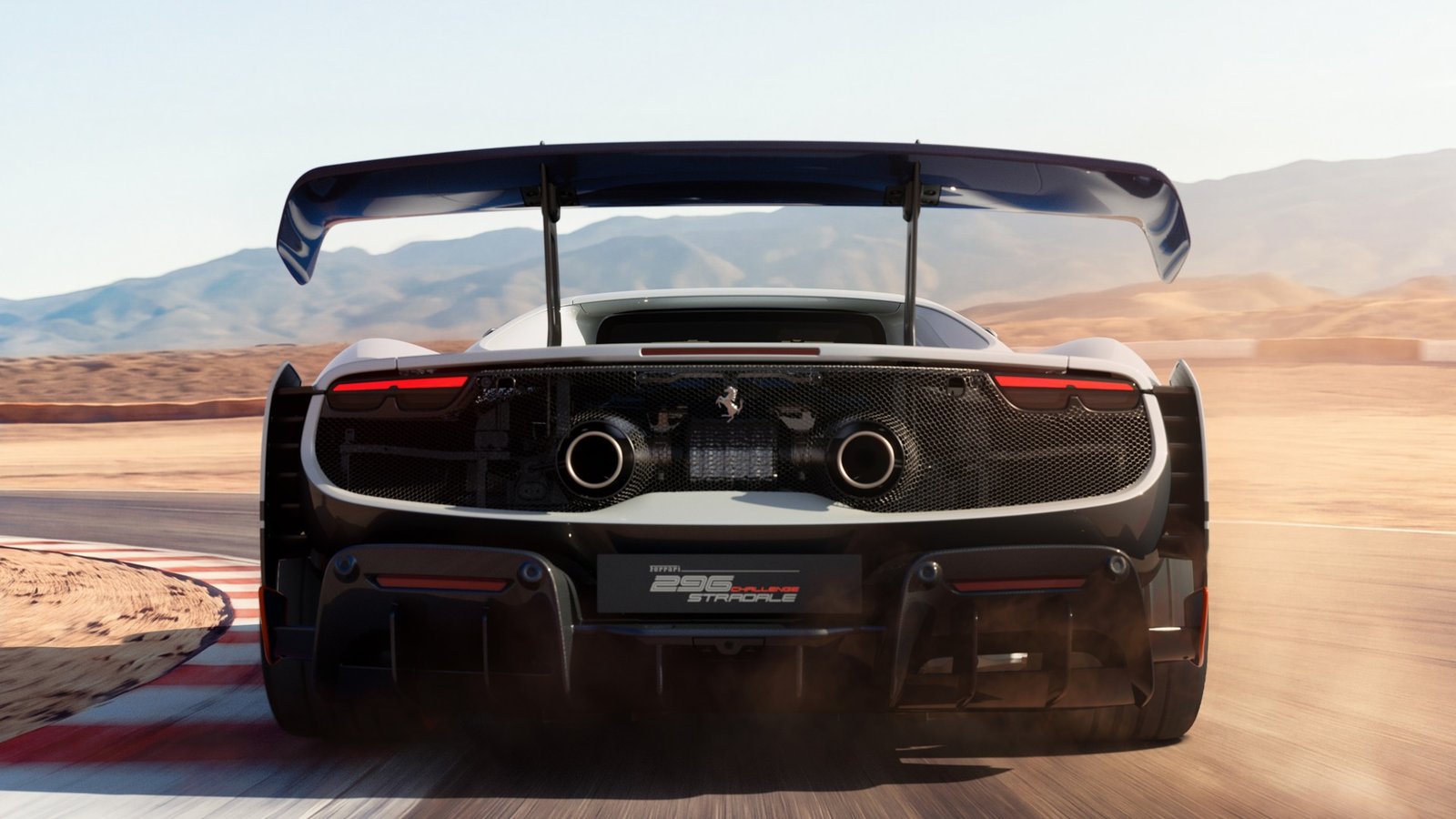
Development took thousands of hours of CFD work and hundreds of hours in the wind tunnel. Ultimately, Ferrari’s goal was a smooth, progressive aero balance through every phase of a corner.
Ferrari 296 Challenge Stradale Handling, Brakes and Electronics
Ferrari developed the dynamics with race-car methods. The suspension uses specific spring rates, new kinematics and unique semi-active damper settings. The springs are roughly twice as stiff as before. Therefore, Ferrari added a race-style helper spring taken from the 296 Challenge Evo.
Ferrari 296 Challenge Stradale: gains over the 296 GTB
Percentage change claimed by Ferrari
Source: Ferrari press kit. Weight change calculated from 1,330 kg vs 1,470 kg.
The electronics also take a step up. For instance, predictive slip control makes its debut on a Ferrari road car. The FIVE vehicle estimator from the F80 also helps the car hold its stability targets. In addition, ABS Evo works in every grip condition and in every Manettino mode.
| Mode | What it does |
|---|---|
| Wet | Standard ABS Evo and EBD calibration for low grip |
| Sport | Standard ABS; semi-active dampers switch to a performance setting |
| Race | High-performance ABS Evo logic for track use |
| CT-Off | Traction control off; stability aids still active |
| ESC Off | Full deactivation of the stability systems |
Braking hardware matches the pace. The front axle uses 398 x 38 mm carbon-ceramic discs and Aero calipers. Meanwhile, the rear uses 380 x 34 mm discs with larger pads. Ferrari also tuned the pedal to feel like the 296 Challenge Evo at high deceleration.
In addition, Pirelli developed P Zero R and P Zero Trofeo RS semi-slick tires for this car. Moreover, Pirelli Color Edition lets owners add colored tire inserts.
Ferrari 296 Challenge Stradale Design, Interior and Options
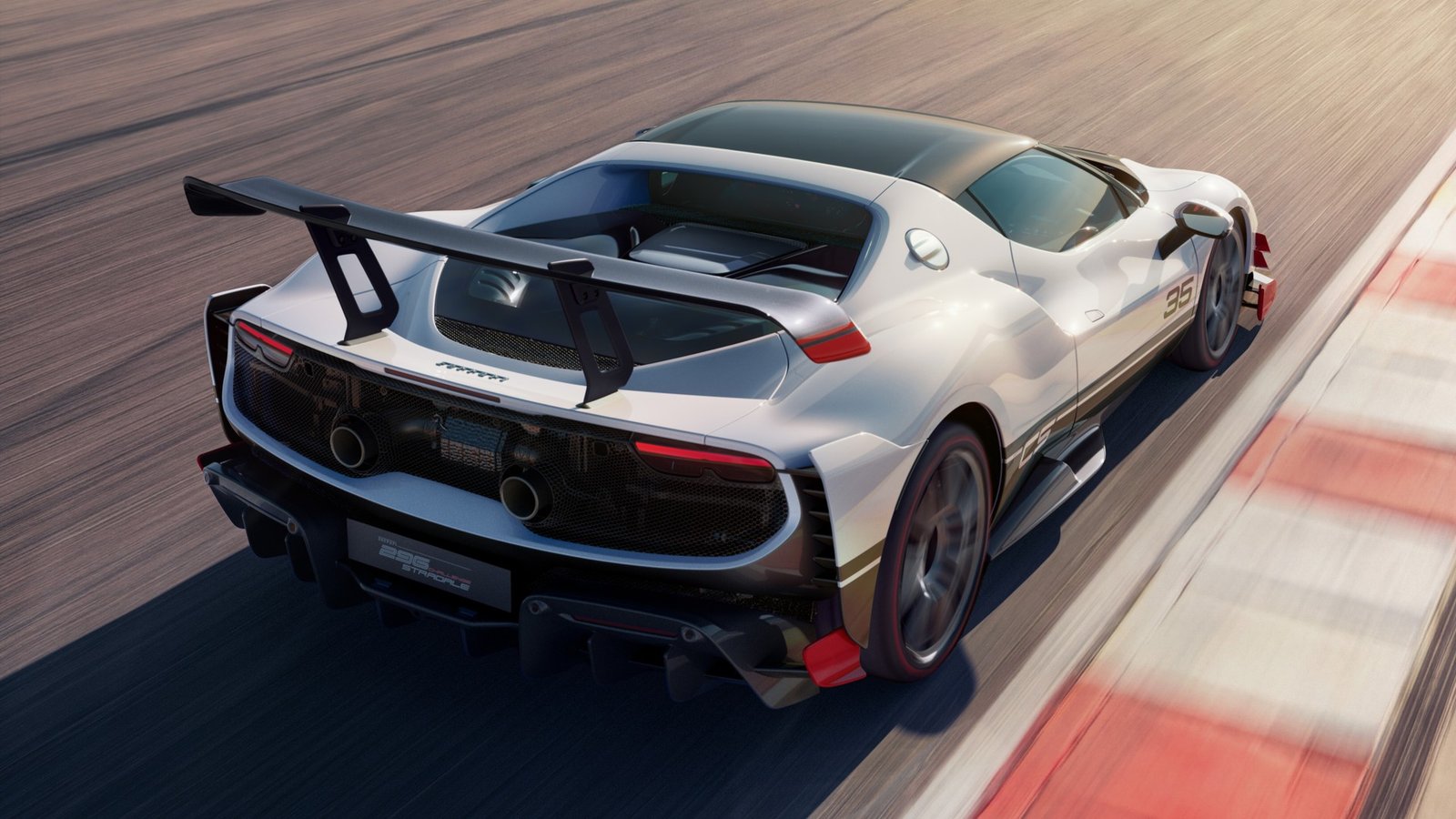
The Ferrari Design Studio, led by Flavio Manzoni, stripped the bodywork back to its function. The bonnet carries a large technical insert for the radiator outlet. Just below it, a wing hangs between two body-colored “claws”, just like on the Challenge Evo. Finally, at the rear, a black metal mesh shows off the mechanical parts and the exhaust tips.

Inside, the cabin follows the 296 GTB layout but can go much further. For example, the door panel is a single carbon-fiber part with no armrest or pocket. For the first time on a production Ferrari, an option removes trim under the seats and console. Consequently, parts of the chassis stay visible, just like in a race car.
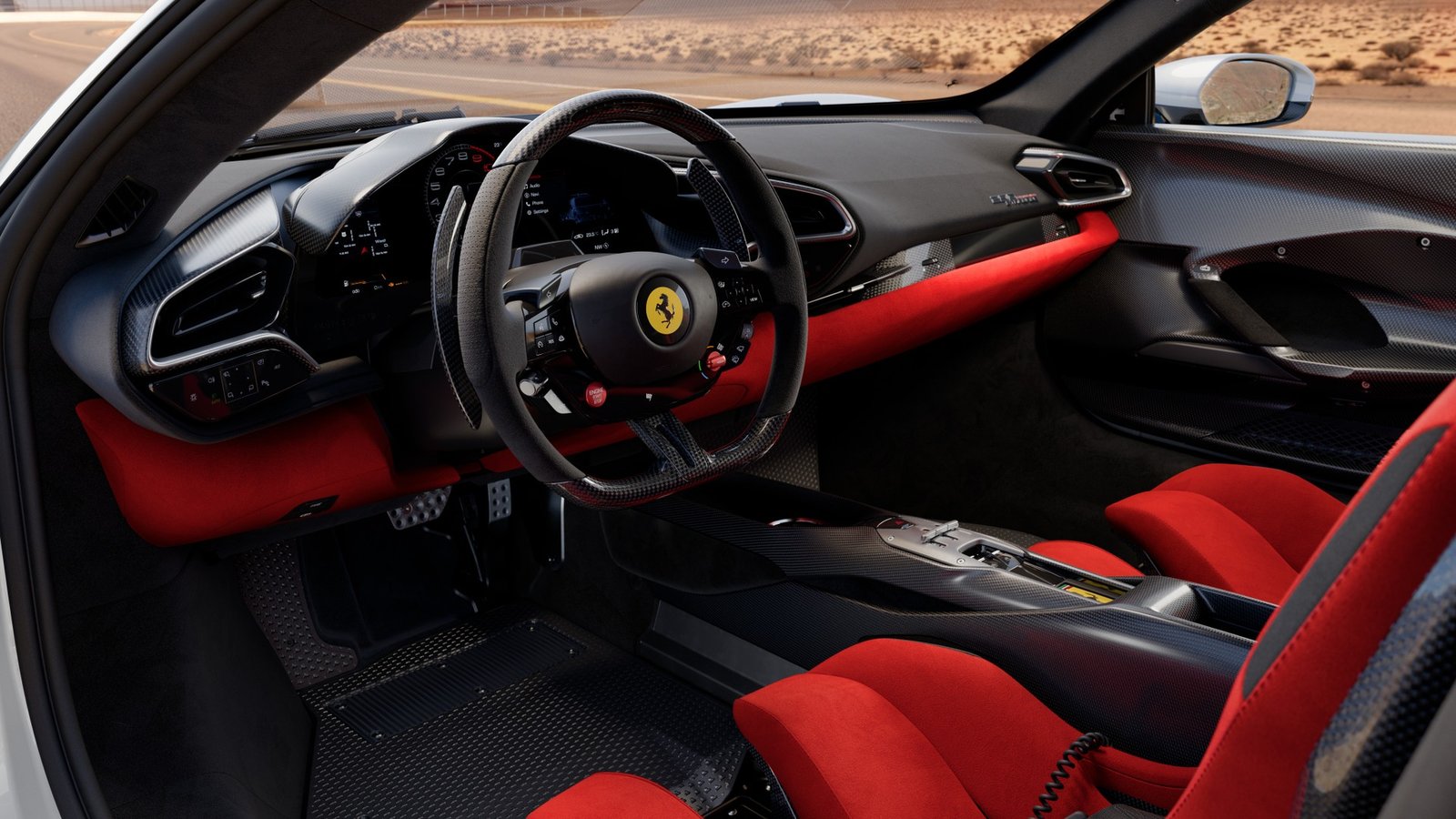
| Option | Benefit |
|---|---|
| Carbon-fiber bonnet trim | Saves 0.7 kg |
| Forged seven twin-spoke wheels | Cut wheel weight by about 11.9 kg |
| Carbon-fiber tubular seats (from SF90 XX Stradale) | 25% lighter than standard racing seats |
| Monolithic aluminium rear tunnel | Black three-lobed footrests for both occupants |
| Exposed-chassis cockpit pack | Removes trim under seats, carpets and console |
| Livery | Bonnet badge, roof graphics and side stripe |
| Alcantara colors | Nero, Charcoal, Rosso, Azzurro Dino, Giallo Modena, Blu Elettrico, Rosso Dino |
Also, wheel finishes include Matte Grigio Corsa, Matte Nero with a diamond-cut finish and Matte Bianco Fuji. Ferrari’s seven-year Genuine Maintenance program also covers the car.
Ferrari 296 Challenge Stradale performance figures
| Metric | Figure |
|---|---|
| Top speed | > 300 km/h |
| 0–100 km/h | 2.8 s |
| 0–200 km/h | 7.9 s |
| 200–0 km/h braking | 101 m |
| Dry weight-to-power ratio | 1.98 kg/hp |
| Fiorano lap time | 1’18″500 |
Ferrari 296 Challenge Evo: Built for the 2027 Season
The 296 Challenge Evo is the tenth car in Ferrari Challenge history. It builds on the 296 Challenge, which has raced since 2024. That car was the first in the series to use a V6, and it set a new downforce benchmark.
For 2027, Ferrari focused on aero, dynamics and a wider operating window. As a result, the car is faster, more consistent and easier to drive at the limit. In fact, in High Downforce trim, it laps Mugello 0.8 seconds quicker than the 296 Challenge.
| Configuration | Key changes | Best suited to |
|---|---|---|
| High Downforce (HD) | +12% peak downforce vs 296 Challenge (+100 kg at 250 km/h) | Technical circuits such as Mugello |
| Low Drag (LD) | Removes two flicks and one lip; lower wing angle; −4% drag | Very high-speed circuits |
| Rear ride height +10 mm | About 30 kg extra downforce at 250 km/h | Fine-tuning the balance |
| Rear wing range | Max angle +4°, min angle −1° vs 296 Challenge | Wider set-up window |
Ferrari also updated the electronics. First, two separate traction-control dials, TC1 and TC2, each offer five levels. Meanwhile, ABS has four settings for wet and dry conditions. Next, a revised eDiff adds stability under braking and more agility in fast corners. Finally, a new display shows TC and ABS intervention with filling icons that are easy to read at speed.
Options include a removable passenger seat for coaching and an LTE antenna for Race Control messages. However, that antenna becomes mandatory in the Ferrari Challenge Trofeo Pirelli. A silencer is also available for circuits with noise limits.
Ferrari Challenge 2027 and the New Middle East Series
This is big news for GearsME readers. That is because Ferrari is adding a Ferrari Challenge Middle East series to its regional calendar. The first round takes place in Bahrain on 11–12 December 2026. After that, rounds in Qatar, Saudi Arabia and Abu Dhabi follow in early 2027.
| Round | Country | Date |
|---|---|---|
| 1 | Bahrain | 11–12 December 2026 |
| 2 | Qatar | January 2027 |
| 3 | Saudi Arabia | January 2027 |
| 4 | Abu Dhabi (UAE) | March 2027 |
In 2027, the 296 Challenge Evo will race only in the Europe and North America series. However, the regional series, including the Middle East, will get the Evo from 2028. In addition, the European series adds 40-minute Endurance races at Mugello, Hockenheim and Valencia. Also, two drivers can share a car, and each race includes a mandatory pit stop.
If you follow endurance racing, read our look at why endurance racing is entering a new era.
Every Ferrari Challenge Car Since 1993
The single-make series reaches its 35th season in 2027. Over that time, ten models have carried the Challenge name. So, the chart below shows how long each one raced.
Ferrari Challenge models: seasons raced
Approximate number of seasons in the series
Source: Ferrari press kit model list, 1993 to present.
Ferrari 296 Challenge Stradale and 296 Challenge Evo: Full Technical Specifications
| Item | Specification |
|---|---|
| Engine type | V6, 120°, turbo, dry sump |
| Displacement | 2,992 cc |
| Bore x stroke | 88 x 82 mm |
| Peak power | 670 hp at 8,000 rpm |
| Torque | 740 Nm at 6,250 rpm |
| Rev limit | 8,500 rpm |
| Compression ratio | 9.4:1 |
| Length / width / height | 4,678 / 2,039 / 1,301 mm |
| Front / rear track | 1,678 / 1,654 mm |
| Dry weight | 1,330 kg (with options) |
| Weight distribution | 41.5% front / 58.5% rear |
| Front luggage / rear bench | 67 l / 88 l |
| Fuel tank | 64.5 l |
| Tires | 245/35 R20 front, 305/35 R20 rear |
| Brakes | CCM 398 x 38 mm front, 380 x 34 mm rear |
| Electronics | SSC 9.0 (TC, eDiff, SCM, FDE 2.0, EPS), ABS Evo/EBD |
| WLTP fuel and CO2 | Pending certification |
Next, here are the full figures for the race car.
| Item | Specification |
|---|---|
| Engine type | V6, 120°, turbo, dry sump |
| Displacement | 2,992 cc |
| Peak power | 700 hp at 7,500 rpm |
| Torque | 740 Nm at 6,000 rpm |
| Specific output | 234 hp/l |
| Gearbox | 7-speed F1 dual-clutch |
| Length / width / height | 4,795 / 1,958 / 1,159 mm |
| Front / rear track | 1,715 / 1,647 mm |
| Dry weight | 1,330 kg |
| Tires | 280/680 ZR19 front, 300/720 ZR19 rear |
| Brakes | 408 x 38 mm front, 390 x 32 mm rear |
| Electronics | TC/eDiff, EPS, ABS Evo/EBD |
Ferrari 296 Challenge Stradale: Frequently Asked Questions
How much power does the Ferrari 296 Challenge Stradale have?
It makes 670 hp at 8,000 rpm and 740 Nm of torque from a 2,992 cc twin-turbo V6. Also, there is no hybrid system.
Is the Ferrari 296 Challenge Stradale a hybrid?
No, it is not. Unlike the 296 GTB, both the Stradale and the Challenge Evo use the V6 alone, which saves weight and complexity.
How fast is the Ferrari 296 Challenge Stradale?
Ferrari quotes 0–100 km/h in 2.8 seconds, 0–200 km/h in 7.9 seconds and a top speed above 300 km/h. Plus, it laps Fiorano in 1’18″5.
What is the difference between the 296 Challenge Stradale and the 296 Challenge Evo?
The Stradale is a road-legal car with an 8-speed gearbox and 670 hp. However, the Challenge Evo is a pure race car with 700 hp and a 7-speed gearbox. It also has adjustable aero for the Ferrari Challenge.
When will the 296 Challenge Evo race in the Middle East?
It races in Europe and North America in 2027. The regional series, including the new Middle East championship, get the car from 2028.
How much does the Ferrari 296 Challenge Stradale cost in the UAE?
Ferrari did not publish pricing in the launch press kit. Therefore, contact Ferrari Middle East dealers for regional prices and allocation.
GearsME Verdict
Seeing both cars in person made one thing clear. Simply put, the Ferrari 296 Challenge Stradale is not a softened race car or a hardened road car. Instead, it sits right between the two, with real race parts and real road manners. So, for buyers who want the closest thing to a Challenge car with a number plate, this is it.
Want more context? First, compare the base car in our Porsche 911 GT3 vs Ferrari 296 GTB test. You can also learn why the layout matters in Mid-Engine Supercars Explained. Finally, official images and documents are available on Ferrari Media.