
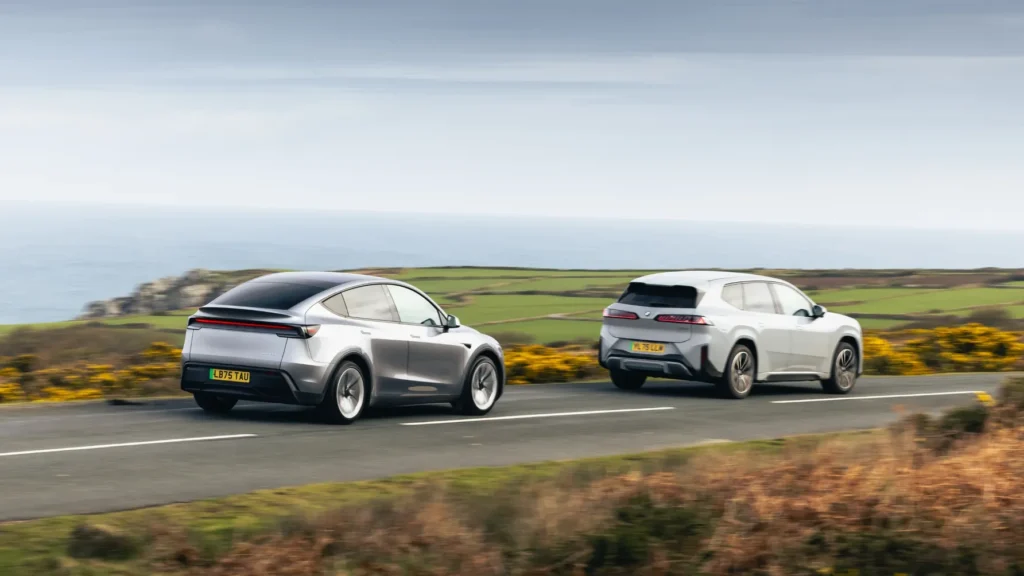

The Tesla Model Y vs BMW iX3 story begins at England’s most easterly mainland point and ends at its most westerly. Therefore, the challenge is covering 425 miles — approximately 685 kilometres on a single full charge with no top-ups on the route. Furthermore, this comparison represents a genuine real-world range test in actual road conditions rather than optimistic WLTP laboratory cycles. Based on this, Top Gear’s writers test the Tesla Model Y Long Range and the new-generation BMW iX3 in the most honest long-distance EV test of the year. So, this story deserves the complete treatment for every electric car enthusiast across the Middle East and Gulf. Ultimately, the numbers from the factory mean nothing — only the numbers at Land’s End matter here.
The Starting Numbers: Official Figures and Real-World Reality
Both cars arrive with very different specifications on paper. Therefore, the Tesla Model Y Long Range carries approximately 75kWh of battery capacity for an official range of 391 miles. Furthermore, the BMW iX3 brings a substantially larger 108kWh battery and an official range of 500 miles on what the Top Gear writer describes as “the endearingly fictional WLTP cycle.” Additionally, the mission logic is clear — BMW carries enough battery advantage that it theoretically could make the full distance while Tesla almost certainly cannot.
Based on this, the rules are firmly established before the first mile is driven. No hypermiling. No lorry drafting. No tricks. Consequently, calm sensible real-world driving — easy on the throttle, easy on the air conditioning — is the only permitted approach throughout the entire 425-mile route.
BMW iX3: Excellent Cabin With One Unforgivable Steering Wheel
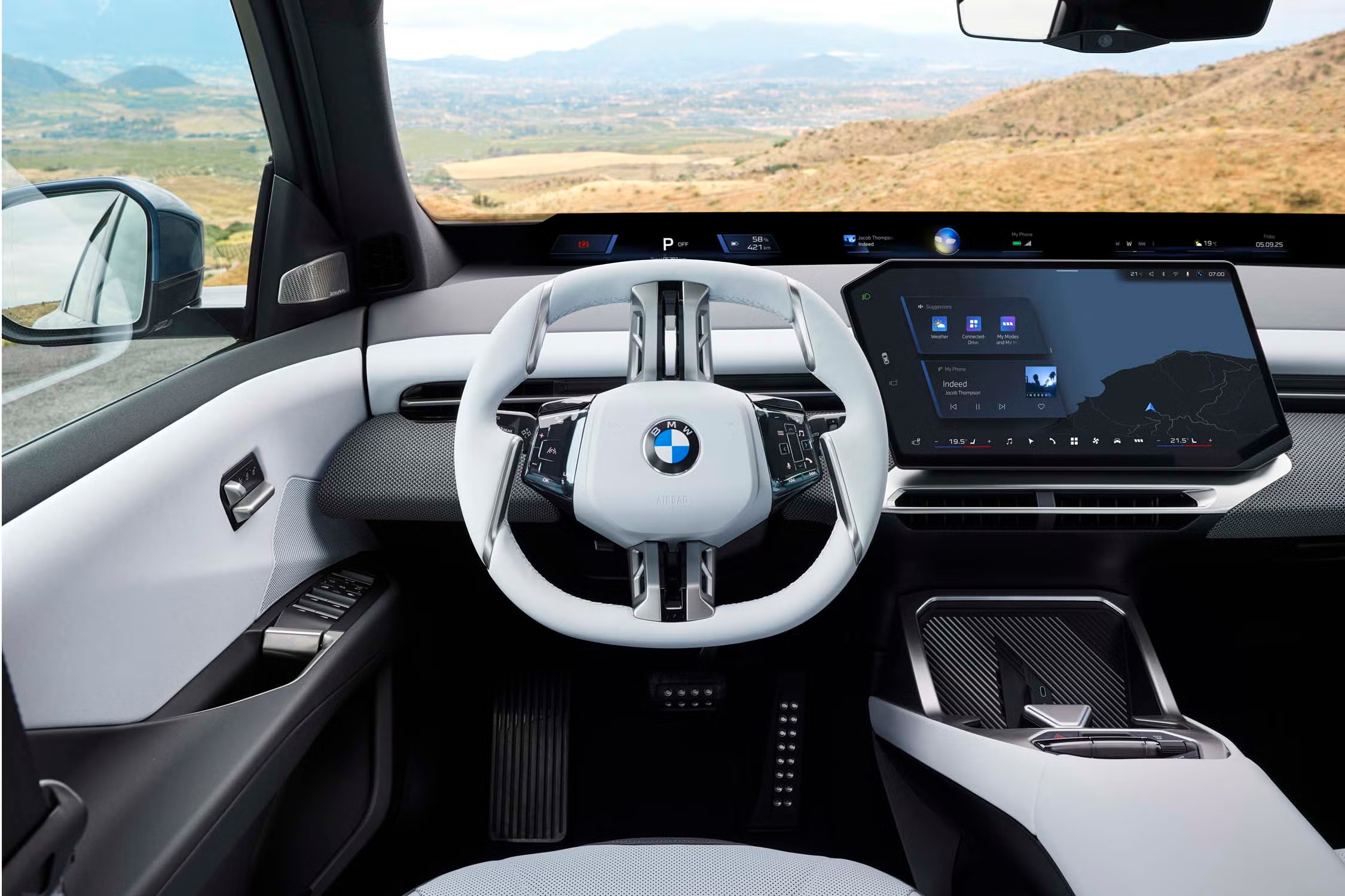
The BMW iX3 makes an immediately strong impression across its cabin comfort for long-distance travel. Therefore, the seats are deeply comfortable, the ADAS systems are subtle and unintrusive and the screen setup is significantly more logical than previous-generation BMW interfaces. Furthermore, the pillar-to-pillar Panoramic Vision display at the base of the windscreen works brilliantly — and entirely eliminates any need for a separate head-up display. Additionally, the iX3 has a head-up display as well. Nobody can explain why.
Based on this, the cabin’s single genuine problem is the steering wheel — described plainly as “an utter eyesore” that is extremely difficult to tell whether it points straight ahead or sits at 180 degrees of lock. Consequently, the Tesla Model Y vs BMW iX3 comparison reveals that BMW delivers a near-complete long-distance experience let down by one design detail that should not have survived any review process.
Tesla Model Y: Maximum Technology, Minimum Everything Else
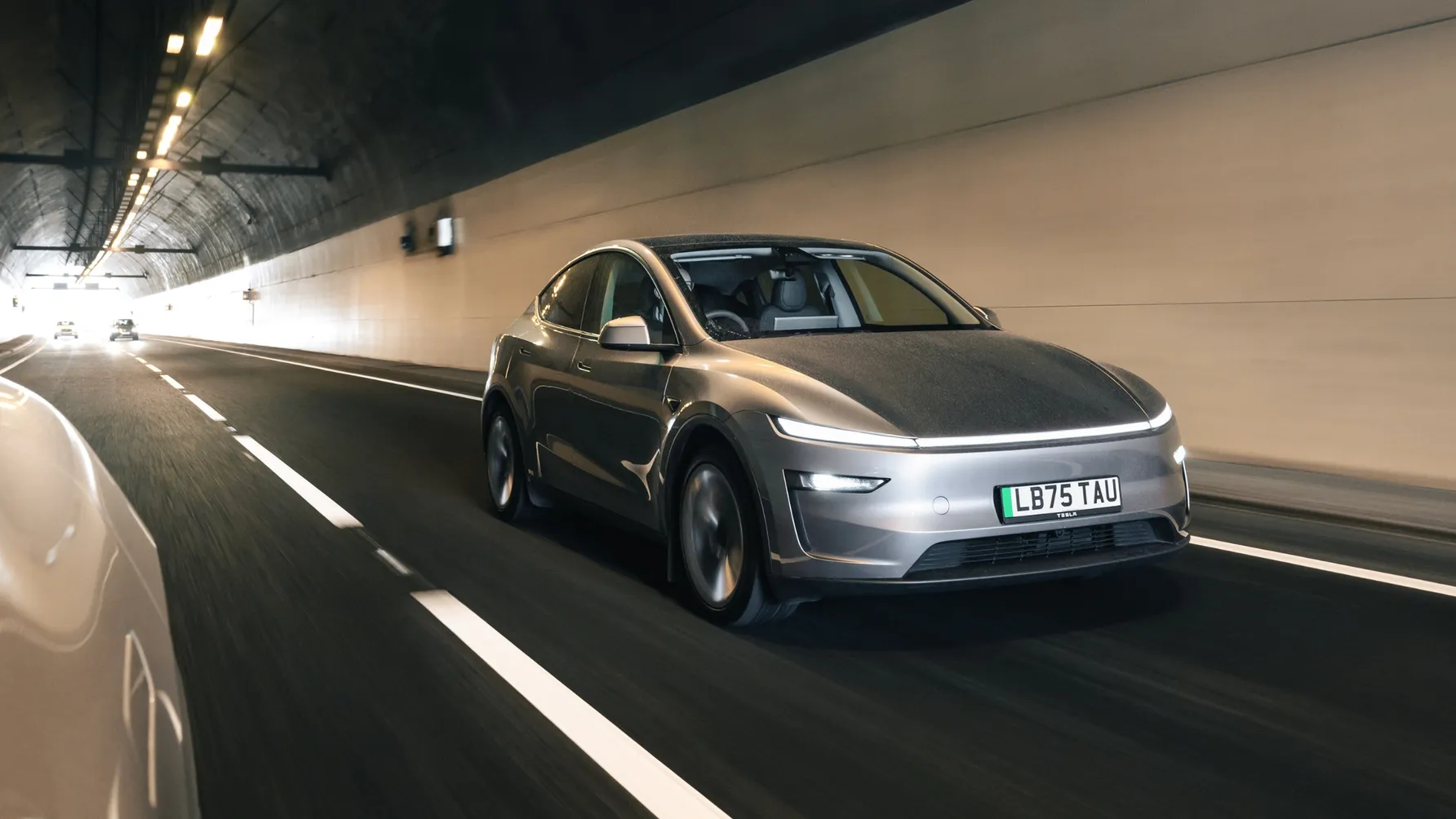
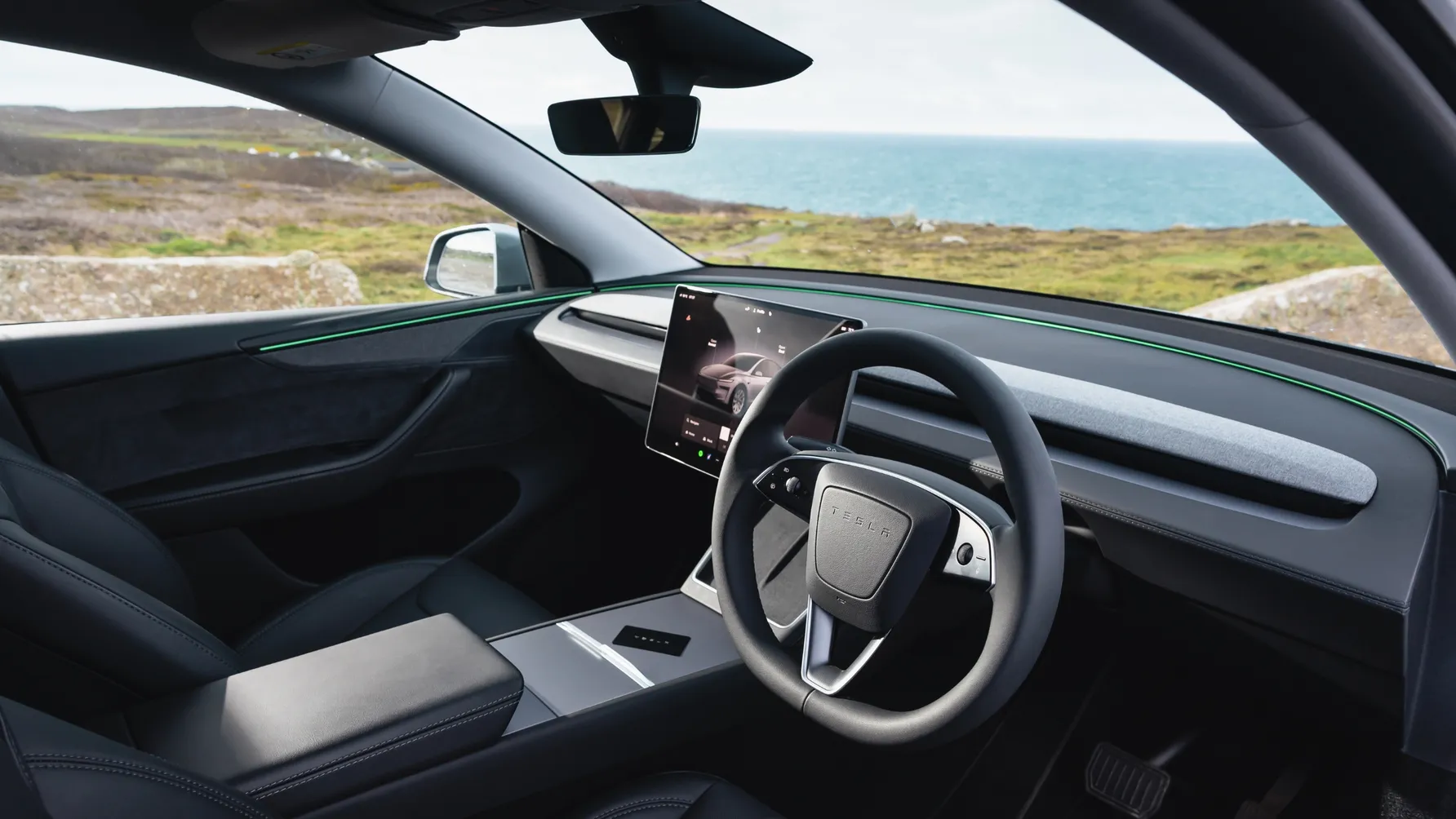
The Tesla Model Y disappoints with a tangible consistency throughout the Tesla Model Y vs BMW iX3 test. Therefore, a cabin priced at £58,000 consists primarily of a large screen and a great deal of empty space that its maker calls elegant minimalism. Furthermore, the absence of Android Auto and Apple CarPlay represents a genuine dealbreaker for anyone accustomed to seamless smartphone integration as a daily essential. Additionally, placing the gear selector on the touchscreen represents a decision so bold in its inconvenience that it crosses from innovation into inconvenience without stopping.
Based on this, Tesla delivers a digital answer to every question even when that answer is not the best one available. Consequently, buyers who want a car that behaves like a sophisticated smartphone will find exactly what they want — buyers who want a car that behaves like a car may find themselves looking at alternatives.
The Midpoint: Stonehenge Tells the Story Early
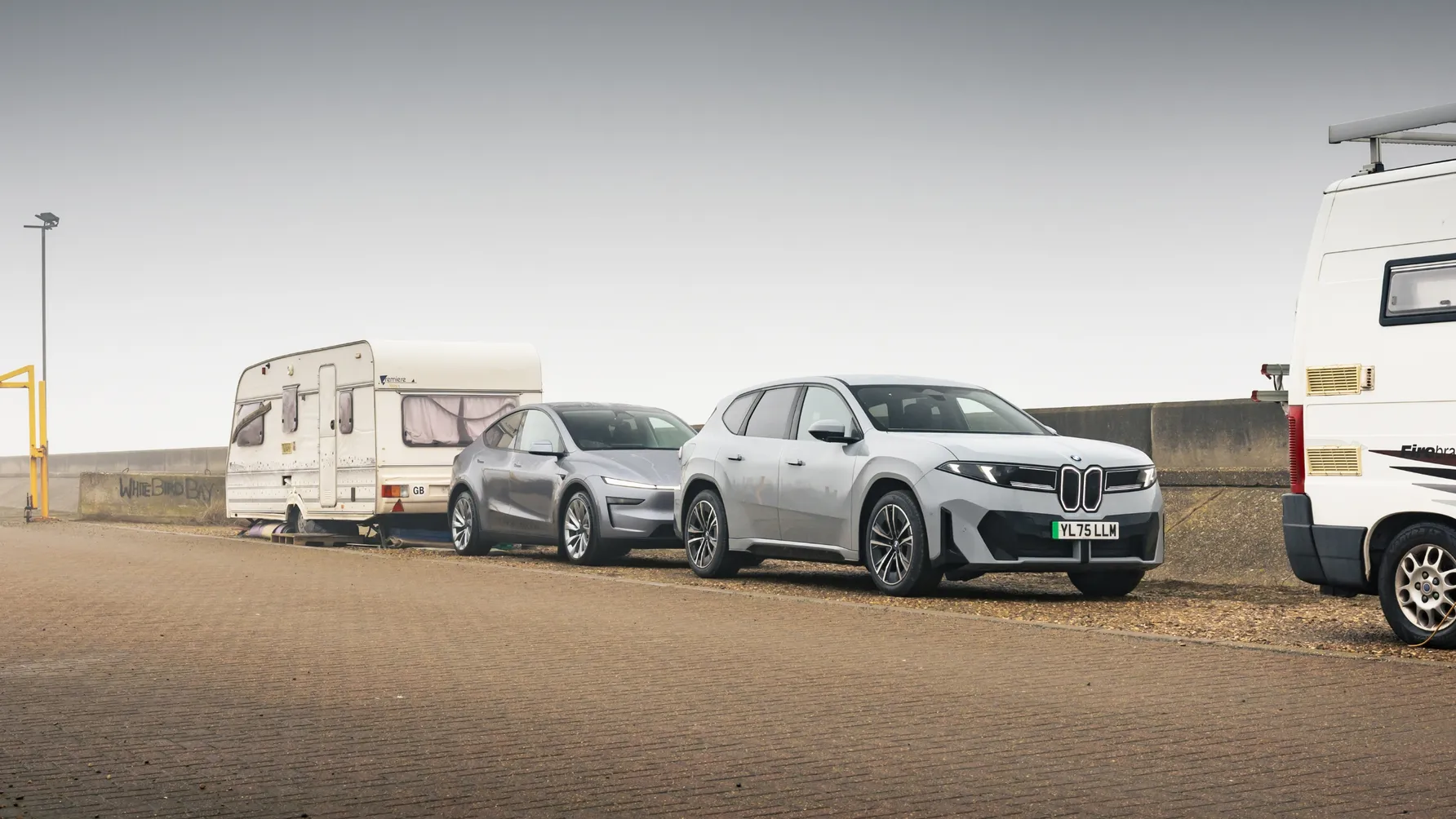
Passing Stonehenge at the journey’s midpoint the battery gap between the two cars becomes visible and meaningful. Therefore, the BMW iX3 sits at 50 percent charge while the Tesla Model Y sits at 40 percent — with over 200 miles of route still remaining. Furthermore, this seemingly small 10-point gap becomes considerably more significant as the terrain shifts toward the hillier south-west of England. Additionally, this midpoint data already confirms the outcome that the finish line will later make official.
Based on this, in the Tesla Model Y vs BMW iX3 comparison the battery capacity gap translates directly into a psychological safety margin gap. Consequently, any driver covering long distances daily understands exactly why that extra buffer matters on every journey — not just the exceptional ones.
Driving Character: German Craft Against American Lightness
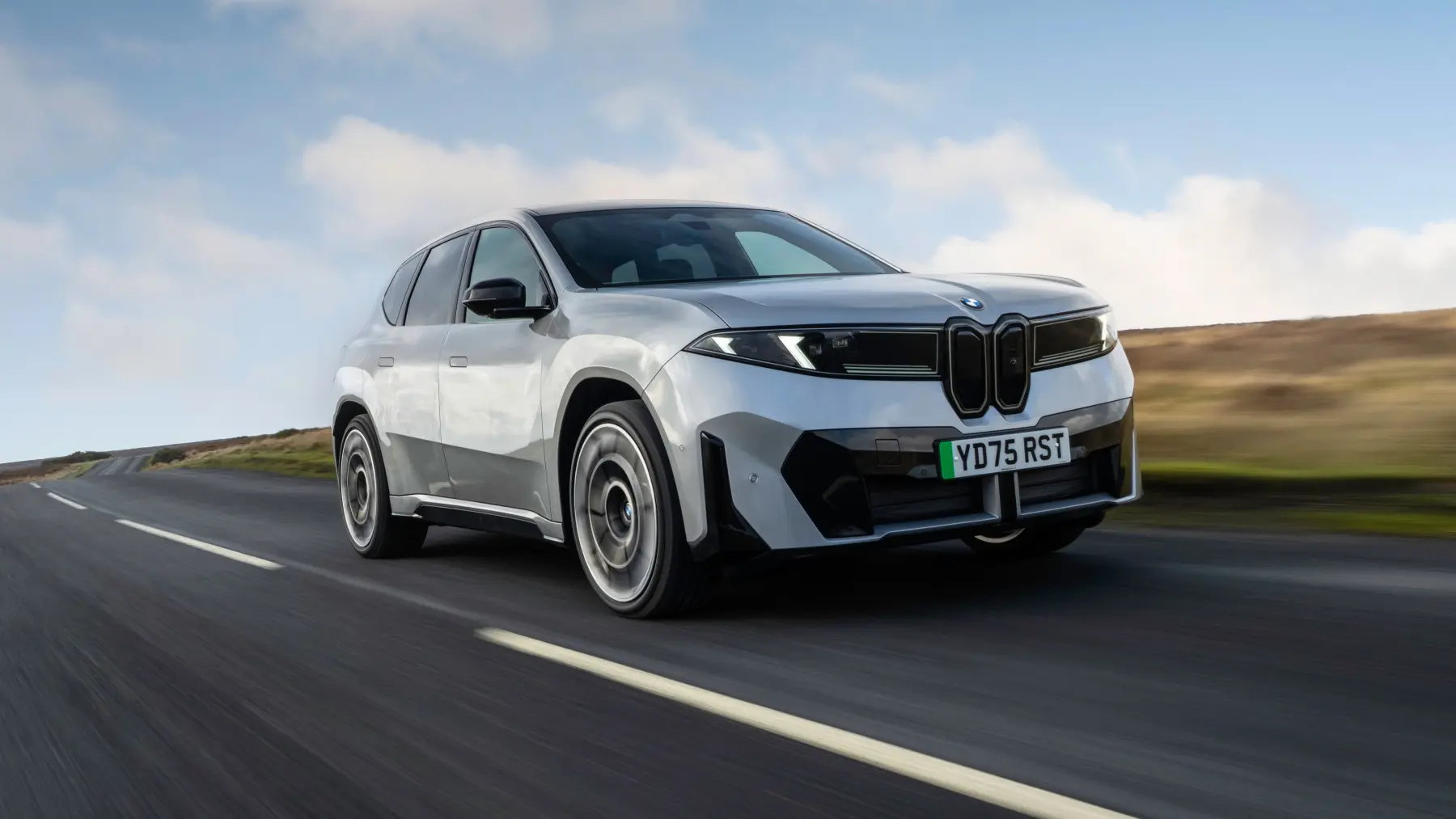
The comparison reveals a fundamental and honest difference in driving philosophy between the two cars. Therefore, the BMW iX3 is heavier on the road with a more controlled and composed steering feel that delivers a genuine sense of connection to the surface. Furthermore, BMW’s Heart of Joy system integrates all dynamic technologies into a single “superbrain” that produces a remarkably coherent driving experience by any electric vehicle standard. Additionally, the Tesla feels lighter by approximately 300 kilograms in official terms and feels like more than that in practice — but it delivers far less satisfaction when driven quickly or enthusiastically.
Based on this, anyone who prioritises driving pleasure selects the BMW iX3 without hesitation from the first corner. Consequently, anyone who prioritises responsive smart technology and a lighter feel finds a genuine answer in the Tesla — but it is not the answer that rewards driving as an activity in itself.
280kW Charging: BMW iX3 Does Not Stop at Range Alone
The BMW iX3 advantage over the Tesla does not end at battery size — it extends powerfully into charging speed. Therefore, the iX3 pulled 280kW from a 300kW rapid charger during a stop on the day before the main journey. Furthermore, this means a 15-minute charging stop adds approximately 150-200 kilometres of genuine real-world range — a figure that significantly softens the practical impact of any range anxiety. Additionally, this charging performance means the gap between the two cars shrinks considerably when measured by total travel time including charging stops rather than battery size alone.
Based on this, in 2026 absolute maximum range is no longer the only metric that matters in EV purchasing decisions. Consequently, charging speed at this level changes the conversation entirely — and the BMW iX3 wins both arguments simultaneously rather than trading one against the other.
The Final Leg: Devon Confirms What Stonehenge Suggested
The result of the Tesla Model Y vs BMW iX3 range test becomes unavoidable as the route enters Devon. Therefore, the Tesla’s battery drops below 25 percent with significant distance still remaining while the BMW iX3 sits comfortably at 40 percent. Furthermore, the BMW carries a meaningful margin of safety through Cornwall and arrives at Land’s End with charge remaining — not in comfort but in control. Additionally, the Tesla reaches the final section of the route with a charging stop becoming a genuine practical necessity rather than simply a theoretical concern.
Based on this, the BMW iX3 wins this specific test on this specific day on this specific route. For the latest EV comparison and long-range test news across the Middle East, follow GearsME. For the full original article and photography, visit the original Top Gear report. Consequently, a 108kWh battery does not deliver 500 real-world miles — but it delivers enough to complete a 425-mile journey with a margin that a 75kWh battery simply cannot match.
What This Test Proves About EV Range in 2026
The Tesla Model Y vs BMW iX3 range challenge reveals something more useful than a simple winner and loser. Therefore, official WLTP figures should be treated as aspirational targets rather than journey planners — neither car comes remotely close to its official claim in real-world mixed driving conditions. Furthermore, the 30kWh battery gap between the two cars translates to a meaningful real-world advantage but not an insurmountable one given the Tesla’s faster Supercharger network in many regions. Additionally, the BMW’s superior driving character, better cabin materials and more logical interface represent genuine quality advantages that matter on a 425-mile journey in ways that never appear in any specification sheet.
Based on this, the correct answer for Gulf-based buyers considering either car depends heavily on which priorities they rank first. Consequently, if daily distance and long highway journeys define the use case the BMW iX3 is the more complete answer — if urban agility, lighter feel and superior charging network density define it the Tesla remains a genuinely compelling choice.
BMW Wins the Miles, Tesla Wins the Market
Ultimately, the Tesla Model Y vs BMW iX3 comparison proves that the new BMW is a better car for covering serious distances with confidence and comfort. Furthermore, a 108kWh battery, 280kW peak charging, a genuinely satisfying driving character and a high-quality long-distance cabin combine into a package that the Tesla cannot currently match at this specific task. Consequently, Tesla remains more ubiquitous, more brand-recognisable and better served by its charging network in most global markets — but the BMW iX3 has arrived with a very clear statement about where it intends to compete.