


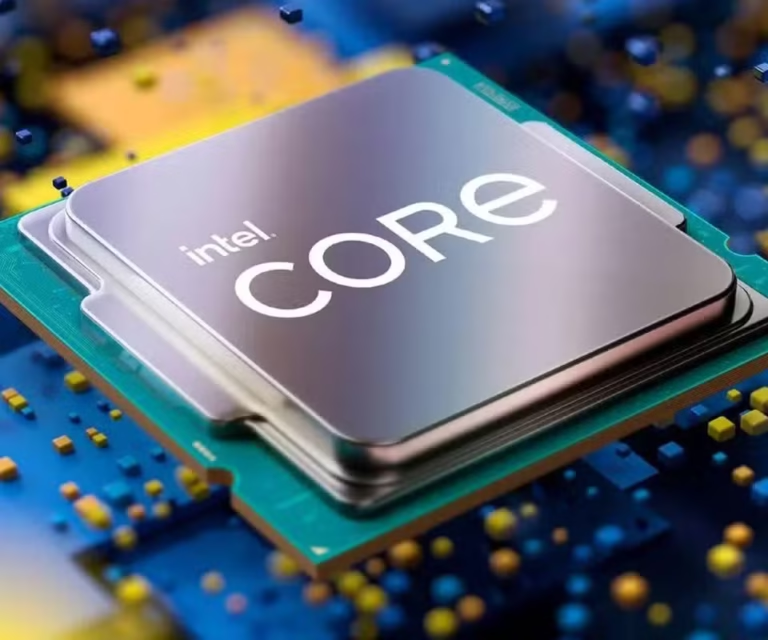
Recent reports suggest that Intel CPU prices could increase in 2026, a move that may affect the global PC market as well as gaming systems and enterprise hardware. At the same time, this potential price adjustment reflects broader shifts across the semiconductor industry.
Over the past few years, the processor market has changed dramatically. In particular, the rapid expansion of artificial intelligence and large-scale data centers has reshaped demand for computing power. As a result, companies are investing heavily in advanced processors capable of handling AI workloads.
Consequently, chip manufacturers now face increasing pressure to balance supply between consumer processors and enterprise-grade chips.

AI Demand Is Reshaping the CPU Market
One of the main reasons behind the possible Intel CPU price increase in 2026 is the explosive demand for chips used in AI computing and cloud infrastructure.
Major technology companies continue to build large data centers designed to power AI models and digital services. Therefore, demand for high-performance processors has increased sharply.
Meanwhile, chip manufacturers are prioritizing server and AI processors because they generate higher profit margins. Because of this, production capacity often shifts toward enterprise hardware.
As a result, fewer processors may remain available for the consumer market. Consequently, limited supply could lead to higher prices for desktop and gaming CPUs.
Rising Hardware Costs Are Adding Pressure
The possible CPU price increase is also connected to rising costs across the broader PC hardware ecosystem.
In recent months, several key computer components have become more expensive. For example, prices have increased for memory modules such as RAM and for storage solutions like SSDs.
Additionally, manufacturing costs for circuit boards and electronic materials have also increased. At the same time, global supply chain disruptions continue to affect semiconductor production.
Because of these factors, the overall cost of building computers has risen. Therefore, processor manufacturers may adjust prices to offset higher production expenses.
How Much Could Intel CPU Prices Increase?
Industry reports indicate that some processors could experience price increases of around 10 percent or more. However, the final impact will depend on several market conditions.
For instance, semiconductor supply stability will play an important role. Moreover, Intel’s manufacturing capacity and product strategy will influence pricing decisions.
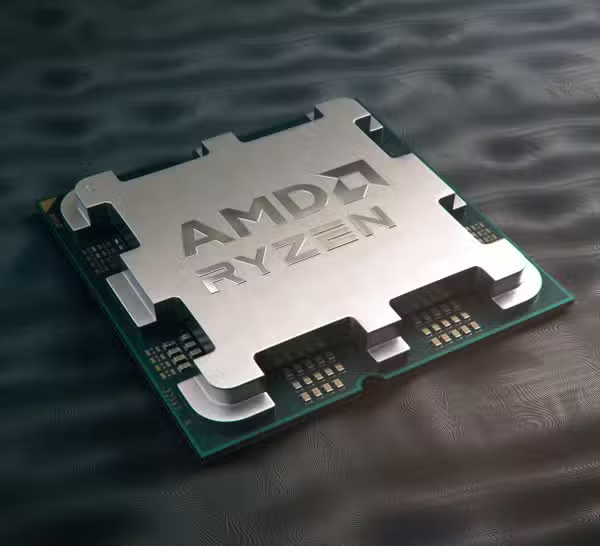
In addition, competition from other chip makers such as AMD could help balance market dynamics. Ultimately, pricing will depend on how supply and demand evolve across the processor industry.
What This Means for Gamers and PC Users
If the Intel CPU price increase in 2026 becomes reality, upgrading or building a new PC may become more expensive.
Naturally, gamers and PC enthusiasts who rely on powerful processors could feel the impact first. Nevertheless, rising prices may also encourage manufacturers to deliver more efficient processors.
In the long term, innovation in chip design could bring higher performance and better energy efficiency. Consequently, consumers may benefit from more advanced computing technology despite potential price increases.