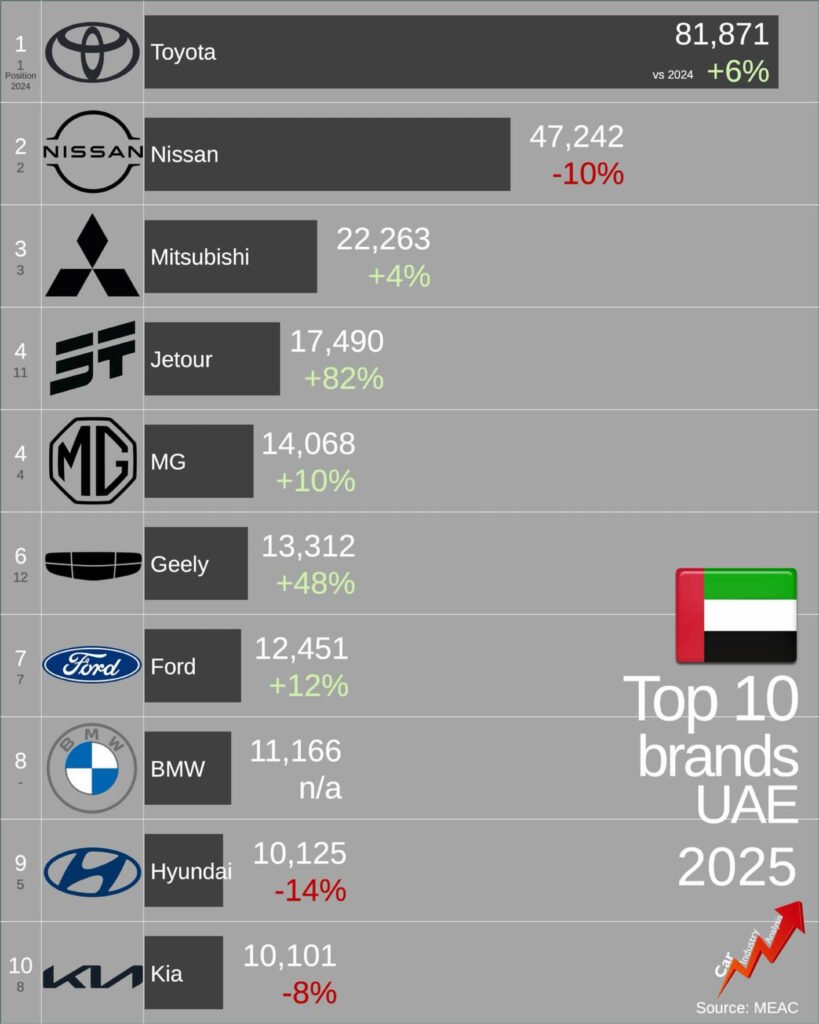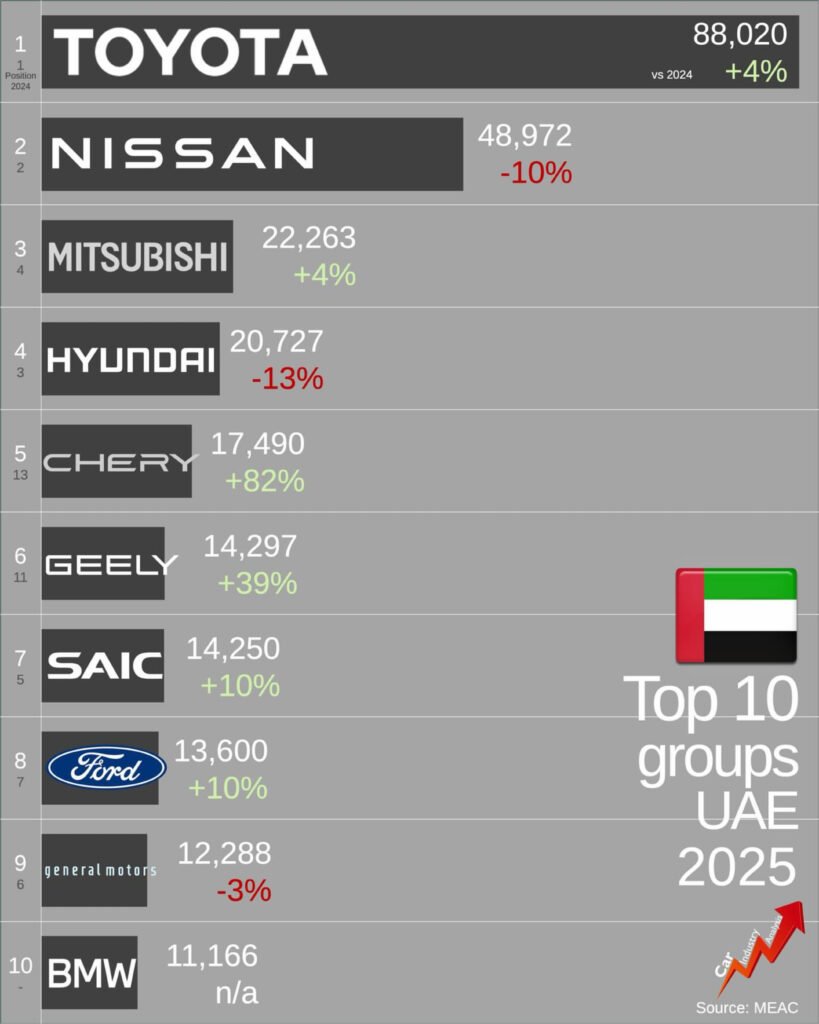


The UAE car market 2025 is witnessing a clear shift in power among automotive brands, as new data reveals strong growth for some players and noticeable declines for others.
These changes go beyond sales figures. They reflect a deeper transformation in consumer behavior and market preferences across the country.
Toyota Maintains Its Dominance
Toyota continues to lead the UAE car market 2025 with a significant margin, recording over 80,000 units and steady growth compared to 2024.
This performance highlights the brand’s strength in reliability and its wide product range, especially in pickup trucks and SUVs.
Nissan Faces the Biggest Decline
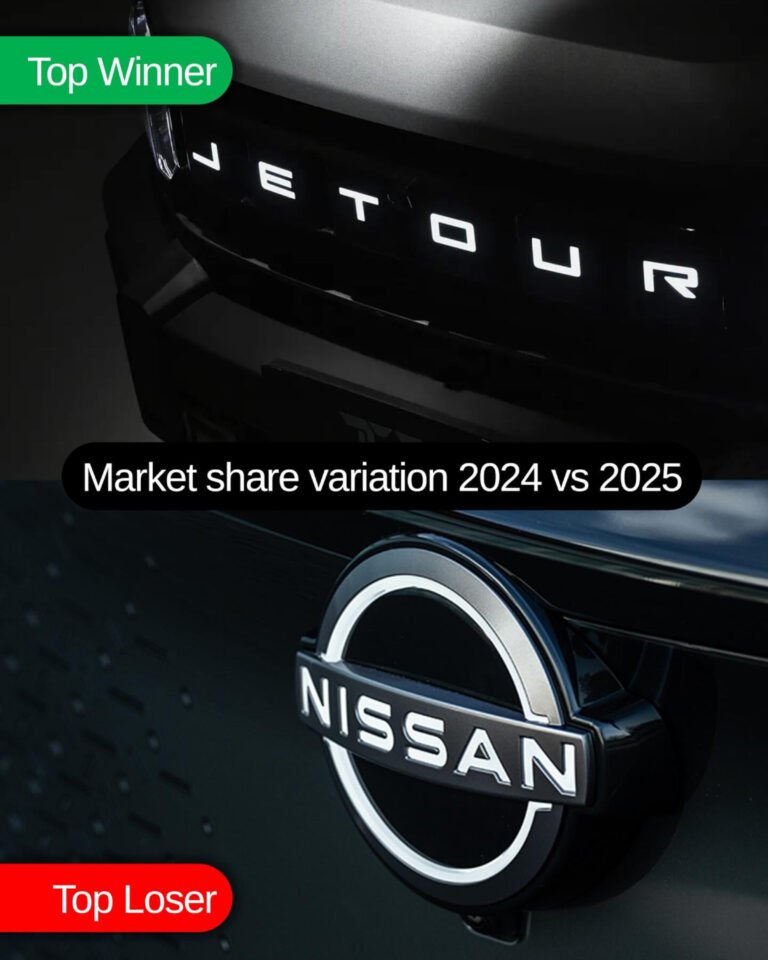
On the other hand, Nissan stands out as the biggest loser in the UAE car market 2025, with a decline of around 10% in market share.
Despite strong models like the Patrol and X-Trail, the overall performance suggests increasing pressure from competitors.
Chinese Brands Are Changing the Game
One of the most important trends shaping the UAE car market 2025 is the rapid rise of Chinese brands.
Chery recorded an impressive +82% growth, while Geely saw strong gains as well. In addition, brands like MG and Jetour are quickly gaining ground.
This growth reflects two key factors: competitive pricing and advanced technology.
Best-Selling Models: Clear Surprises
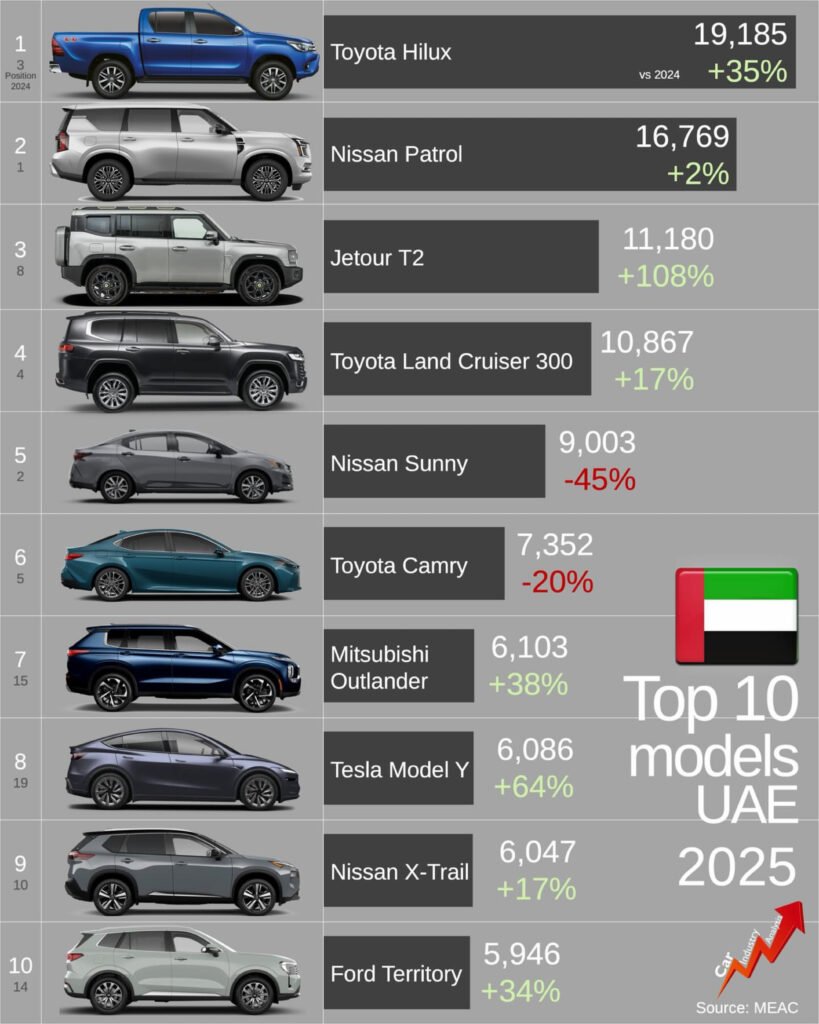
Looking at individual models in the UAE car market 2025, the Toyota Hilux leads with a strong +35% increase, confirming continued demand for pickups.
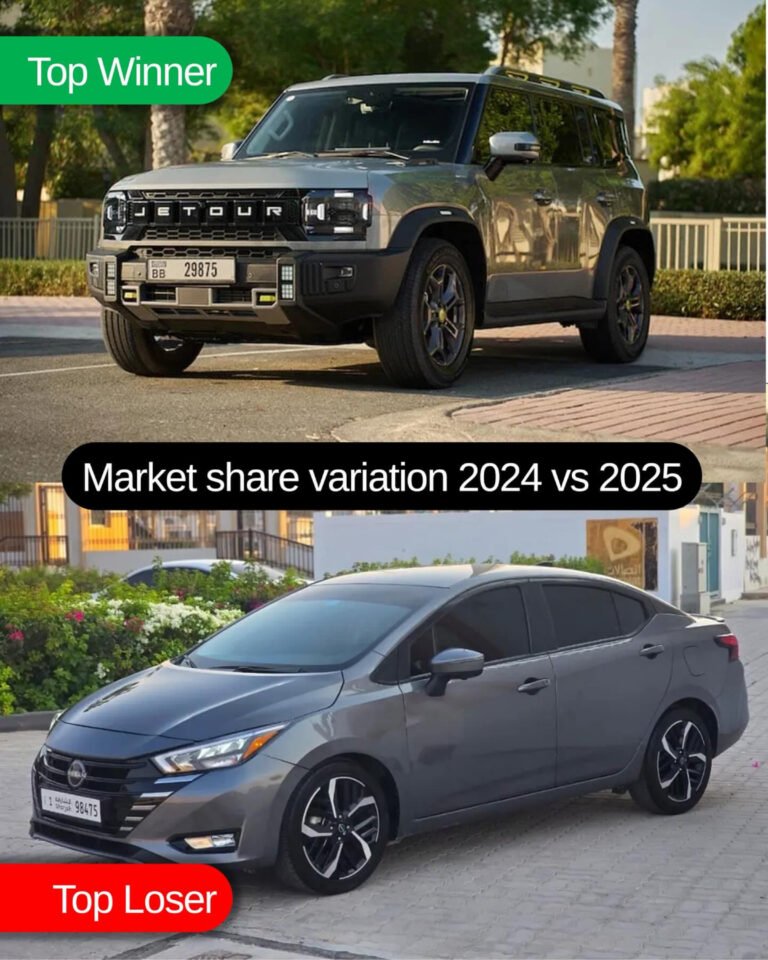
Meanwhile, the Jetour T2 emerges as one of the biggest surprises, with an outstanding +108% growth.
In contrast, models like the Nissan Sunny saw a sharp decline of -45%, while the Toyota Camry dropped by -20%.
A Shift in Consumer Preferences
The data from the UAE car market 2025 clearly shows a shift in buyer priorities.
Today, consumers no longer rely only on brand reputation. Instead, they focus more on value, technology, and design.
Is the Market Being Reshaped?
What we are seeing in the UAE car market 2025 is more than a temporary fluctuation. It signals the beginning of a structural transformation.
Traditional brands remain strong, but they face increasing competition. At the same time, new players are entering the market with speed and confidence.
The next phase will be critical, especially as competition intensifies across pricing, features, and innovation.