
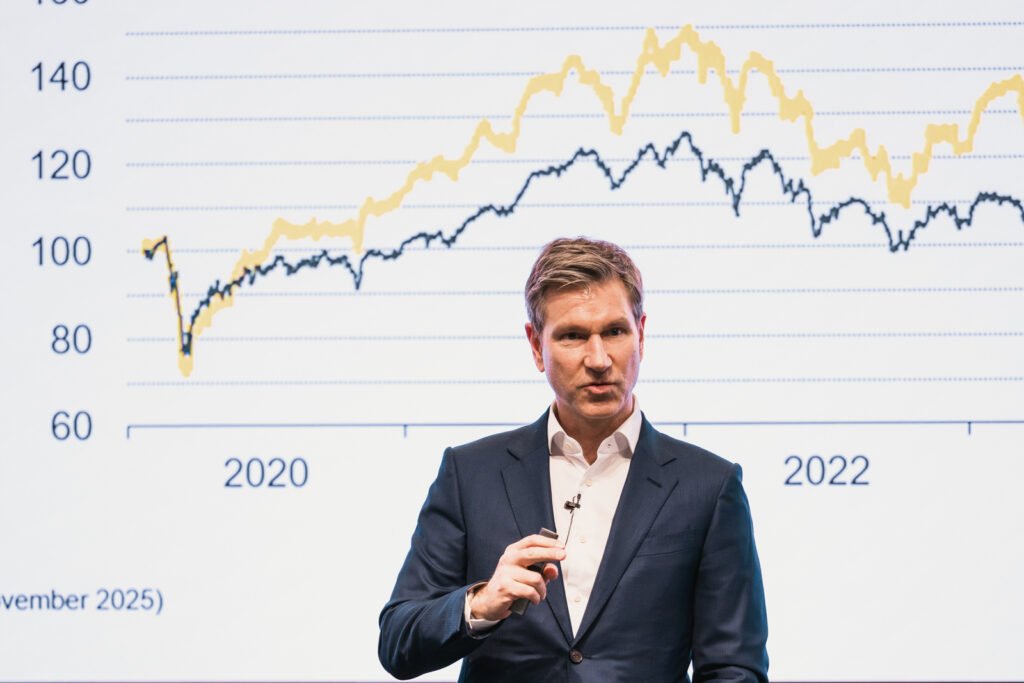

The Swiss watch market is going through a period of noticeable change in 2026, according to a recent industry report published by Vontobel. The report highlights important shifts in the global watch industry, where top luxury brands continue to grow while other segments face increasing pressure.
At the same time, several global economic factors are influencing the performance of watch manufacturers. Currency fluctuations, rising material costs, and changes in consumer demand are all shaping the current landscape of the industry.
Economic Pressures on the Swiss Watch Market
The Swiss watch market is strongly affected by global economic conditions. One of the key challenges is the strength of the Swiss franc against other major currencies.
For example, a watch sold internationally for 100 dollars previously generated around 90 Swiss francs for manufacturers. Today, because of currency changes, that amount can fall to about 78 francs. As a result, watch brands earn less revenue after converting foreign sales into Swiss currency.
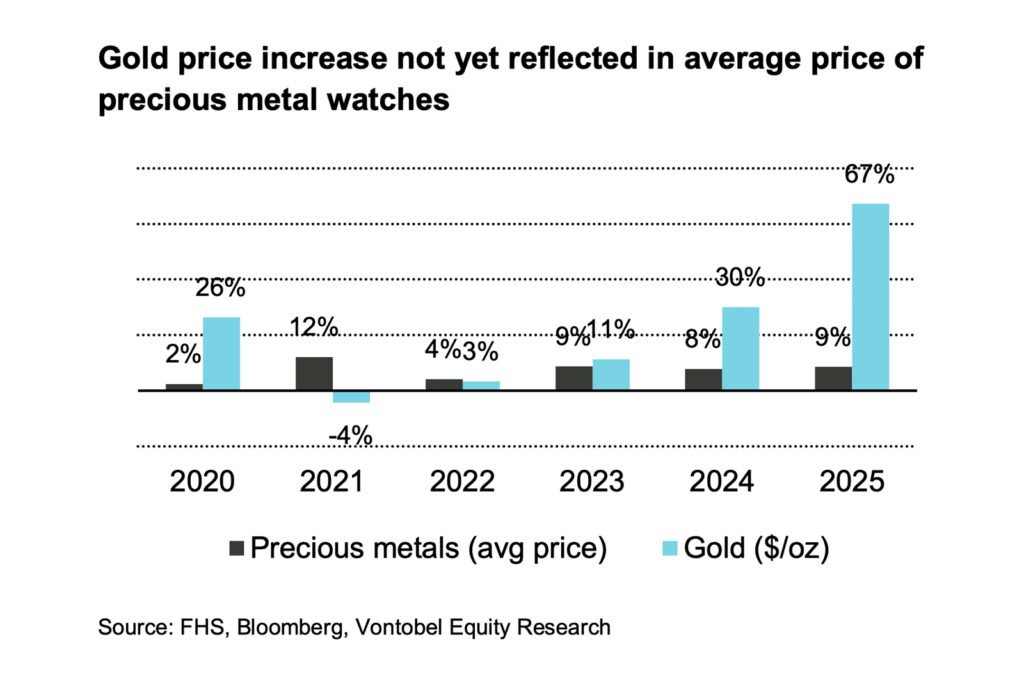
In addition, rising gold prices have increased manufacturing costs. Since gold is widely used in luxury watchmaking, the increase has had a direct impact on production expenses across the industry.
Swiss Watch Exports Show Slight Decline
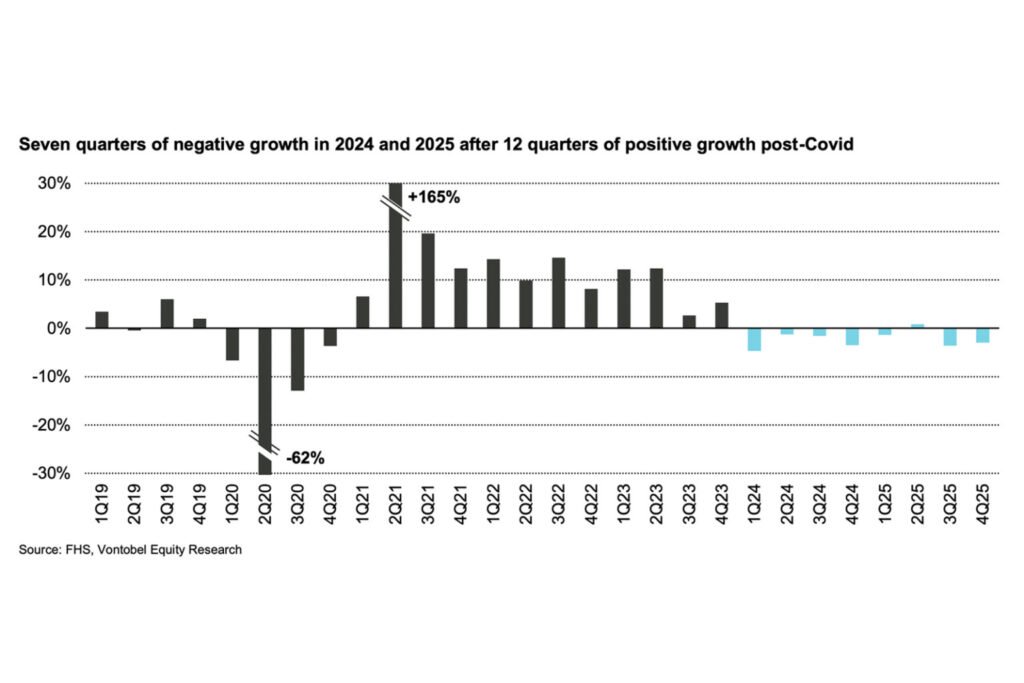
Despite the strength of leading brands, exports from the Swiss watch market have declined slightly. The report shows that total exports reached around 25.5 billion Swiss francs, representing a drop of approximately 1.7 percent compared with the previous year.
Although the decline is relatively small, it reflects a broader slowdown in global demand for certain categories of watches.
However, the overall structure of the industry remains stable, with a strong concentration around major luxury brands.
Luxury Segment Continues to Grow
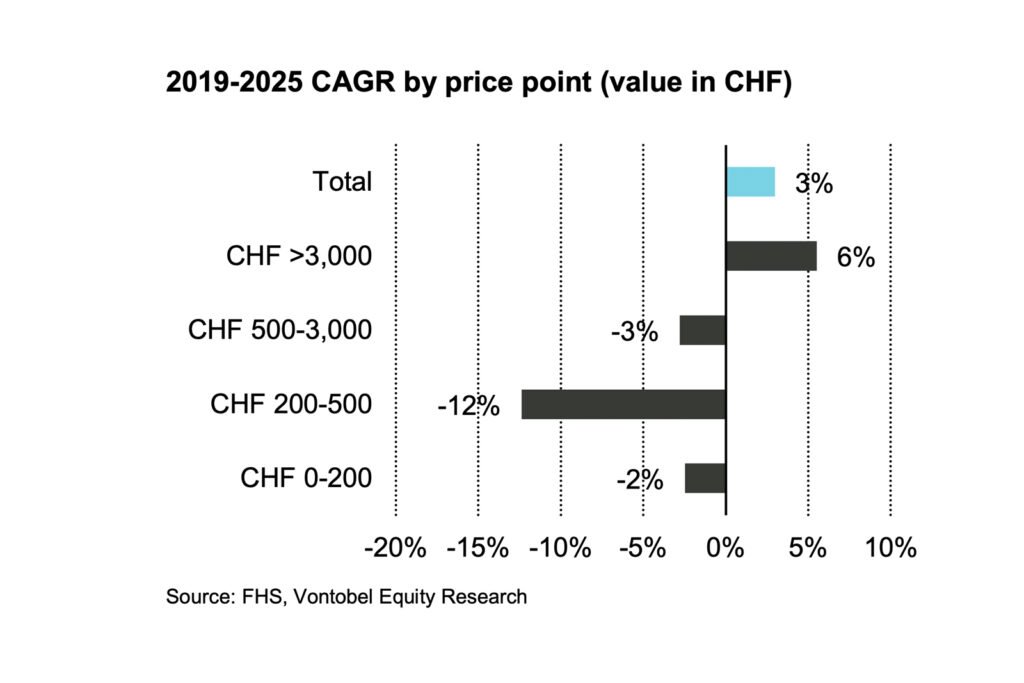
While some parts of the market are slowing, the high-end segment continues to perform well. Watches priced above 20,000 Swiss francs are still experiencing solid demand among collectors and wealthy buyers.
Meanwhile, lower-priced watches are facing more pressure. Watches priced below 500 Swiss francs have seen demand decline by roughly four percent.
This trend reflects what analysts often describe as a “K-shaped market,” where the luxury segment grows while the lower segments contract.
Rolex and Cartier Strengthen Their Position
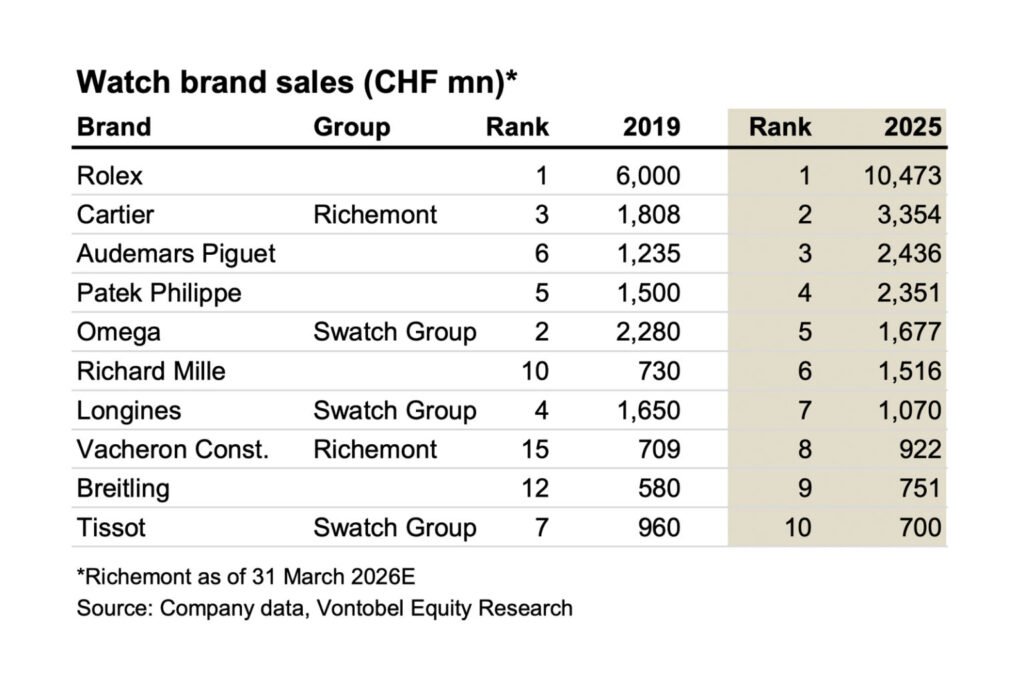
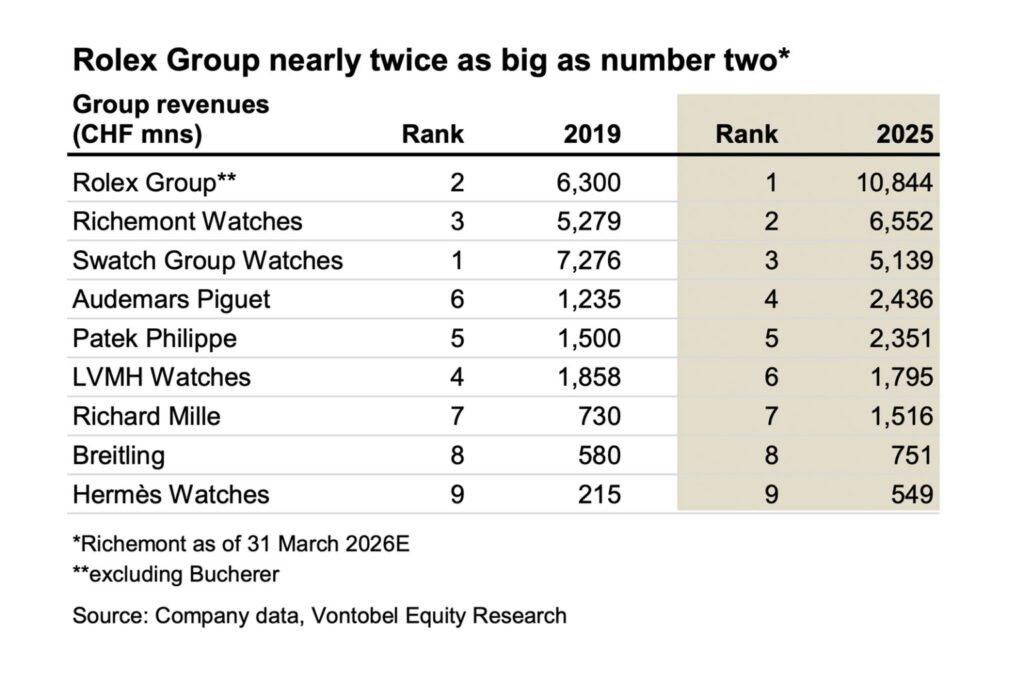
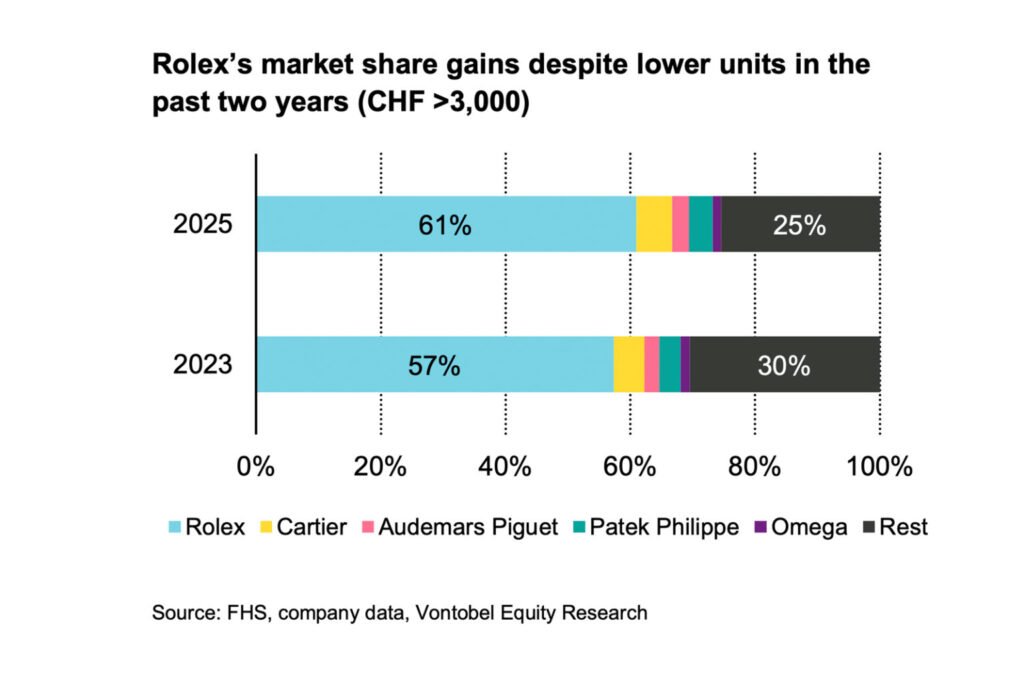
Within the Swiss watch market, brands such as Rolex and Cartier continue to dominate global sales.
Rolex, in particular, has strengthened its position with its certified pre-owned watch program, often referred to as CPO. According to estimates, this program alone may generate more than 500 million Swiss francs in annual revenue.
Cartier, on the other hand, benefits from its strong presence in both watchmaking and jewelry. This dual positioning allows the brand to reach a wider customer base across different markets.
Future Outlook for the Swiss Watch Market
Despite current challenges, experts believe the long-term outlook for the Swiss watch market remains positive.
One possible growth driver is the gradual recovery of the Chinese market, which remains one of the most important regions for luxury watch sales.
In addition, lower energy costs in Switzerland could help manufacturers improve profit margins in the coming years.
An Industry Balancing Challenges and Opportunities
Overall, the Swiss watch market appears to be entering a new phase of adjustment. While economic factors are creating pressure on some segments, luxury brands continue to perform strongly.
As global demand evolves, the industry is likely to remain stable, supported by strong heritage brands and continued interest in high-end mechanical watches.
For enthusiasts and collectors alike, the coming years could bring further innovation and competition across the luxury watch industry.