
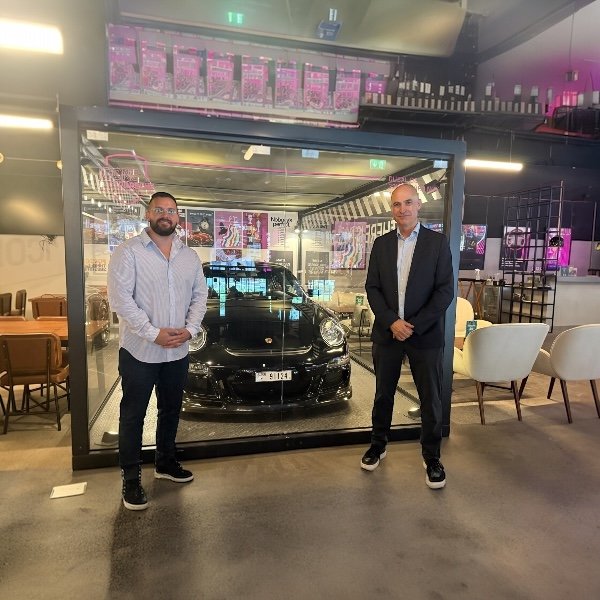

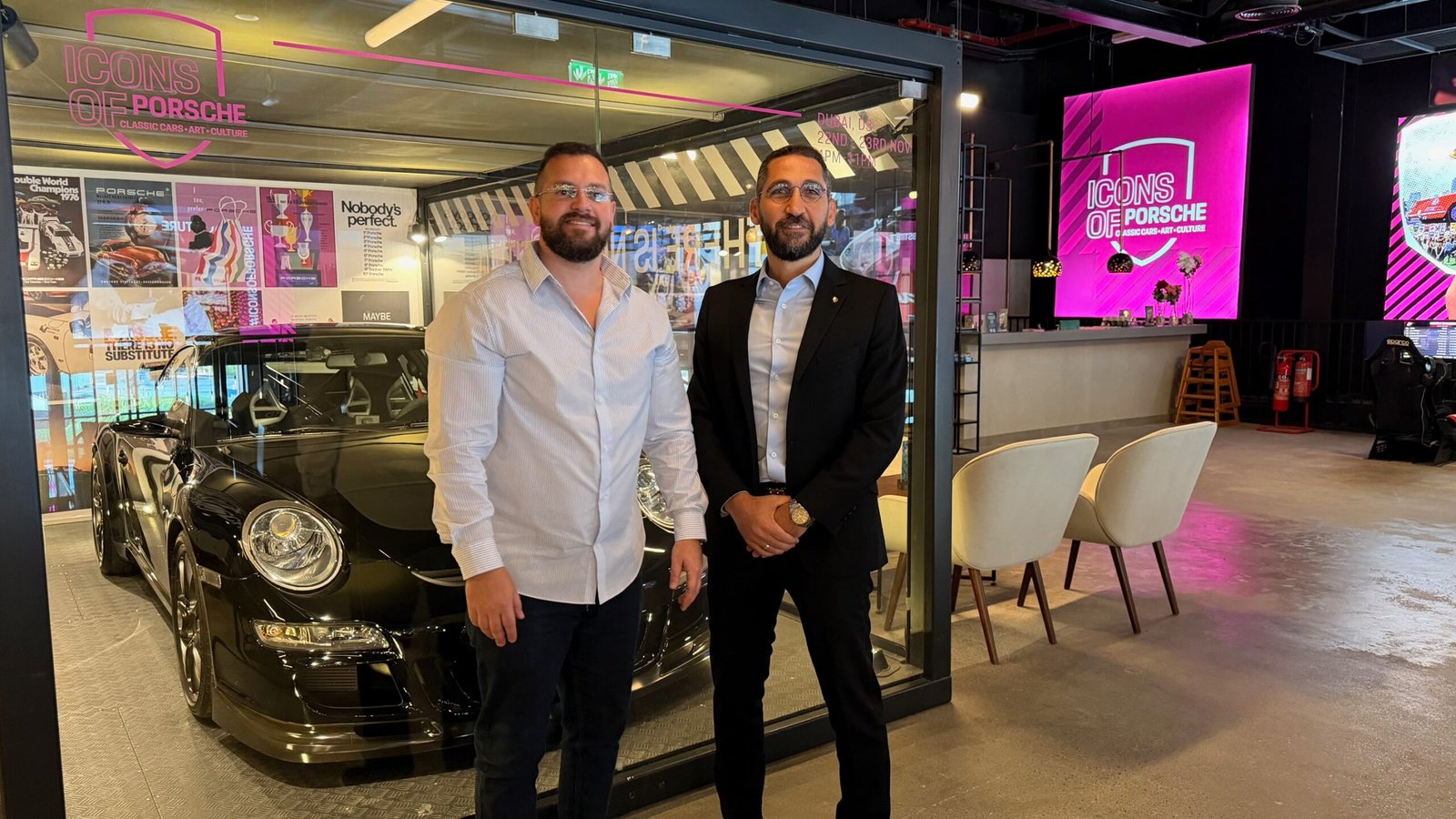
In a sit-down conversation, Dr. Manfred Bräunl, CEO of Porsche MEA, and Mohamed Hassan, Sales Director of Porsche Middle East & Africa, shared fresh insights on Porsche’s strongest year in over a decade across the region—plus the brand’s recalibrated electrification roadmap, customer trends, and how Porsche is thinking about residual values, classic parts, and future market expansion.
Key highlights
- 2025 sales: 9,628 deliveries across Porsche Middle East & Africa.
- 5-year growth: +55% across the last five years.
- 911 is surging: Share of retail mix rose from 15% (five years ago) to 23% last year—an all-time record for the region.
- BEV mix hit 10%, driven largely by Macan Electric ramp-up (with Taycan also contributing).
- Electrification timeline: Porsche says the transition will take longer than initially expected—especially in the region—so the company is doubling down on customer choice: EV, hybrid, and combustion.
- Cayenne Electric previewed in Dubai with 6 of 8 Porsche board members present; market arrival expected in H2 (second half) of the year.
- Warranty: Porsche MEA moved to up to 15 years extended warranty, with added incentives if purchased at the time of new-car purchase.
- Classic support: Porsche confirms long-term parts availability through a dedicated classic setup—some parts are reproduced in small batches when needed.
A record year—measured beyond volume
Dr. Bräunl opened by framing 2025 as Porsche MEA’s most successful year in the last 12 years, emphasizing that Porsche doesn’t judge performance purely by retail volume.
Beyond the 9,628 sales figure, he highlighted two pillars:
- Customer satisfaction rising significantly (based on internal studies), and
- A notable shift in brand mix: the 911 reaching 23% of total retail—an unprecedented level for the region.
He also noted the increasing demand for Porsche Exclusive Manufaktur, with more customers choosing highly personalized builds and Porsche encouraging buyers to order to specification rather than purchase stock vehicles.
“It’s not a love story” — Porsche and electrification, realistically
The conversation quickly moved to EV strategy—acknowledging what many in the industry now admit: the EV transition has not moved as fast as forecasts predicted.
Porsche’s position from the interview:
- The company will continue engineering and producing EVs,
- While also ensuring combustion engines remain available where needed,
- And maintaining a lineup that gives customers a choice between EV, hybrid, and ICE.
Customers aren’t only buying a drivetrain—they’re buying Porsche, and every model must still feel, perform, and drive like a Porsche. As Bräunl put it in essence!
Macan Electric momentum—and the region’s biggest EV hurdle
The executives pointed to Macan Electric as the key driver behind regional BEV growth, taking BEV share to 10%.
But they also called out the biggest barrier: charging infrastructure, which varies heavily by country and by living setup (especially high-rise apartment owners and customers without convenient home charging). Convenience, they said, is a deciding factor in this segment.
One of the strategies Porsche sees working well: back-to-back test drives (electric vs combustion). The team noted many customers who claim they want “six- or eight-cylinder only” often change their mind after experiencing EV performance firsthand.
Cayenne Electric: Dubai preview, global attention, and what Porsche expects
A major moment highlighted in the interview was the Cayenne Electric preview in Dubai, described as a significant launch event—especially with six board members attending.
Bräunl’s stance was clear:
- The Cayenne Electric performance is “out of this world,” and the car is positioned at the top of Porsche’s EV engineering capability.
- Still, Porsche expects buyer preferences to remain split—some will choose EV (especially if they can charge at home), while others will stay loyal to combustion for personal reasons, sound, and emotional connection.
When asked whether the Cayenne Electric could face the same debate as the Macan shift, Porsche’s answer was essentially: it’s not either/or—the goal is to keep both paths open and let the customer decide.
“No one is pushing cars onto us” — on global pressure and regional targets
A key question challenged whether Porsche MEA is under increased pressure to compensate for slower EV demand in other major markets.
Porsche MEA’s response:
- The region follows global strategy—but decisions are made based on local demand and market pace across 16 importers / 15 countries (with the UAE having two importers).
- They emphasized that no one is pushing supply beyond demand, and that oversupplying would harm the luxury market—especially in residual values.
They also addressed global profitability discussions by noting that Porsche’s investment pivot back into combustion and broader powertrain choice requires significant new investment—and that’s part of why profitability guidance can shift even when demand remains strong.
The logic Porsche shared:
Even if new ICE production reduces over time, millions of combustion cars will still exist—and e-fuels can make their continued operation cleaner and more sustainable.
Residual values and EV depreciation: Porsche won’t “control” the market—but won’t oversupply it
When asked about EV resale value drops in the secondary market, Porsche MEA acknowledged the reality that:
- EVs are still perceived as new technology,
- Early adopters move quickly to newer tech, and
- Residual values largely follow supply vs demand, like any market.
Their key takeaway: Porsche’s best tool is disciplined supply—not flooding the market—which helps stabilize used values over time.
China’s EV wave: Porsche says the “package” matters more than specs
On the rise of aggressive Chinese EV brands (specs, horsepower, price), Porsche MEA’s answer was that competition is always monitored—but Porsche’s differentiation remains the full experience:
- The brand
- Quality
- Performance as a total system
- Ownership journey
They also noted that, at least today in their dealer feedback, buyers typically don’t cross-shop Porsche directly with far-east entrants—but Porsche won’t take that for granted.
Markets like Syria: “No plans—constantly monitored”
On whether Porsche could return to markets like Syria, the response was cautious and tied to:
- Geopolitical conditions
- Sanctions and trade compliance
- Whether market potential justifies the investment to build a proper network
For now: no plans, but monitoring is ongoing.
Warranty goes to 15 years—and Porsche wants more cars under factory coverage
A strong aftersales segment of the interview focused on Porsche’s extended warranty offering in the region, now up to 15 years, which Porsche positioned as highly competitive.
They also highlighted a newer behavior they want to encourage:
- Buying extended warranty at the time of new-car purchase (with incentives),
- Keeping cars under factory warranty longer,
- Improving satisfaction and ownership confidence,
- And supporting used values by keeping vehicles within official coverage.
Classic Porsche support: “You will get the parts”
For classic owners, Porsche MEA emphasized that parts supply remains a Porsche strength:
- Porsche has a dedicated classic function focused on parts availability.
- Some parts can be reproduced in limited runs when needed—typically more expensive, but available.
- This is a key reason classic Porsches retain value and remain usable long-term.
Porsche Macan Turbo EV: A New Benchmark in Electric Performance