
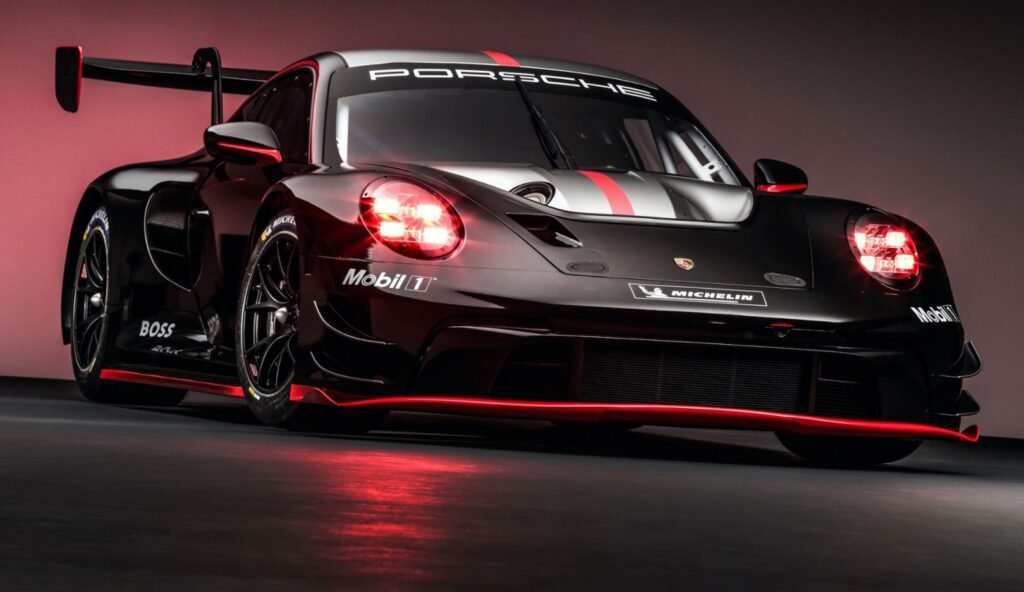

Few racing cars carry the weight of history quite like the Porsche 911. For more than six decades, the unmistakable silhouette has evolved while staying true to its roots. In GT racing, that lineage reaches its sharpest expression in the Porsche 911 GT3 R—a customer racing machine engineered to win endurance classics while honoring one of motorsport’s most enduring designs.
A Race Car Born From Heritage
The 911 GT3 R competes in the GT3 category, one of the most hotly contested classes in global motorsport. From the 24 Hours of Le Mans and Daytona to the Nürburgring 24 Hours and GT World Challenge, GT3 racing places strict balance-of-performance regulations on manufacturers. Within those constraints, Porsche has refined the 911 GT3 R into a weapon defined by consistency, reliability, and precision rather than brute force alone.
Unlike many of its mid-engine rivals, the GT3 R remains rear-engined, a defining characteristic that continues to shape its behavior on track. What was once considered a disadvantage has become a carefully managed strength, offering exceptional traction and stability—particularly under braking and on corner exit.
Engineering the Modern 911 GT3 R
At the heart of the car lies a 4.2-liter naturally aspirated flat-six engine, derived from Porsche’s motorsport program and tuned to meet GT3 regulations. Producing around 565 horsepower (depending on Balance of Performance), the engine favors responsiveness and durability over outright peak output—critical for endurance racing where cars are pushed to their limits for 24 hours at a time.
Power is delivered through a six-speed sequential gearbox, operated via steering-wheel paddles. Every component is designed with longevity in mind, from reinforced internals to optimized cooling systems that allow the GT3 R to maintain performance through long stints and changing track conditions.
The chassis is based on a lightweight aluminum-steel composite structure, paired with a carbon-fiber body. Extensive use of CFRP (carbon fiber reinforced plastic) helps reduce weight while improving stiffness, allowing the suspension to work more precisely.
Aerodynamics: Function Over Flash
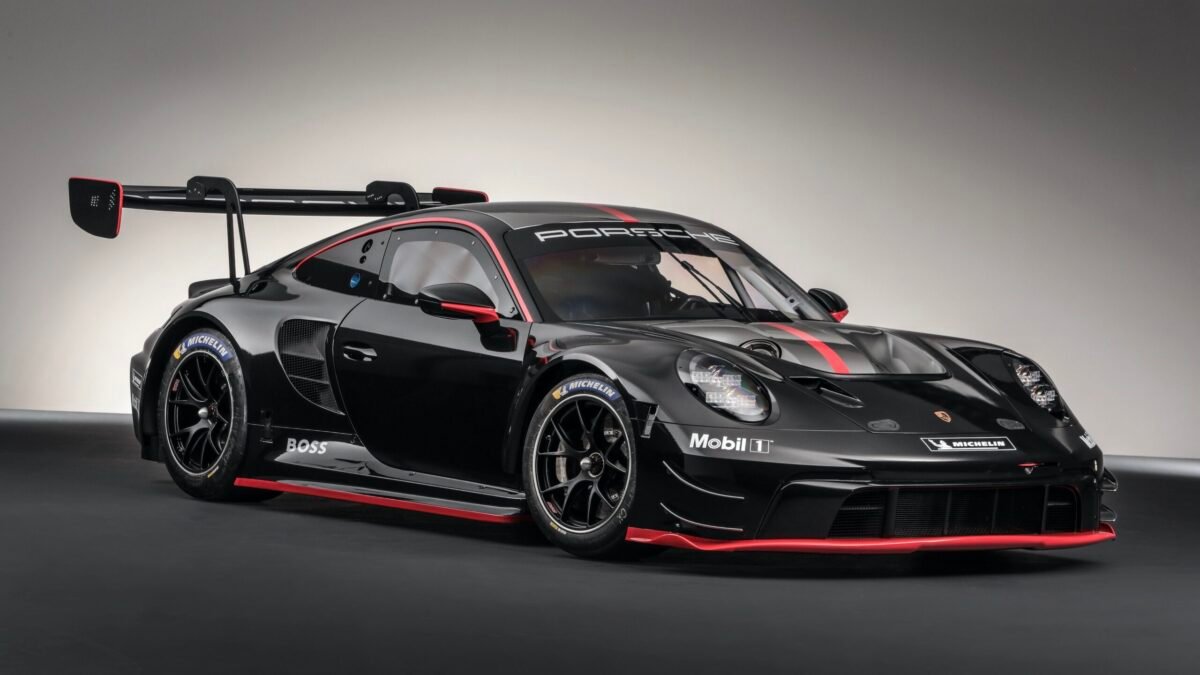
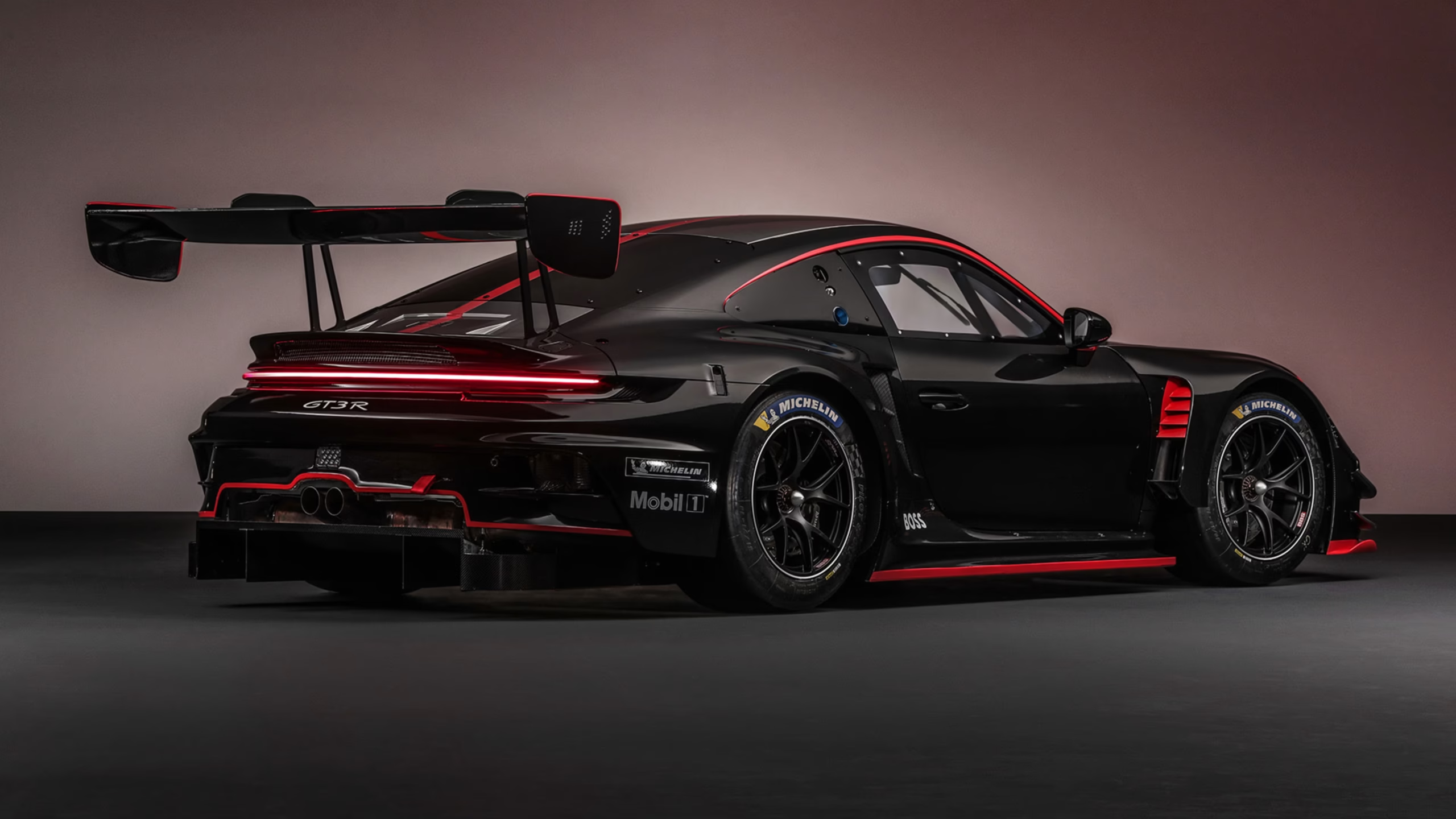
GT3 regulations limit aerodynamic freedom, but Porsche’s engineers have extracted every possible advantage. The wide front splitter, sculpted wheel arches, and flat underbody work together to improve airflow and front-end grip. At the rear, the towering wing provides stability at high speed, particularly through fast corners and under heavy braking.
Crucially, the aerodynamic package is designed not just for outright downforce, but for predictability. In endurance racing, a car that is easy to drive at the limit—lap after lap, hour after hour—often outperforms a faster but more temperamental rival.
Designed for Drivers and Teams
One of the 911 GT3 R’s greatest strengths is its driver-friendly nature. Porsche has invested heavily in ergonomics, ensuring that drivers of different sizes can maintain comfort and control during long stints. The cockpit layout emphasizes clarity, with essential controls positioned for instinctive use even in high-pressure situations.
For customer teams, accessibility is just as important. The GT3 R is engineered for ease of maintenance, with modular components that can be replaced quickly during a race weekend. Porsche’s global motorsport support network further enhances its appeal, offering data analysis, spare parts logistics, and on-site engineering assistance.
Dominance on the World Stage
The Porsche 911 GT3 R has built an enviable résumé. Victories in iconic endurance races—including Daytona, Spa, Nürburgring, and Bathurst—underline its versatility across vastly different circuits and conditions. Whether battling through torrential rain at the Nordschleife or enduring the heat of a Florida afternoon, the GT3 R has proven its resilience.
What sets Porsche apart is not just the car’s success at the factory level, but its performance in the hands of privateer teams. In GT3 racing, customer programs are the backbone of the sport, and Porsche’s ability to deliver a competitive, reliable platform year after year has made the 911 GT3 R one of the most popular choices on the grid.
Evolution Without Compromise
Each new generation of the GT3 R represents careful evolution rather than radical change. Porsche listens closely to feedback from professional and amateur drivers alike, refining suspension geometry, braking performance, and electronics with each update. Improvements in traction control, ABS calibration, and power delivery ensure that the car remains competitive as regulations and rival designs evolve.
Yet through all these changes, the essence of the 911 remains intact. The sound of the flat-six at full song, the unmistakable rear-engine balance, and the relentless focus on race-winning efficiency define the GT3 R’s character.
More Than Just a GT3 Car
In an era where motorsport is increasingly shaped by simulation, data, and regulation, the Porsche 911 GT3 R stands as a reminder that great racing cars are built on philosophy as much as performance. It is not the most radical car on the grid, nor the loudest or flashiest—but it is one of the most complete.
“By blending tradition with modern engineering, Porsche has created a machine that respects its past while continuing to dominate the present. For teams, drivers, and fans alike, the 911 GT3 R is more than just a competitor—it is the latest chapter in one of motorsport’s greatest stories”.
Porsche’s Icon Returns: What Makes the 911 Turbo S the Ult