

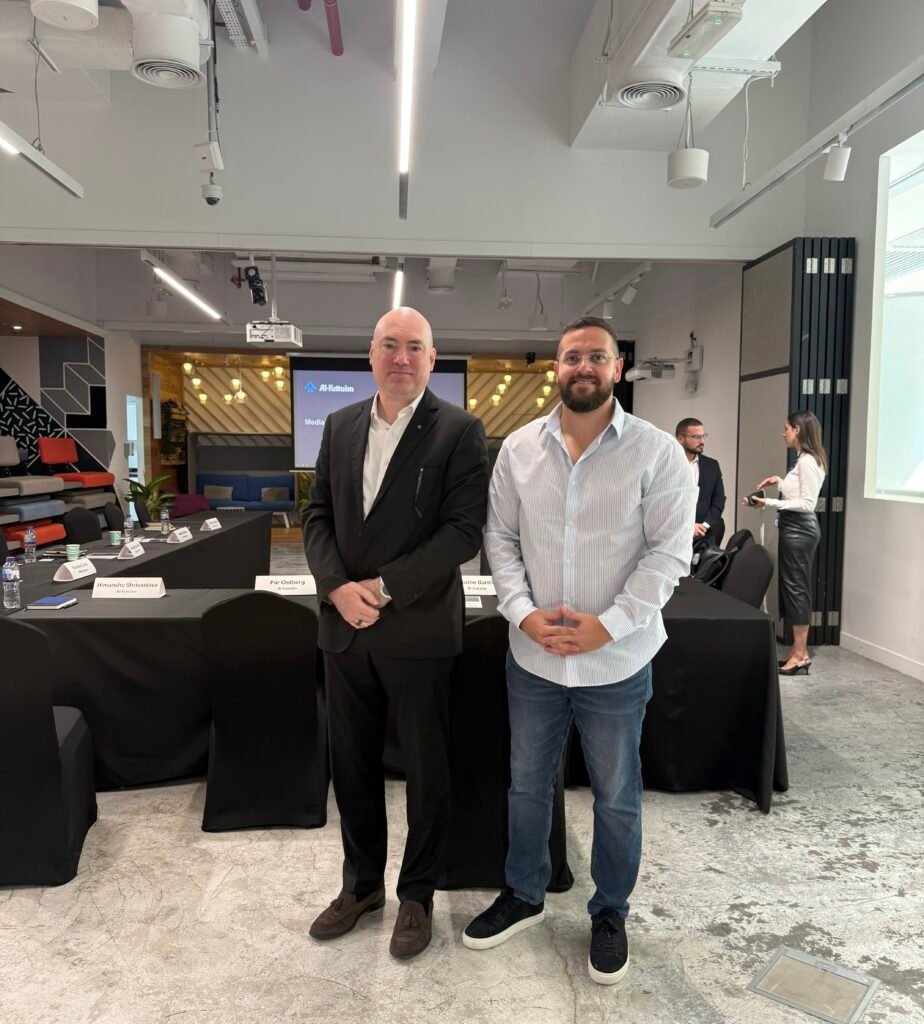

Dubai doesn’t lack ambition. What it does require—and what industry leaders are now openly discussing—is alignment. Alignment between infrastructure and innovation, between public policy and private execution, between technology and everyday life That was the central theme of a closed-door media roundtable hosted by Al-Futtaim Group, titled “One Al-Futtaim: Shaping What’s Next”, where a select group of media were invited to sit down with senior leadership to understand how one of the region’s most influential conglomerates is preparing for the next phase of growth.
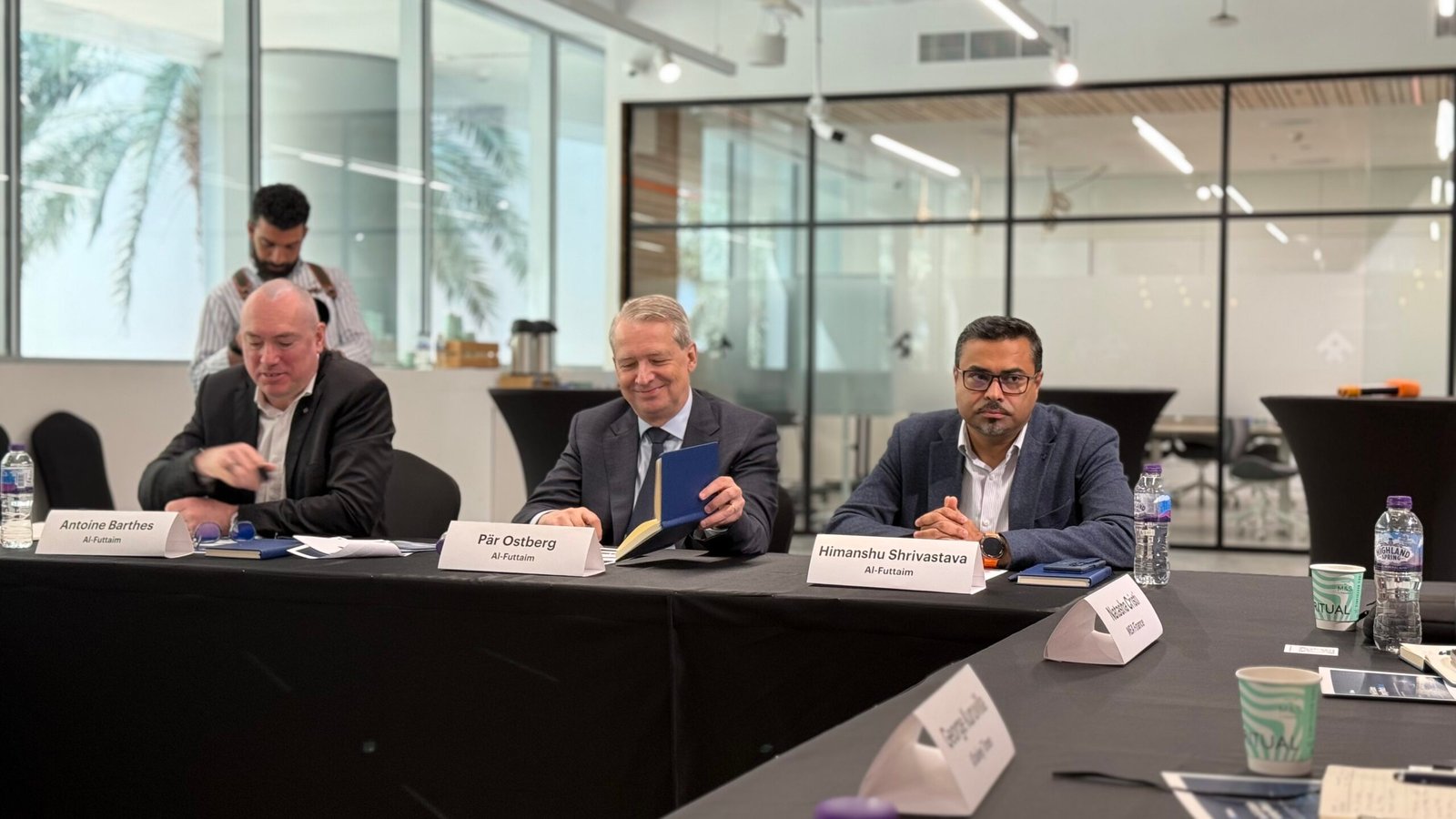
The discussion brought together Par Ostberg, Group Director – Finance, Antoine Barthes, Vice President – Automotive, and Himanshu Shrivastava, Chief Technology Officer, offering rare insight into how Al-Futtaim is navigating transformation across mobility, technology, finance, and human capital.
A Group Built on Scale—and Adaptability
With over 90 years of history, 40,000+ employees, operations in 20+ countries, and a portfolio spanning 200+ brands across five divisions—Automotive, Retail, Real Estate, Healthcare, and Financial Services—Al-Futtaim is not a company experimenting on the margins. It is an ecosystem.
What stood out immediately was how openly leadership acknowledged that size alone is no longer enough. The real challenge, as Ostberg put it, is not whether the region will transform—but how fast infrastructure, regulation, and customer experience can move together.
The UAE Mobility Reality Check
One of the most telling data points shared during the session was simple yet powerful:
- Nearly 90% of daily mobility in the UAE still relies on private vehicles
- Charging infrastructure remains the #1 barrier to EV adoption
- Over two-thirds of consumers say better-integrated infrastructure would change their mobility choices
The message was clear: electrification is inevitable, but it cannot succeed in isolation. Al-Futtaim sees mobility transformation as a shared responsibility between government, private sector, and technology providers.
This is why the group has invested heavily beyond vehicle retail—into charging infrastructure, logistics, fleet management, financial services, and lifecycle vehicle solutions. Mobility, in Al-Futtaim’s view, is no longer about selling cars; it’s about enabling access.
Automotive Is Still the Anchor—But Not the Limit
While Automotive remains a core pillar, Antoine Barthes emphasized that Al-Futtaim’s strength lies in its breadth of exposure. From passenger cars to commercial fleets, logistics equipment, financing models, rentals, subscriptions, and resale ecosystems—the group covers the full mobility spectrum.
What’s particularly strategic is how Al-Futtaim approaches brand partnerships. Rather than flooding the market, the group pilots, tests, measures, and only then commits—ensuring long-term value for customers and partners alike.
This approach has been especially evident in newer mobility brands and EV entrants, where success depends as much on ecosystem readiness as it does on product appeal. Technology as a Growth Engine, Not a Cost Center. If mobility was the what, technology was clearly the how.
Himanshu Shrivastava outlined a transformation that goes far beyond buzzwords. Al-Futtaim has quietly executed one of the region’s most ambitious tech overhauls:
- 100% cloud migration, with all on-premise data centers shut down
- A full transition to SAP S/4HANA on cloud, completed in under two years
- A unified group-wide data platform connecting customers across all divisions
- Early, large-scale adoption of AI copilots and agentic AI systems
The objective is not automation for its own sake. It’s scale. Agentic AI is being deployed to work with humans—enhancing productivity, decision-making, and customer experience rather than replacing people.
From Strategy to Real-World Impact
What made the discussion particularly compelling were the real use cases.
In Automotive, Al-Futtaim leveraged AI-driven digital pop-ups and data intelligence to support BYD’s aggressive regional expansion. In just months, this approach generated tens of thousands of leads, improved test-drive conversion, and directly contributed to record sales momentum.
In Real Estate, similar technology was applied to villa launches—resulting in hundreds of qualified leads and rapid transaction closures.
In Healthcare, AI transcription and insurance automation reduced doctor admin time and improved approval rates—directly impacting patient experience.
The pattern was consistent: test fast, scale smart, and replicate across divisions.
Growth with Discipline
Despite its scale, Al-Futtaim remains privately held—and intentionally measured. While leadership avoided disclosing financial figures, the confidence was evident. Organic growth remains the priority, complemented by selective acquisitions where strategic alignment exists.
Saudi Arabia, Egypt, and the wider GCC continue to be key growth markets, supported by population growth, infrastructure investment, and increasing demand for integrated mobility and services.
The Bigger Picture
What emerged from this roundtable was not just a corporate roadmap, but a philosophy.
Al-Futtaim sees the region’s advantage clearly: unlike older markets constrained by legacy infrastructure, the GCC has the opportunity to design mobility, cities, and digital ecosystems from the ground up—if public and private sectors move together.
As the conversation closed, one thing was evident: this wasn’t a presentation about the future. It was a report on what is already underway.
For a group of Al-Futtaim’s scale, transformation is not a slogan. It’s an operational necessity—and one that will shape how mobility, retail, healthcare, and technology intersect in the Middle East for years to come.