

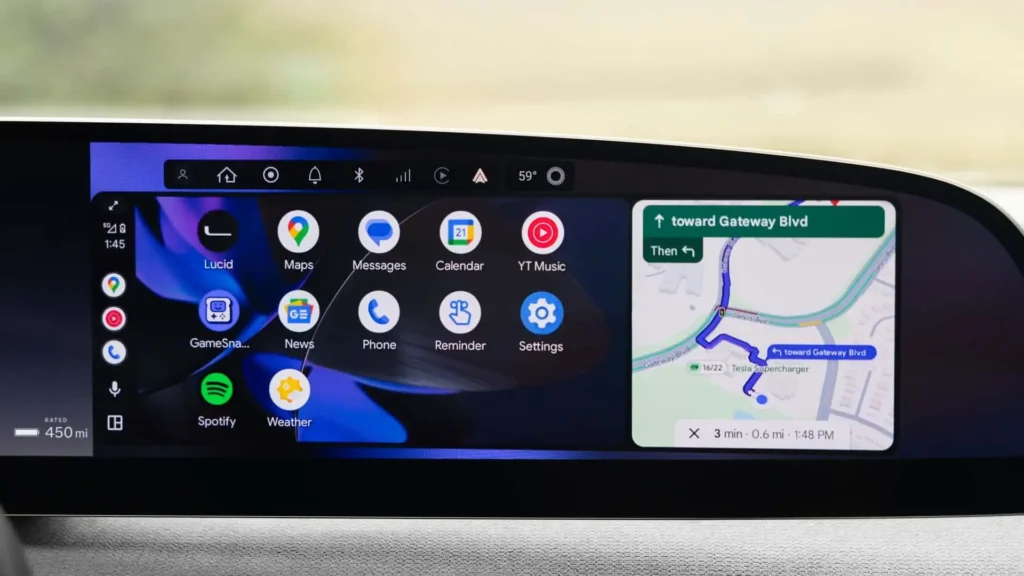

Google has introduced a new update to Google Maps that brings EV route planning to Android Auto. The feature is designed to make long-distance travel in electric vehicles easier and more predictable. With this update, drivers can plan routes that automatically include charging stops along the way.
The launch of this feature comes as electric vehicles become more common around the world. As more drivers switch to EVs, navigation tools must adapt to new needs. Therefore, smart route planning and charging guidance are becoming essential parts of the EV driving experience.

How EV route planning works in Google Maps
The EV route planning system in Google Maps analyzes several factors before suggesting a route. For example, the system considers the vehicle’s battery level, expected energy use, and the distance to the destination. As a result, the app can determine the most efficient route for the journey.
In addition, Google Maps can automatically suggest charging stations along the route. The system also estimates how much battery will remain when the vehicle reaches the next stop or the final destination. This allows drivers to better understand their energy consumption during the trip.
Furthermore, the navigation system can estimate how long a driver may need to charge at each station. This helps travelers plan their stops more efficiently and avoid unnecessary delays.
Broad support from car brands using Android Auto
The new feature will be available in vehicles that support Android Auto, where the navigation details appear directly on the car’s infotainment screen. Consequently, drivers can view charging stations, battery estimates, and route adjustments without needing to use their phone.
According to Google, the EV route planning feature will launch across several major automotive brands. Moreover, the company plans to expand support to additional manufacturers in the future.
The brands that will support the feature at launch include:
Audi
BMW
Chevrolet
FIAT
Genesis
Hyundai
Jaguar
Kia
Lexus
Lucid
Mercedes-Benz
Nissan
Porsche
Subaru
Toyota
Volkswagen
Because many of these brands already produce electric or hybrid models, a large number of vehicles will soon benefit from integrated EV trip planning.
Competition among EV navigation tools
Over the past few years, several specialized applications have emerged to help drivers with EV route planning. These tools usually focus on locating charging stations and planning longer trips for electric vehicles.
However, Google’s approach is slightly different. Instead of relying on a separate app, the company integrates the feature directly into Google Maps. As a result, drivers can continue using a familiar navigation platform while gaining access to EV-specific tools.
This integration may also make electric vehicle navigation easier for new EV owners who prefer a simple and unified interface.

Why EV route planning matters for EV drivers
Planning long journeys remains one of the main challenges for electric vehicle drivers. Unlike traditional cars, EVs require drivers to consider battery range and charging availability.
Therefore, EV route planning helps drivers travel with more confidence. The system allows them to identify charging stops, estimate battery levels, and select the most efficient route.
In addition, this feature helps reduce what many drivers call “range anxiety.” When drivers know where and when they can charge their vehicle, longer trips become easier and more comfortable.
The future of smart EV navigation
Navigation technology for electric vehicles is expected to become more advanced in the coming years. As connected vehicles continue to evolve, navigation systems will rely more on real-time data.
For example, future systems may analyze traffic, weather conditions, and driving patterns to improve route planning. Artificial intelligence may also help predict energy consumption more accurately.
Therefore, Google’s introduction of EV route planning in Google Maps represents an important step toward smarter and more efficient electric mobility.