
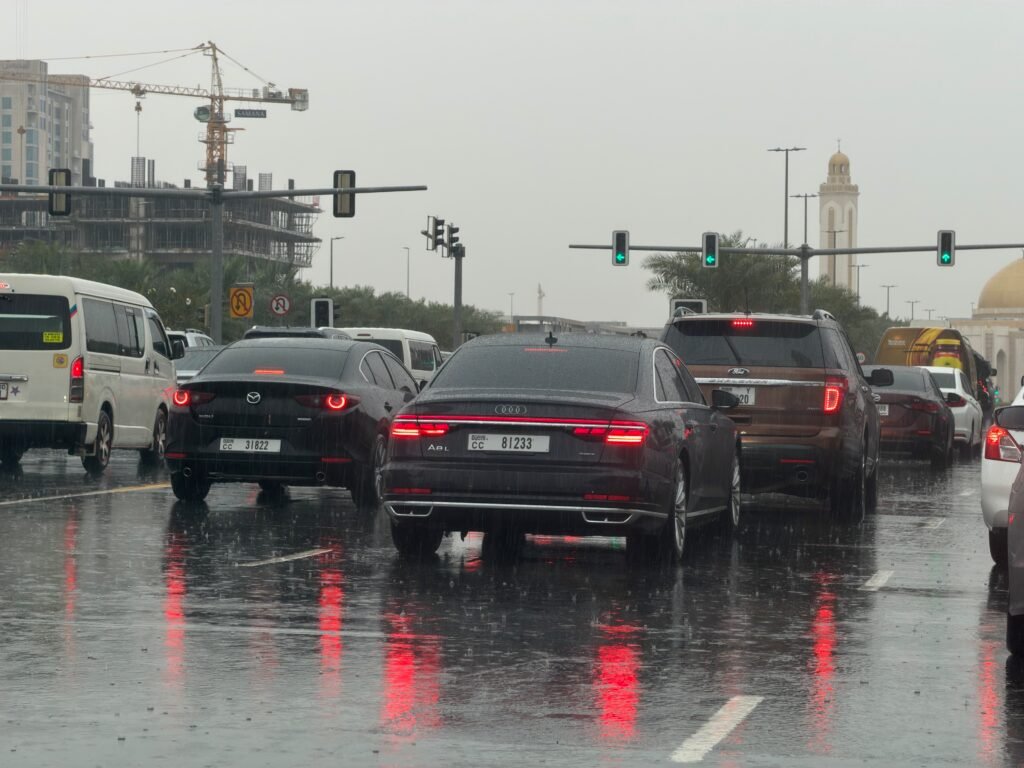

Driving in the rain has a set of skills that you should be aware of. Rain in the UAE is not common, but when it arrives, it often catches drivers off guard. Roads that are normally predictable can quickly become slippery, visibility drops, and certain areas such as underpasses and low-lying roads can flood within minutes.
Across Dubai and the wider GCC, heavy rain tends to expose the same driving mistakes every time. Cars lose control on highways, vehicles stall in standing water, and many drivers underestimate how different wet conditions really are.
Understanding how to drive safely in the rain is not just about caution. It is about adapting your driving style, knowing your car’s limits, and making smart decisions before problems happen.
Why Driving in the Rain in the UAE Is More Dangerous Than You Think
Unlike countries where rain is frequent, roads in the UAE are not always conditioned for constant wet weather. Dust and oil buildup on asphalt create a slippery surface when mixed with water, especially during the first rainfall. Many drivers are also not used to adjusting their behavior in wet conditions. Speed remains high, following distances stay short, and sudden movements increase the risk of losing control.

Essential Tips for Driving Safely in the Rain
The first and most important adjustment is speed. Wet roads reduce traction, which directly affects braking performance. Stopping distances can increase significantly, even at moderate speeds. Maintaining a safe following distance is critical. A good rule is to double your normal gap to the car in front. This gives you enough time to react without relying on sudden braking.
You can also read our guide on safe highway driving techniques in the UAE for more advanced tips.
Understand and Avoid Hydroplaning
Hydroplaning occurs when a layer of water builds up between your tires and the road surface. When this happens, your tires lose grip and your car can feel like it is floating.
If you experience hydroplaning:
- Stay calm and avoid panic reactions
- Gently lift your foot off the accelerator
- Keep the steering wheel steady
- Avoid braking suddenly
As the tires regain contact with the road, control will return gradually (For more technical insights, see our article on how car safety systems work in real driving conditions)
Use Headlights Correctly
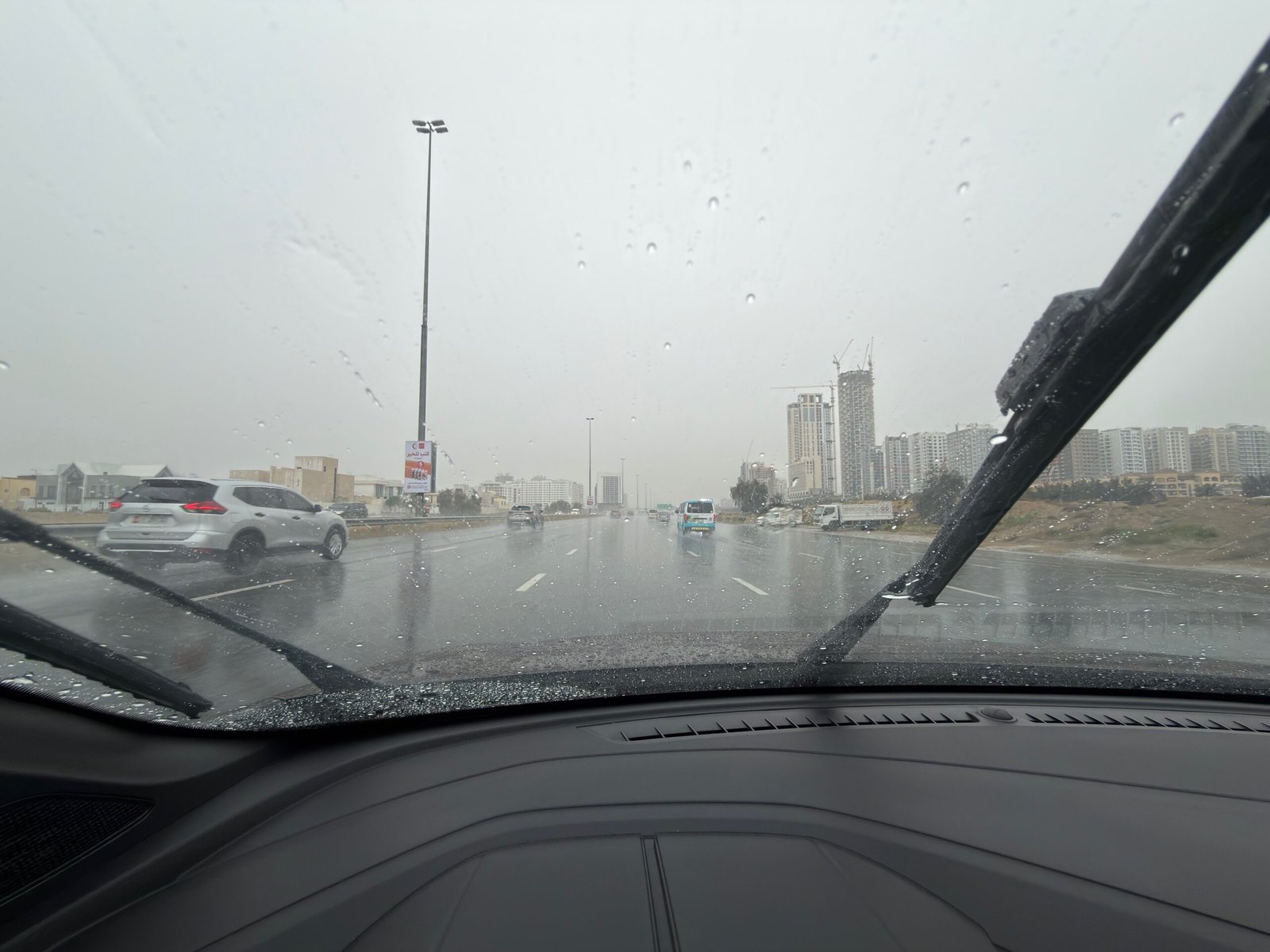
Visibility becomes a major issue during rain, especially during heavy downpours or at night. Always use low-beam headlights. This helps you see the road clearly and ensures other drivers can see you. Avoid using hazard lights while driving, as they can confuse other drivers and reduce your ability to signal properly.
Check Tire Condition Before Driving
Tires play the most important role in wet driving conditions. Good tread depth allows water to disperse effectively and maintain contact with the road.
Before driving in rainy conditions:
- Inspect tire tread depth
- Ensure proper tire pressure
- Replace worn or damaged tires
One of the most common mistakes in the UAE is underestimating water depth.
Standing water can lead to serious issues such as:
- Engine hydrolock, which can permanently damage the engine
- Electrical system failures
- Loss of steering and braking control
Flood related vehicle damage has become more common in recent years, especially with sudden storms. You can read more about this in our coverage of extreme weather impact on cars in the GCC.
️ How to Protect Your Car During Heavy Rain and Flooding
Driving safely is only part of the equation. Where and how you park your car during heavy rain can determine whether it stays protected or suffers costly damage. Basement parking areas are highly vulnerable to flooding in the UAE. During intense rain, water can accumulate quickly and fill underground levels within a short time. Choosing above-ground or elevated parking is one of the simplest ways to reduce risk.
Choose Parking Locations Carefully
Parking decisions matter more during extreme weather. Avoid areas that are exposed to potential hazards such as:
- Trees that could fall due to strong winds
- Construction sites where debris may be present
- Low drainage areas where water collects
If covered parking is not available, using a waterproof car cover adds an extra layer of protection. It helps shield the vehicle from rain, dirt, and debris while also reducing moisture exposure around seals and openings.
Park on Higher Ground
Even a small elevation difference can make a significant impact during heavy rainfall. Water naturally flows to lower areas, so choosing higher ground reduces the risk of your car being affected by flooding.
Once the rain has passed, it is important to check your vehicle before driving normally.
Key things to do include:
- Testing the brakes gently to ensure they are functioning properly
- Checking the dashboard for warning lights
- Listening for unusual sounds from the engine or wheels
Routine checks like these are part of our broader vehicle ownership and maintenance tips section.

️Flooded Roads in the UAE and Why You Should Never Take the Risk
Flooded roads remain one of the biggest dangers during heavy rain in the UAE. Underpasses, especially in major cities like Dubai, can fill with water rapidly. Many drivers assume their vehicle can handle it, particularly if they drive an SUV. However, water depth is often unpredictable, and even capable vehicles can suffer serious damage.
Driving through deep water can result in:
- Immediate engine failure
- Expensive repair costs
- Total vehicle loss
In some cases, insurance providers may not cover damage caused by knowingly driving into flooded areas.
Final Thoughts on Driving in the rain
Rain changes everything about driving. It reduces grip, limits visibility, and introduces risks that are not present in dry conditions. The key to staying safe is awareness and preparation. Adjust your speed, maintain your car properly, and avoid unnecessary risks. In the UAE, where rain is infrequent but often intense, the smartest drivers are those who respect the conditions and adapt quickly. At the end of the day, protecting your car and your safety comes down to simple decisions.
For more daily updates, reviews, and real-world automotive insights in the region, explore the latest content on GearsMe.com.