

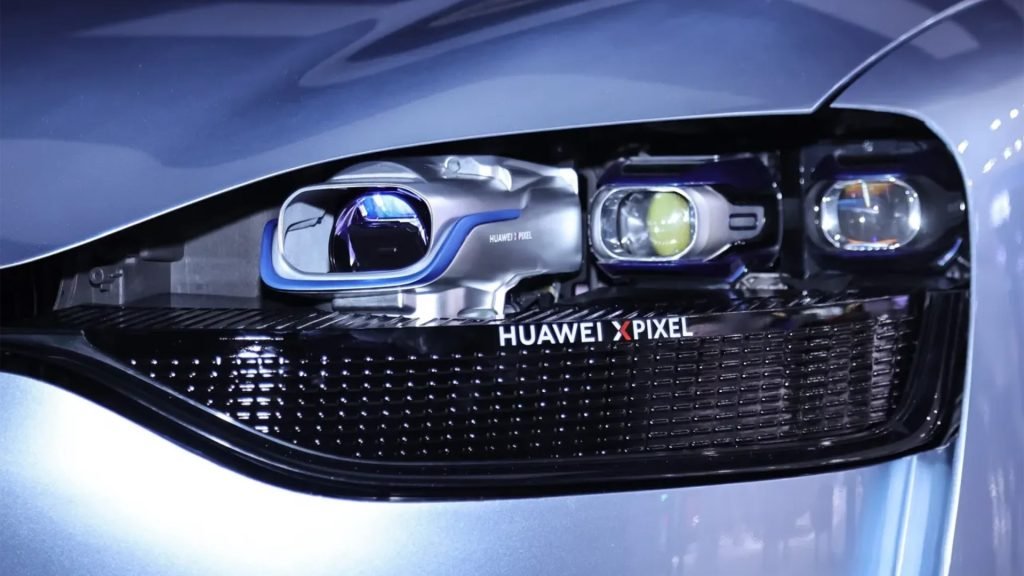
Huawei reveals the latest version of its xPixel headlight technology at the Huawei Qiankun Technology Conference at the Beijing Auto Show. Therefore, Huawei xPixel transforms the car’s front headlights from a lighting device into a full-colour visual display system with one million pixel resolution. Furthermore, these headlights project films, games, live sports and navigation cues onto any wall or flat surface nearby. Based on this, Huawei xPixel becomes the most technically exciting announcement in the electric vehicle industry in 2026. So, this technology deserves real attention from every technology and automotive enthusiast across the Middle East and Gulf. Ultimately, Huawei xPixel does not upgrade the headlight — it reinvents what a headlight is allowed to be.
From Monochrome to RGB: Three Years of Development in One Leap
Huawei xPixel did not arrive from nowhere — it evolved through careful and deliberate steps. Therefore, Huawei has been shipping its xPixel high-resolution pixel-controlled LED headlight platform in monochrome form for around three years — already appearing in vehicles like the Stelato S9. Furthermore, the new generation adds full RGB output in a qualitative leap that transforms the headlights from illumination into a complete colour projection system. Additionally, the technology uses DLP Digital Light Processing chip technology — the same principle that powers standalone projectors — integrated into what still functions as a road-legal headlight.
Based on this, what previously required a separate projector costing thousands of dirhams now sits embedded inside the car’s standard front headlights. Consequently, Huawei xPixel eliminates the need for a home cinema projector whenever you point your car toward any available wall.
One Million Pixels and a 100-Inch Image on Any Surface
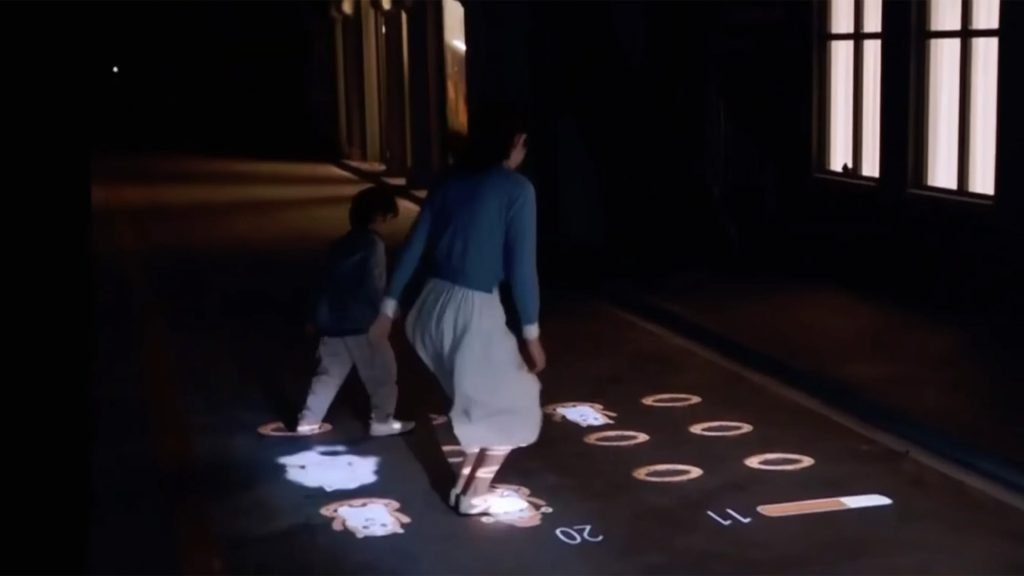
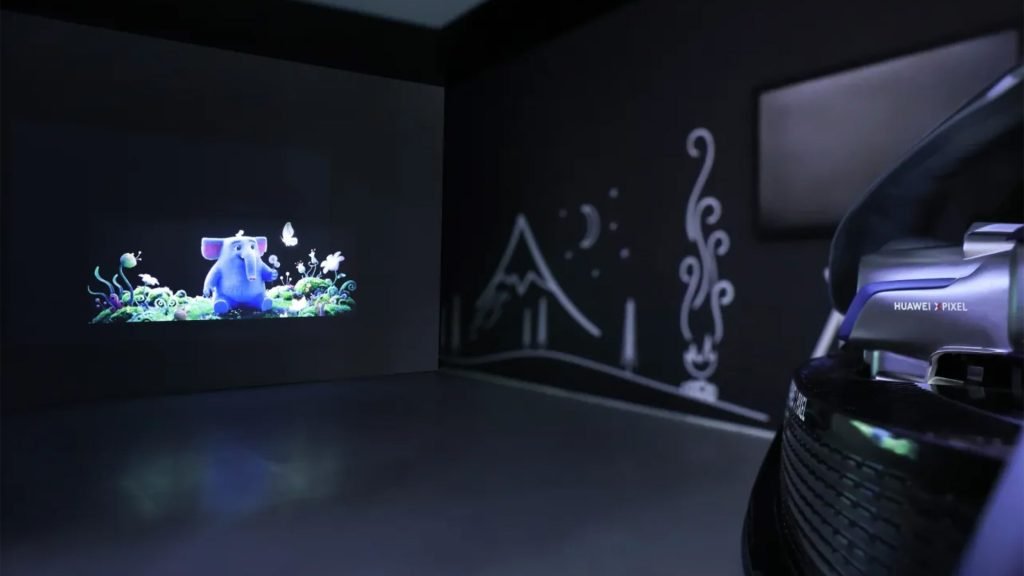
The resolution capability of Huawei xPixel sets an entirely new benchmark for automotive lighting systems. Therefore, the headlights transform the car’s front end into a dynamic display capable of projecting a 100-inch RGB image onto any available wall or surface. Furthermore, you can park your car and use the nearest wall to watch your favourite show or movie like it is some sort of personal drive-in movie theatre. Additionally, the technology projects live sports matches and real-time navigation arrows directly onto the road surface ahead of the car.–
Based on this, the classic American drive-in cinema concept returns in a far more personal and technologically advanced form. Consequently, Huawei xPixel reinvents a culturally significant idea using twenty-first century precision that the original drive-in concept never had access to.
Beyond Entertainment: Driver Assistance Through Light
The Huawei xPixel system carries a genuine functional dimension that goes far beyond entertainment. Therefore, xPixel can work with advanced driver assistance systems to project lane guidance and other visual cues onto the tarmac ahead — including during manoeuvres such as lane changes. Furthermore, the system warns pedestrians at crossings with visible light signals projected directly onto the road surface in real time. Additionally, xPixel adjusts colour temperature in rain or fog to improve light penetration and visibility in adverse weather conditions.
Based on this, what appears to be visual spectacle carries a real safety value on the road. Consequently, the headlights transform from a passive illumination device into an active communication tool between the vehicle and its surrounding environment.
The Lighting Carpet: The Road Follows Your Curve
Huawei xPixel introduces a visual feature it calls the lighting carpet. Therefore, this projected light carpet adapts dynamically to road curvature and shows a precise illuminated line that follows the road ahead. Furthermore, this feature reduces glare that blinds oncoming drivers in the opposite lane while simultaneously improving the driver’s own forward visibility. Additionally, the system provides a deeper intuitive sense of the road’s path in sharp bends and conditions of severe darkness.
Based on this, the technology combines visual spectacle with genuine practical value in a combination that is genuinely rare in automotive innovation. Consequently, this is the difference between a technology that impresses in a demonstration and one that adds real daily value to the driver’s life.
Aito M9 and Beyond: Wide Deployment Expected
Beijing Auto Show marks a clear production timeline for Huawei xPixel. Therefore, the full-colour version of xPixel will debut on a refreshed version of the Aito M9 SUV according to Huawei. Furthermore, the technology is planned for additional vehicles including the Qijing GT7 shooting brake and the Luxeed V9 MPV — a deployment scale that signals Huawei’s intention to make xPixel a new standard. Additionally, Huawei is extending the concept inward — developing a system that projects imagery onto roll-up screens behind the front seats and can cast video from a raised tailgate.
Based on this, Huawei xPixel targets not a single model but a complete visual ecosystem both inside and outside the vehicle simultaneously. Consequently, within a few years this technology may become China’s definitive answer to the question of what a parked electric car is genuinely capable of delivering to its owner and passengers.
Will It Reach Beyond China? The Legitimate Question
Huawei xPixel raises legitimate questions about its potential for global deployment. Therefore, whether projection headlights spread beyond China will depend on cost, real-world benefits and local rules on what can be displayed from a moving vehicle. Furthermore, many Western markets apply strict regulations to vehicle lighting that would complicate any direct application of this technology without modification. Additionally, the price question remains completely unanswered — leaving the full economic picture unclear for potential international buyers and manufacturers.
Based on this, the technology’s global future remains an open question despite its obvious technical brilliance. For the latest automotive technology news across the Middle East, follow GearsME. For full official details on Huawei xPixel, visit the official Huawei website. Consequently, the Gulf market — which already embraces Chinese electric vehicles faster than most regions — could become one of the first international markets where Huawei xPixel finds genuine commercial traction outside its home territory.
What xPixel Tells Us About Chinese EV Competition
The Huawei xPixel announcement carries implications that extend far beyond the technology itself. Therefore, xPixel is a marker of where competition in electric cars is heading — not just batteries and motors but software-defined hardware that can be updated, personalised and used to communicate in new ways. Furthermore, Chinese electric vehicle brands no longer compete simply on price or range — they compete on imagination and on the redefinition of what a vehicle is allowed to do. Additionally, the gap between Chinese EV innovation and the rest of the automotive world’s response is widening with every announcement at every Beijing Auto Show.
Based on this, Huawei xPixel is not simply a clever party trick. Consequently, it represents a fundamentally different approach to vehicle technology — one that asks not how much range the car delivers but what the car can do for you when it is standing still.
Huawei xPixel Redefines What a Headlight Means
Ultimately, Huawei xPixel proves that Chinese EV competition has moved decisively beyond batteries and motors into experiences that no other automotive market currently matches. Furthermore, one million pixels, full RGB colour, 100-inch projection, lane guidance, pedestrian warnings and weather-adaptive lighting all from the same set of front headlights — this is the level of ambition that defines where automotive technology is heading. Consequently, the only question worth asking in the Middle East and Gulf right now is not whether this technology is impressive — it clearly is — but when it arrives here.