


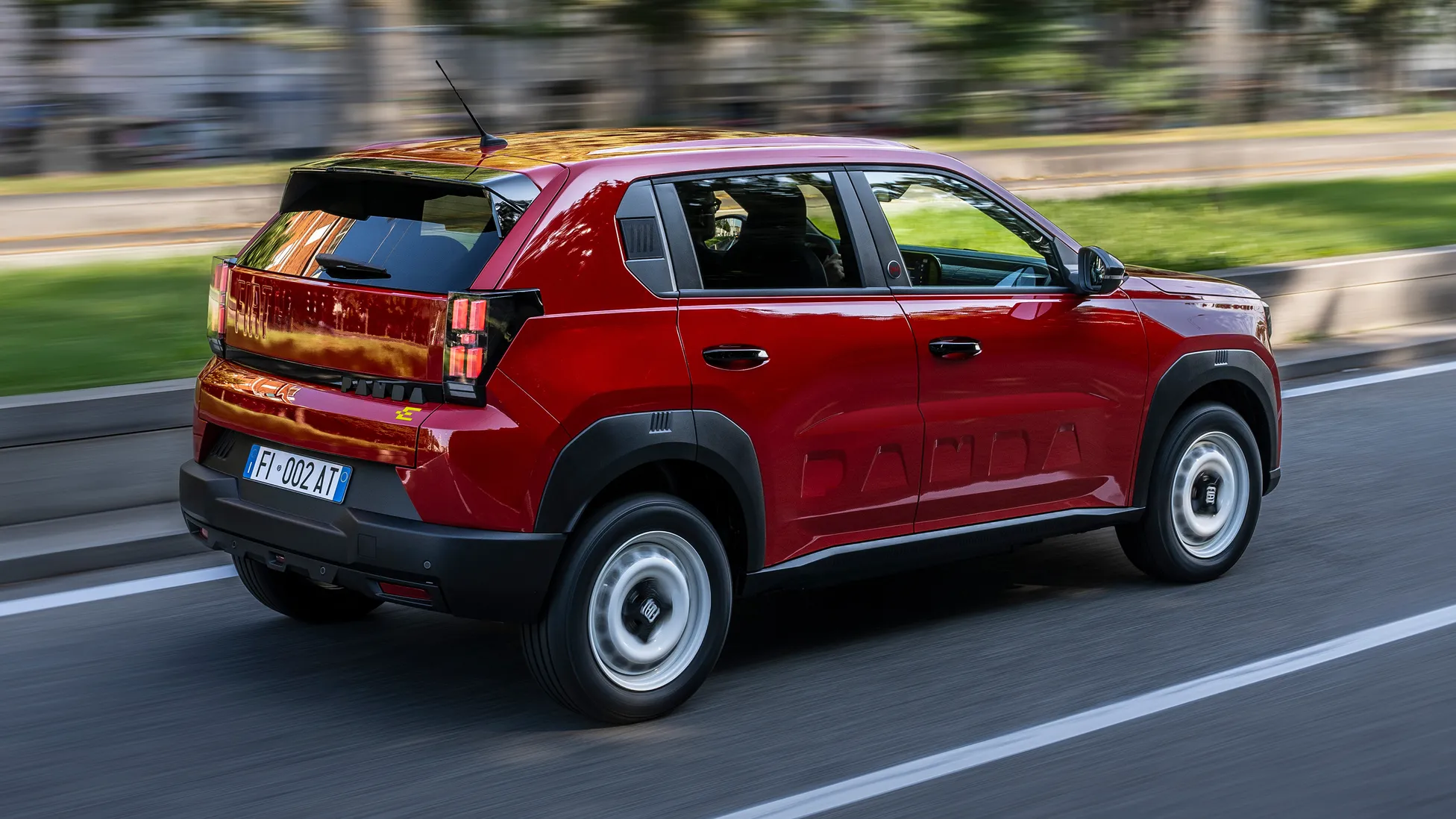
Stellantis officially confirms the E-Car project. Therefore, Stellantis E-Car 2028 production begins at the Pomigliano factory in Italy. Furthermore, this is the same factory that currently builds the Fiat Panda. Based on this, the project targets a segment that quietly collapsed across Europe in recent years. So, the Stellantis E-Car 2028 becomes one of the most significant industrial announcements in electric vehicle history before the decade ends. Ultimately, affordable small electric cars are coming — and they arrive in just two years.
What Does the E in E-Car Actually Mean?
Stellantis names things with intention. Therefore, the company confirms that the letter E carries four simultaneous meanings. Furthermore, those meanings are European origin, Emotion in driving, Electric powertrain and Environmental friendliness. Additionally, these four pillars define the design, production and performance philosophy of the entire project.
Based on this, the Stellantis E-Car 2028 is not simply a cheap car. It is an industrial declaration. Consequently, anyone who reads the name carefully understands what Stellantis wants before seeing the vehicle itself.
Why Now? The Collapse of the Small Affordable Car Segment
CEO Antonio Filosa explained the real motivation behind the Stellantis E-Car 2028 with complete directness. Therefore, he said the market experienced “an unprecedented contraction of the small affordable car segment in Europe in recent years.” Furthermore, he added: “Our customers are calling for a revival of small stylish vehicles produced in Europe that are also affordable and environmentally friendly.” Additionally, Filosa confirmed the chosen production site is Pomigliano in Italy — where the Fiat Panda currently comes to life.
Based on this, Stellantis admits clearly that the market lost something important. Consequently, this level of public honesty from a company of Stellantis’s scale proves the project carries genuine commercial seriousness behind the announcement.
What Makes the E-Car Actually Affordable?
The low cost of the Stellantis E-Car 2028 comes from deliberate engineering decisions. Therefore, the cars will be limited in both size and performance — a direct reduction in production complexity and cost. Furthermore, they will do without some of the more expensive advanced safety technology found in larger modern vehicles. Additionally, a regulatory tool called Super Credits allows carmakers to sell 1.3 combustion cars for every E-Car electric model they sell to consumers.
Based on this, the formula is clear: smaller, simpler and cheaper but fully electric and proudly built in Europe. Consequently, this is not a sacrifice of quality but a deliberate strategic choice to reach buyers who lost their options in the affordable small car market over the last decade.
Which Stellantis Brands Will Carry the E-Car?
Stellantis operates the largest portfolio of car brands in European automotive history. Therefore, its brands include Fiat, Peugeot, Citroen, Opel, Vauxhall and several others across the full price spectrum. Furthermore, Stellantis has not yet confirmed which specific brands will carry the first E-Car models at the 2028 launch. Additionally, signals point strongly toward Fiat given its direct connection to the Pomigliano production facility.
Based on this, buyers across Europe may find the E-Car wearing a Fiat badge or a Peugeot badge or a Citroen badge depending on the market. Consequently, the shared platform model is precisely what makes large-scale production economically viable and genuinely affordable at the consumer level.
The Super Credits System: How It Works
The regulatory framework behind the Stellantis E-Car 2028 is as interesting as the car itself. Therefore, the European Super Credits system grants manufacturers a commercial incentive to produce small electric vehicles. Furthermore, for every E-Car sold the manufacturer earns the right to sell 1.3 combustion engine vehicles. Additionally, this creates a financial logic that makes the E-Car project commercially rational for Stellantis beyond any environmental motivation.
Based on this, the Super Credits system turns small EV production into a commercial tool rather than simply a regulatory obligation. Consequently, Stellantis builds E-Cars not only because customers want them but because the regulatory maths makes strong commercial sense simultaneously.
What the E-Car Means for the Middle East and Gulf
Some readers ask a logical question: why does a small European electric car matter in the Gulf market? Therefore, the answer runs deeper than the car itself. Furthermore, the E-Car represents a model for what happens in emerging markets when charging infrastructure matures to a level that supports small urban electric vehicles. Additionally, the broader lesson is universal: demand for affordable electric cars is real and global — not exclusive to Europe or China.
Based on this, the Stellantis E-Car confirms that the affordable EV segment will eventually globalise. Consequently, markets across the Gulf that currently focus on larger premium EVs will see compact affordable electric options arrive as infrastructure and buyer confidence both grow. For the latest electric vehicle news across the Middle East, follow GearsME. For full official details, visit the official Stellantis website.
The Bigger Picture: Stellantis Bets on Volume
The Stellantis E-Car 2028 sits within a broader strategic shift for the entire group. Therefore, Stellantis faces commercial pressure from Chinese brands that dominate the affordable small car space globally. Furthermore, European carmakers lost significant ground in this segment over the last decade as production costs rose and profit margins shrank. Additionally, the E-Car represents Stellantis’s direct answer to that competitive pressure from China — build small affordable EVs in Europe faster than the competition can establish itself locally.
Based on this, the Pomigliano factory in Italy becomes a symbol of European industrial resilience in the electric era. Consequently, the E-Car project is simultaneously a product launch, a jobs commitment and a strategic declaration about where Stellantis intends to compete in the next chapter of automotive history.
Final Thoughts: Stellantis Brings Back the Small Electric Car
Ultimately, the Stellantis E-Car 2028 proves the world’s largest car group has not forgotten the budget buyer. Furthermore, just two years separate the electric vehicle world from a new era of small affordable cars built in Europe at prices within genuine reach. Consequently, the real bet behind Stellantis E-Car 2028 is simple: electricity and affordability are not opposites — they are two forces that will define the next decade of mobility together.