

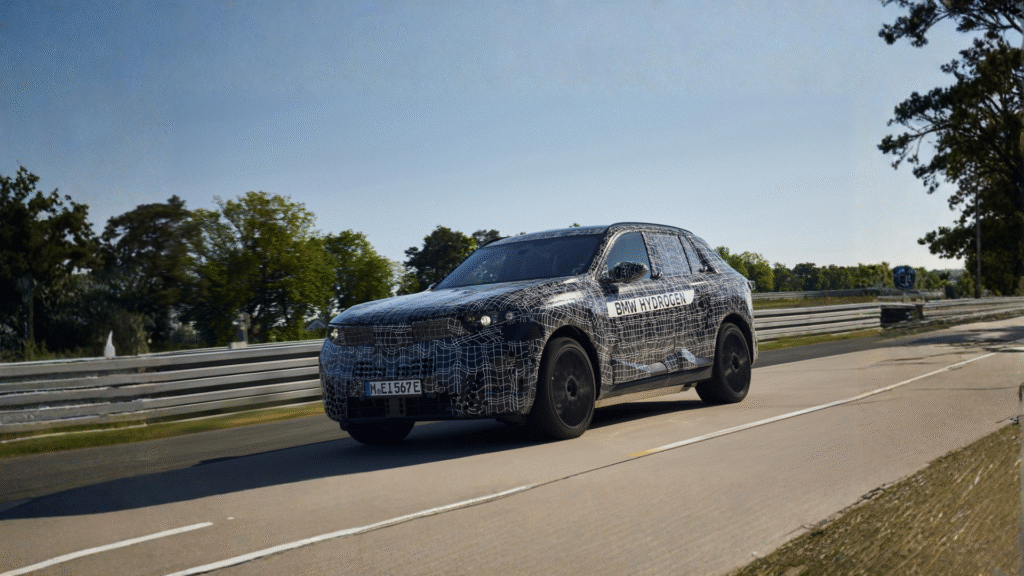

The BMW iX5 Hydrogen represents BMW’s latest step toward sustainable mobility. As the automotive industry moves toward cleaner technologies, manufacturers are exploring several alternatives to traditional engines.
Among these solutions, hydrogen fuel-cell technology is gaining attention. Therefore, BMW developed the BMW iX5 Hydrogen as a way to test the potential of hydrogen-powered vehicles.
At the same time, the company continues to invest in electric and hybrid models. However, BMW believes hydrogen could complement battery electric vehicles in the future.
How the BMW iX5 Hydrogen Works
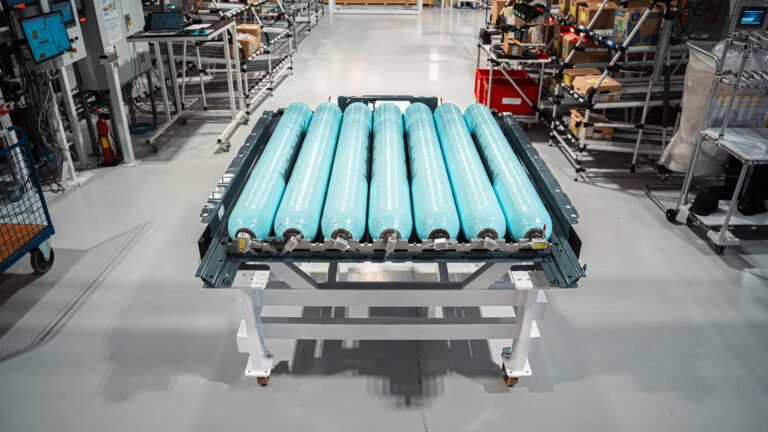
The BMW iX5 Hydrogen uses a fuel-cell system that converts hydrogen into electricity. In simple terms, hydrogen reacts with oxygen inside the fuel cell.
As a result, the system produces electricity to power the electric motor. Meanwhile, a small battery stores additional energy for short bursts of power.
Most importantly, the process produces only water vapor as a by-product. Therefore, the vehicle operates with virtually zero emissions.
Strong Performance Despite the Eco Focus
Although the car focuses on sustainability, BMW iX5 Hydrogen still delivers strong performance.
The electric drivetrain produces 401 horsepower. As a result, the SUV accelerates from 0 to 100 km/h in under 6 seconds.
Furthermore, the vehicle reaches a top speed of more than 180 km/h. This means drivers still enjoy the dynamic driving experience expected from BMW.
Long Range and Fast Refueling
Another key advantage of hydrogen vehicles is fast refueling. Unlike electric cars that may require longer charging times, hydrogen tanks refill quickly.
For example, the BMW iX5 Hydrogen can refuel in three to four minutes. Therefore, the process feels very similar to filling a petrol car.
In addition, the SUV stores hydrogen in two high-pressure tanks. Together, they hold about 6 kilograms of hydrogen.
Because of this setup, the vehicle can travel around 504 kilometers according to the WLTP standard.
BMW and Toyota Collaboration
Meanwhile, BMW did not develop this technology alone. Instead, the company partnered with Toyota, which is well known for its expertise in fuel-cell technology.
Through this collaboration, both companies aim to improve efficiency and reliability. Furthermore, they hope to accelerate the development of hydrogen-powered vehicles.
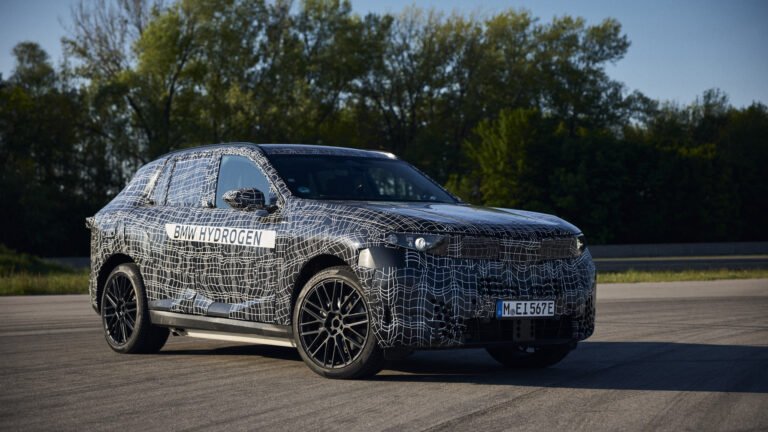
Currently, BMW is testing a limited fleet of BMW iX5 Hydrogen models in real-world conditions.
The Future of Hydrogen Cars
Looking ahead, BMW believes mobility will rely on several technologies. Battery electric vehicles will continue to grow. However, hydrogen may provide an additional solution.
For instance, hydrogen vehicles may work well in regions with limited charging infrastructure.
Overall, projects like the BMW iX5 Hydrogen show how manufacturers are exploring different paths toward sustainable mobility.