
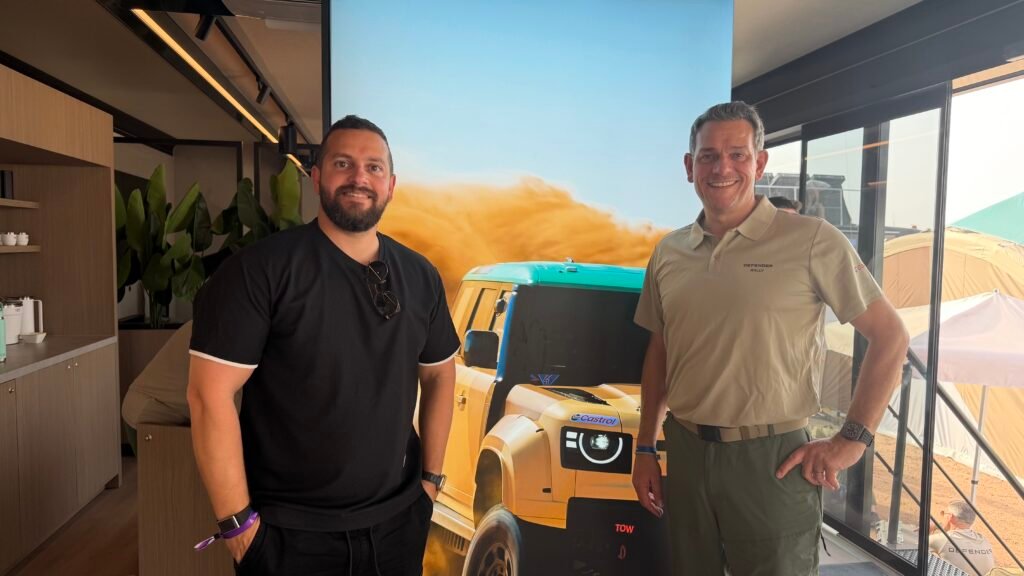

During the Dakar Rally 2025, in the heart of the Saudi Arabian desert where machines, teams, and drivers are pushed to their absolute limits, GearsMe sat down with Mark Cameron, Managing Director of the Defender brand at Jaguar Land Rover.
Surrounded by the intensity of the world’s toughest rally raid — from shifting dunes to the moving bivouacs of Dakar — we discussed one of the most significant chapters in Defender’s modern history. From the strategic decision to enter Dakar as a factory team, to the deeper philosophy behind proving real-world capability, Cameron shared how Dakar has become a defining platform for Defender’s future.
In this exclusive conversation, we explore how Defender is using Dakar not as a motorsport statement alone, but as a global stage to reaffirm its DNA — durability, authenticity, and adventure — rooted in an heritage that dates back to 1948, even as the brand operates at the very top end of the luxury SUV world.
Fahed Abu Salah (GearsMe)
From a brand perspective, Defender today feels like it’s deliberately carving out its own territory — away from where traditional rivals and mainstream rugged SUVs sit. Is the ambition to build Defender as a unique luxury adventure brand, rooted in durability, longevity, and its original DNA dating back to 1948?
Mark Cameron:
Absolutely. The objective is very clear: to build and protect Defender as a distinct luxury adventure brand, deeply rooted in durability, longevity, and its bloodline going back to the very first Land Rover in 1948.
If you look at the market today — particularly the rugged SUV segment — it’s increasingly crowded. Many manufacturers are launching vehicles that look tough or capable. Design has become the dominant conversation. In that environment, it’s more important than ever for us to talk about what truly differentiates Defender — what’s underneath the skin, not just what it looks like.
Since the launch of the new Defender in 2020, its appeal has largely been driven by design and on-road character. But its extreme off-road capability hasn’t always been at the center of the story. Was that something you wanted to change?
Yes, that’s fair. Defender’s appeal since 2020 has been strongly driven by design and driving characteristics, but we haven’t talked enough about its capability in a truly extreme, competitive context.
We’ve done expeditions and internal adventures, but proving Defender on a global stage — somewhere as demanding and uncompromising as the Dakar Rally — is the ultimate test. Dakar is one of the few environments where you can’t fake capability. It’s the perfect place to tell that story credibly.
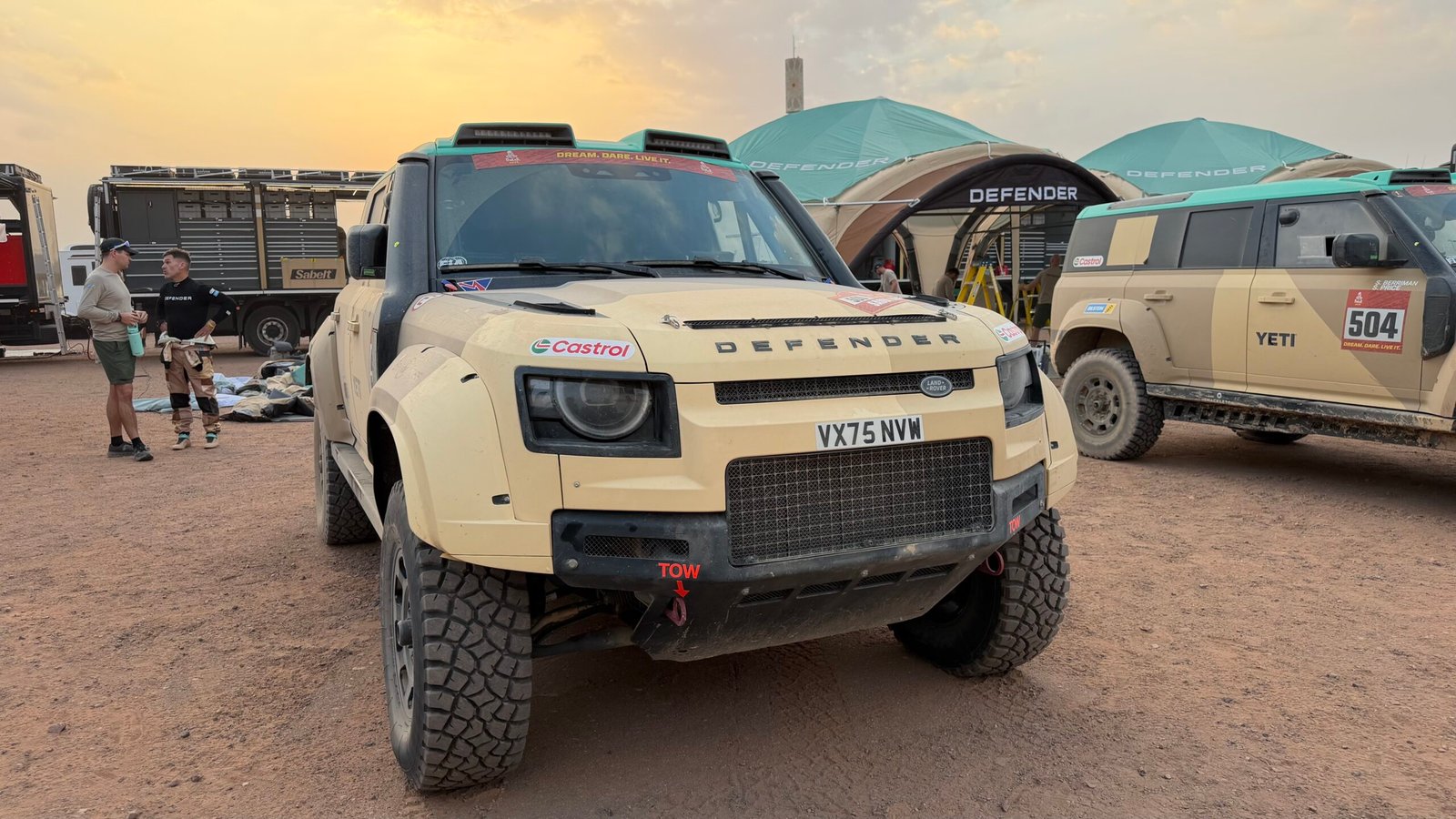
That meant reworking the production-class regulations. Did that idea come from the Dakar organizers, or was it driven by Defender?
It was very much driven by us.
This wasn’t about “let’s go racing” for the sake of motorsport. From a brand strategy perspective, I wanted to use motorsport to solve a brand challenge. Shortly after I took responsibility for Defender as a standalone brand, I began thinking about where we could authentically prove its DNA.
Towards the end of 2023, I had early discussions internally, and two members of our motorsport team met with ASO to explore the idea of Defender entering Dakar as a factory team. We were open about our concerns — the production category had lost momentum, entries had declined, and the regulations weren’t creating the spectacle we felt was needed.
ASO were extremely receptive. They wanted to rejuvenate the category too. Over the following 12 to 24 months, those discussions accelerated. Toyota came into the conversation, along with other OEMs — some not competing yet, but clearly interested.
Because it’s a production-based category, everyone starts from a different point, so it required a lot of collaboration, compromise, and trust. But everyone had the right intent: to bring excitement, relevance, and credibility back to the stock category.
At the moment, there are eight cars in the field. How do you see this evolving?
Currently, there are two factory teams and several privateers. I know of at least two or three very strong prospects likely to join next year.
Realistically, over the next three years, I’d expect five to ten manufacturers, potentially growing to around 20 cars. A key factor is cost. Production-based rally cars are significantly more affordable than top-tier prototypes, which makes the category far more accessible and attractive.
From a business perspective, what kind of return do you expect from a Dakar program like this?
I can’t share exact numbers, but the return is measured in multiples.
We track it through brand research, image uplift, and social engagement across all major markets — and we’re already seeing strong results. But beyond traditional metrics, we also wanted to connect with an adjacent audience.
Dakar has a loyal motorsport following, but by leaning into adventure, exploration, and lifestyle storytelling, we’re bringing new people into the narrative. That’s good for Defender, and it’s good for Dakar as a global event.
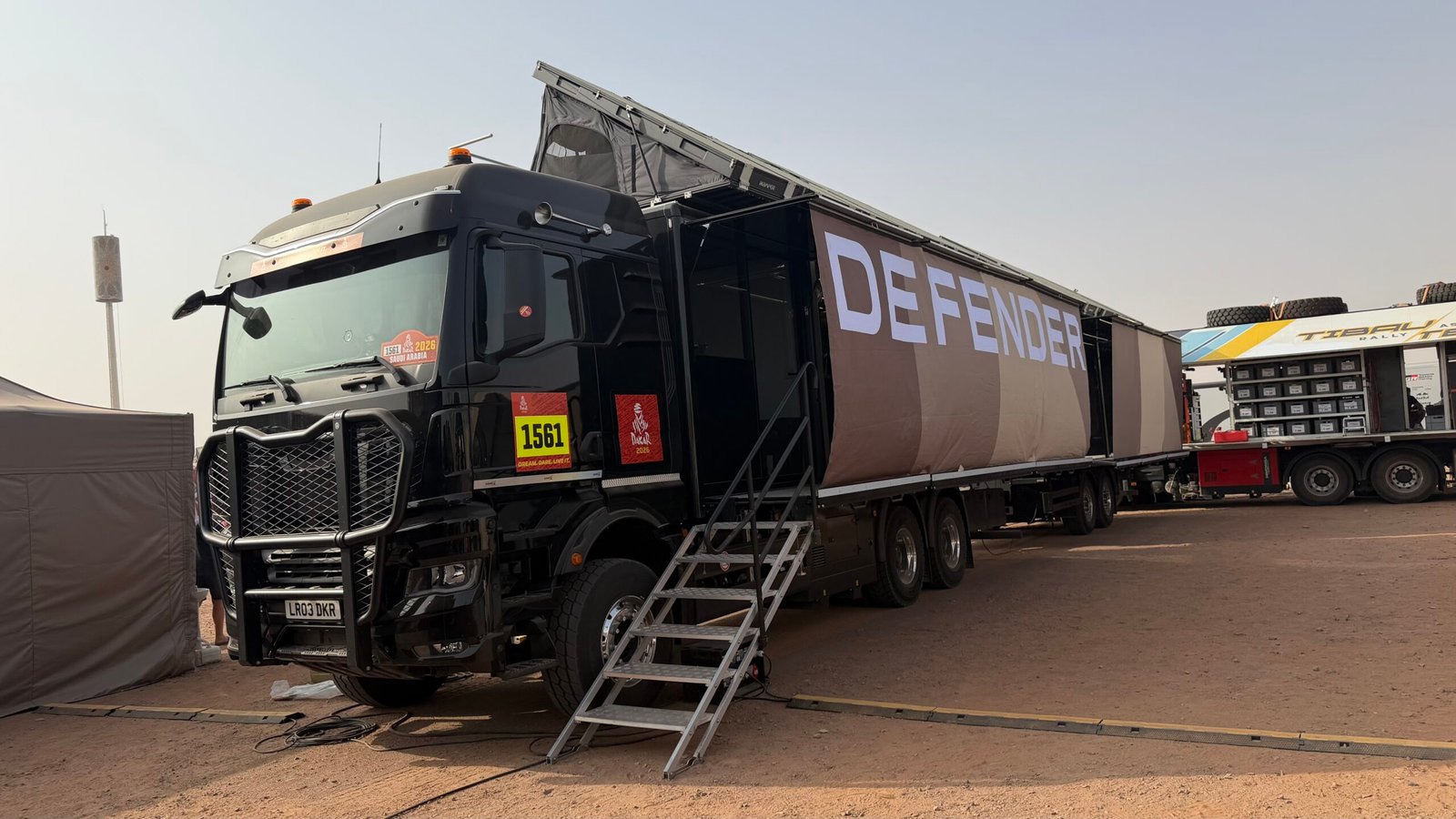
Have you started building customer or lifestyle experiences around Dakar yet?
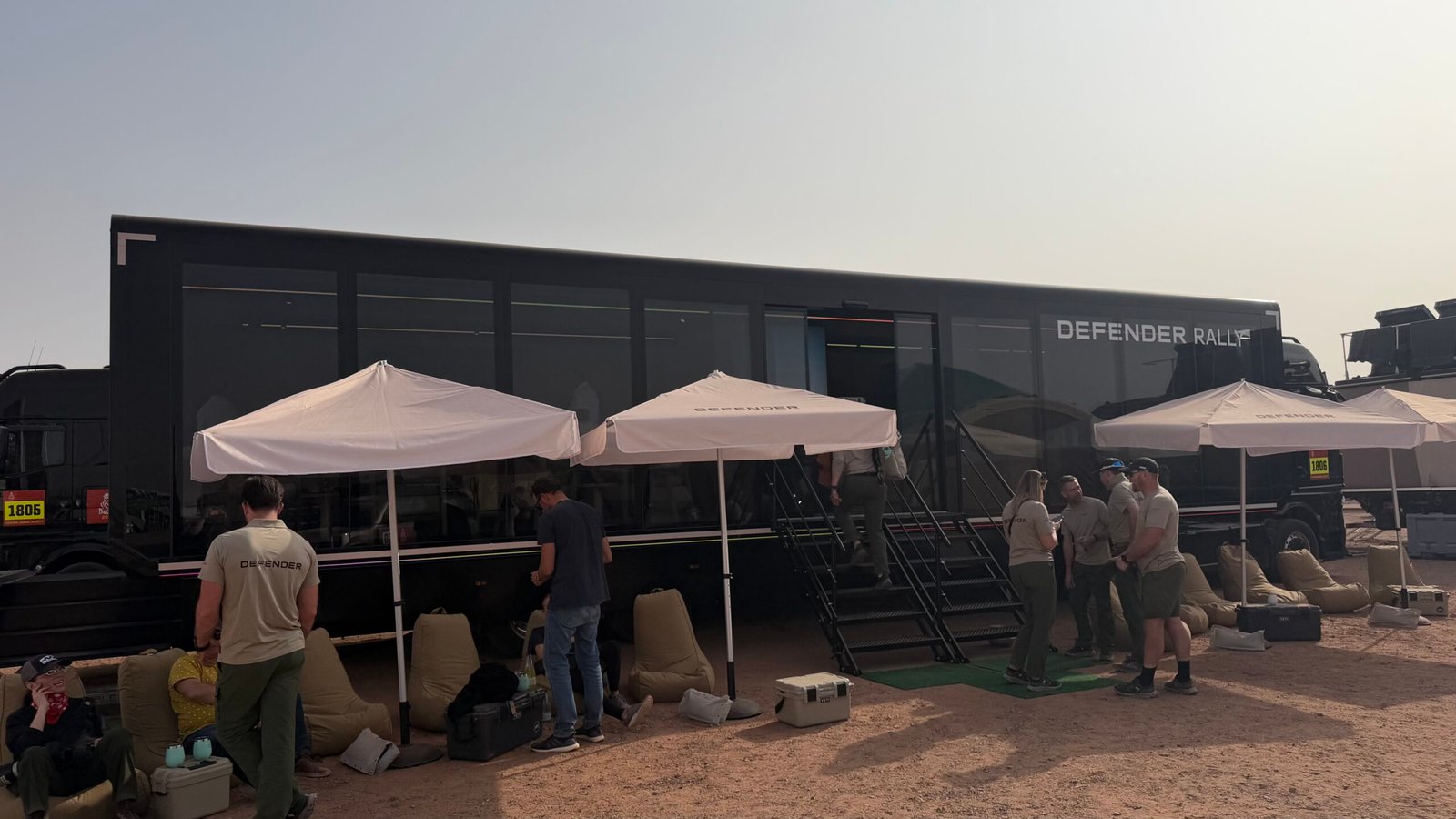
Not fully — year one has been about execution. Running a Dakar team is an enormous logistical challenge. Getting three cars to the start line is one thing; managing the entire operation across two weeks, multiple locations, and hosting over 120 guests is another.
That’s why we committed to a minimum three-year program. We don’t want to do everything in year one. Going forward, you’ll see more immersive experiences — desert expeditions, overnight camping, rooftop tents — authentic adventures that no one else is really offering.
We’ve even worked with content creators outside the automotive world, purely from adventure and travel backgrounds, to tell that story differently.
Is there interest from privateers or customer teams?
Yes — and a lot of it. Since announcing our Dakar entry, we’ve had significant unsolicited interest from individuals and private teams.
If you look at GT racing, privateer participation has grown massively. Rally raid doesn’t yet offer that same pathway, but it could. There are people out there who want to do something truly extreme. I can absolutely see a future where Defender supports customer entries alongside the works team.
Let’s talk about the car itself. You’re using the Defender OCTA as the base — was that always the plan?
No. The OCTA program started more than five years ago, long before Dakar was even discussed.
Once we committed to the production category, regulations required selling at least 1,000 units per year. We then objectively assessed every Defender powertrain and body style. The OCTA, with its twin-turbo V8 and longer 110 wheelbase, was simply the strongest starting point.
But this is fundamentally a Defender story. That’s why the rally car is called Defender D7X-R — D7X is the core Defender architecture, and “R” denotes Rally. OCTA just happens to be the donor vehicle.
Power is restricted to around 400 hp. Why not use another Defender variant?
While power is restricted, torque is not — and torque is everything in sand dunes. The OCTA’s 800 Nm gives us a significant advantage.
We evaluated all powertrain options, including the 5.0-liter supercharged V8. Objectively, the OCTA platform delivered the best balance within the regulations.
Many Defender owners may never fully use that extreme capability. How do you justify this investment?
It’s like buying a luxury Swiss dive watch rated to 300 meters. Most owners will never go beyond 10 meters — but they buy it because of what it can do.
People want intrinsic quality, tested capability, and authenticity. Even if only a small percentage push the limits, that capability underpins the entire Defender brand.
Could we ever see a road-legal rally version sold to customers?
We’re exploring it. There’s strong interest, but homologation is complex — pedestrian safety, emissions, and different regulations across markets.
What I don’t want is a cosmetic exercise. If we do it, it has to be as close to the rally car as possible while remaining road-legal. It’s early days, but the potential is there.
Do you expect to win Dakar?
I’m realistic. We’re competing against teams with decades of Dakar experience. Our focus initially is finishing strongly, learning, and building.
We know the car is fast. The challenge is managing it over two weeks. That’s why having someone like Stéphane Peterhansel is invaluable — not just as a driver, but as a mentor and leader within the team.
Final question — is this just the beginning?
Mark Cameron:
Very much so. This is the start of a long journey. There will be challenges and evolution, but Dakar gives Defender the most authentic platform possible to prove who we are.
Motorsport in the Arab World: A New Era of Formula 1, Drifti